
Global food insecurity is becoming increasingly urgent, with the United Nations Food and Agriculture Organization reporting that nearly 828 million people worldwide are suffering from hunger. At the same time, climate change is disrupting traditional agricultural systems, exacerbating this crisis and highlighting the urgent need for smarter, more resource-efficient solutions. In this context, an autonomous indoor farming system powered by artificial intelligence (AI) and assisted by robotics holds promise for revolutionizing food production, particularly in regions with limited arable land.
Limitations of Traditional Irrigation Overcome by AI-Driven Innovation
Traditional greenhouses employ water management techniques such as drip irrigation, soil moisture sensors, and automated irrigation systems, which improve efficiency and reduce waste. However, these methods lack responsiveness and accuracy, often leading to over- or under-watering that wastes resources and harms crop health. Agricultural water use accounts for the vast majority of human water consumption, and over 2 billion people worldwide face water shortages, making innovative water-efficient methods imperative.
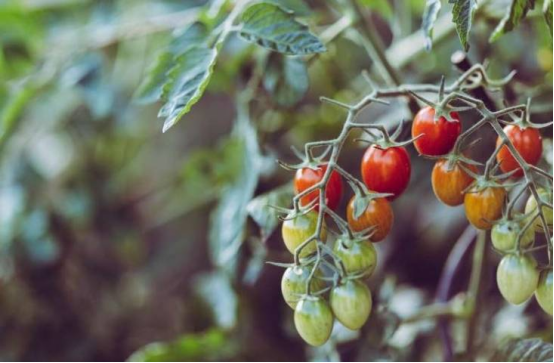
A research team from the School of Mechatronic Systems Engineering at Simon Fraser University (SFU) has developed an AI-sensing robot prototype capable of autonomously monitoring water needs in tomato plants. The robot uses electrical signals from plants (plant electrophysiological responses) as real-time indicators of plant health and water requirements, integrating advanced AI algorithms to interpret these signals and precisely determine irrigation timing. This technology eliminates guesswork and manual labor in traditional irrigation, promoting efficient water use, reducing waste, and optimizing plant health.
Fusion of Multiple Technologies Ushers in a New Era of Smart Agriculture
Recent studies indicate enormous potential in integrating AI innovations into agriculture. AI systems can significantly improve water efficiency, reduce chemical runoff, and optimize crop yields. Advances in robotics enable non-invasive and continuous monitoring of plant health, facilitating precise and timely interventions. The latest developments in monitoring plant physiological signals show that sensors capturing electrical signals reflecting plant stress, water status, and overall health can provide highly specific real-time data.
SFU's non-invasive sensing robot achieves a major leap in intelligent plant care by continuously and effectively monitoring plant health and using AI to dynamically adjust precise watering based on actual plant needs. Additionally, innovations combining multispectral imaging and machine learning enhance the detection of plant diseases and stress. When paired with electrical sensing robots, these can lead to comprehensive plant health monitoring systems. Fully autonomous agriculture is becoming a reality. This technology extends beyond irrigation to enable autonomous nutrient management and environmental monitoring. Multi-functional robots can optimize resource utilization, reduce waste, and increase crop yields, supporting global food security.
From Greenhouses to Fields: International Collaboration Drives Adoption
The prototype has shown promising results in greenhouses, but the true potential of AI water management lies in scalable and adaptable solutions. Addressing global food and water security requires international collaboration, sharing knowledge and technology, and developing targeted strategies for regions affected by resource scarcity and climate change.
In recent years, the SFU team has engaged deeply with agricultural communities in Tanzania and Asia-Pacific countries including Singapore, the Philippines, Japan, and South Korea, gaining insights into severe water shortages, lack of advanced technology, and adverse climate impacts in these areas. To ensure solution effectiveness, technologies developed in controlled environments must be adapted, and farmers need easy access to them. This means developing affordable, user-friendly sensor tools and scalable AI and robotic systems that operate effectively under variable environmental and infrastructural conditions.
International collaboration is crucial in this process. The United Nations Food and Agriculture Organization, the Association of Pacific Rim Universities, and the World Bank are actively promoting cross-border research partnerships, capacity-building projects, and technology transfer initiatives, emphasizing that sustainable agricultural progress depends on combining cutting-edge technology with local knowledge. The SFU team's goal is to develop affordable, easily deployable AI-sensing robots for small farms, providing real-time plant monitoring to reduce waste, increase yields, and foster resilient agricultural ecosystems—contributing to the United Nations Sustainable Development Goal of ending hunger and malnutrition.
Scaling such prototypes from greenhouses to global agriculture requires robust international cooperation. Supportive policies and knowledge sharing will accelerate the deployment of intelligent water management systems, enabling farmers worldwide to achieve more sustainable and resilient food production.