
A research team led by Los Alamos National Laboratory (LANL), in collaboration with Lawrence Livermore National Laboratory (LLNL), has successfully achieved fusion ignition in experiments on a new diagnostic platform.
Los Alamos physicist and co-director of the LANL Inertial Confinement Fusion Program, Joseph Smidt, said: "This is a game-changing breakthrough that advances fusion science and 3D modeling capabilities."
The experiment, conducted on June 22 at the National Ignition Facility (NIF), confirmed that ignition can still be achieved even when the system is modified to allow X-rays to escape for measurement purposes. The test produced 2.4 ± 0.09 megajoules of fusion energy and also generated a self-sustaining feedback loop known as a "burning plasma."
This experiment was the first operational test of the Los Alamos National Laboratory's Thin Hohlraum Optimized Radflow (THOR) window system. The system is designed to provide a high-flux X-ray source for other scientific applications, primarily to study how materials respond to extreme radiation environments. Smidt noted that this shows the design can effectively create fusion ignition conditions while addressing key stockpile stewardship questions.
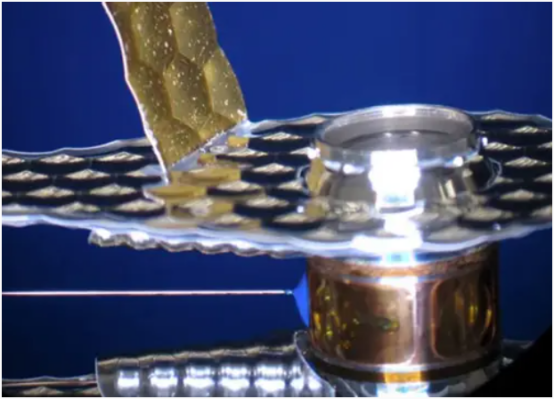
In standard NIF experiments, lasers fire into a gold-plated cylinder or hohlraum containing a capsule of deuterium-tritium fuel. The lasers generate uniform X-rays inside the hohlraum, symmetrically imploding the fuel capsule to trigger fusion. The THOR design modifies the standard hohlraum by adding windows, allowing some X-rays to escape the chamber. These escaping X-rays can be used to irradiate test materials, helping scientists study radiation flow and energy absorption.
The primary scientific challenge in designing the THOR hohlraum was controlling its inherent energy loss and potential asymmetry, as the fusion ignition process is highly sensitive to implosion energy balance. Introducing windows creates an exit path for X-ray energy, which could disrupt the uniformity needed to compress the fuel capsule. Los Alamos physicist Brian Haines pointed out that ignition capsule implosions are extremely sensitive, and any energy loss or perturbation could prevent ignition. This experiment successfully validated the high-fidelity computer simulations used to design the platform and compensate for the modifications.
Lawrence Livermore National Laboratory first achieved ignition in 2022 and has since replicated it. This experiment represents an important step in expanding the applications of the ignition platform. Laboratory physicist and THOR campaign lead Ryan Lester summarized that the experiment is a critical step in validating high-fidelity simulations, proving that the modified THOR platform can also achieve ignition-scale performance.
With the feasibility of the THOR concept validated, researchers plan to continue its development. Future work will focus on improving window transparency and designing experimental apparatus that can attach to the hohlraum to collect material property data under plasma conditions—something not possible in previous laboratory settings.