
The energy transition is challenging nations, cities, and regions. Utilizing sustainable energy is key to curbing climate change, but energy system costs must remain manageable, and supply security must be ensured. The energy trilemma—composed of sustainability, affordability, and security of supply—poses a critical issue for policymakers designing future energy systems.
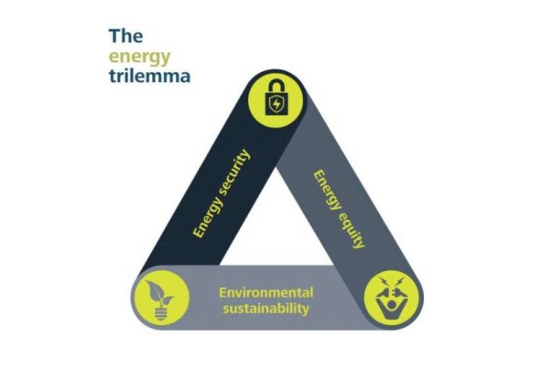
The energy trilemma, proposed by the World Energy Council, aims to model the three criteria on a rigorous scientific basis, quantitatively comparing different energy scenarios to ideally identify paths achieving the best balance among the three objectives. Currently, the sustainability and cost of different energy systems can be reliably quantified through various models, but existing models have significant shortcomings in assessing supply security. Matthias Sulzer, Head of the Department of Engineering Sciences at Empa, pointed out that many existing models are vague, not user-friendly, and not designed for today's modeling capabilities.
To address this issue, Sulzer collaborated with researchers from the Swiss Federal Laboratories for Materials Science and Technology (Empa), ETH Zurich, and Lawrence Berkeley National Laboratory in the U.S. to develop a more efficient method for quantifying energy supply security. The research findings have been published in the journal iScience.
The model is pyramid-shaped with five layers, and the researchers defined quantitative indicators for each layer. The bottom layer is self-sufficiency, calculated through simple energy balances to understand a country's annual production and consumption of energy using its own resources; the second layer is autonomy, focusing on annual energy imports and the security of import routes; starting from the third layer, system adequacy and dynamic effects come into play, checking hourly or at higher resolution whether energy demand can be met from any source at any specific time; the fourth layer explores whether a country can dispense with imports during certain periods; the top layer discusses whether a country can sustain itself relying solely on domestic energy production at any time of the year (or even longer).
Co-author Georgios Mavromatidis, Head of the Urban Energy Systems Lab at Empa, emphasized that the layers are interdependent. Modern energy systems are complex, and the pyramid model aims to help correctly assess indicators and clarify terminology. Its main advantage is that higher layers account for dynamic effects. Because renewable energy systems operate with high dynamics and variable utilization of wind and solar, annual averages are not a good indicator for measuring supply security in such systems.
The researchers stated that the pyramid model should be viewed as a preliminary proposal—a foundation for further discussion, research, and refinement of the indices—but it is already usable for energy planning. In a study using Switzerland as an example, the researchers compared Switzerland's current energy supply security with future scenarios for 2050 using the pyramid, based on previous research conducted in collaboration with the Association of Swiss Electricity Companies (VSE).
The analysis shows that through a sensible combination of renewable energies, Switzerland can enhance its future energy security. Matthias Sulzer believes that greater diversification of energy sources and higher domestic production are two key factors in achieving this goal. Additional storage facilities also help secure energy supply; beyond hydropower stations, thermal storage facilities can store and utilize industrial waste heat, and batteries are important—for example, Empa is researching how to use electric vehicles as temporary electricity storage when they are not on the road.
In the researchers' vision, Switzerland will not pursue complete self-sufficiency. Matthias Sulzer believes this is not the ultimate goal. Establishing a completely self-sufficient energy supply system in Switzerland is technically feasible, and even a self-sufficient and sustainable system is possible, but it would significantly drive up costs. By mixing imports and domestic production, along with adopting diverse energy sources, Switzerland can balance cost, sustainability, and supply security, offering a new approach to solving the energy trilemma.