
In AD 79, the Roman writer Pliny the Elder marveled in his Natural History at the phenomenon of dust turning to stone upon contact with water. The "Puteoli dust" he described—now known as pozzolana—was capable of hardening into rock when mixed with water, a property that enabled the construction of remarkably durable structures like the Pantheon, whose concrete dome has stood for nearly 2,000 years.
Today, the backbone of modern skyscrapers and homes is cement. Cement production requires heating limestone to over 1,400°C in a calcination process, which emits carbon dioxide accounting for about 8% of global totals—one of the largest industrial sources of global warming.
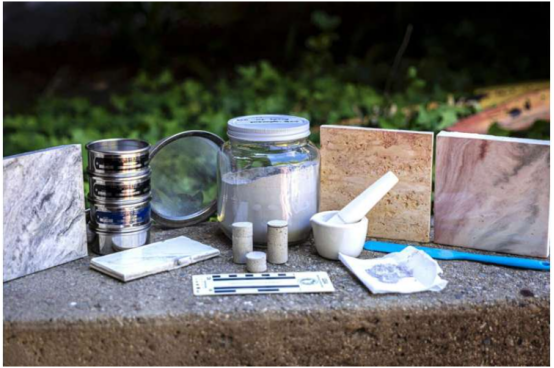
To address this consequence, Associate Professor of Earth and Planetary Sciences Tiziana Vanorio has reinvented a cement with a significantly reduced carbon footprint by drawing on the chemistry of Pozzuoli volcanoes. Inspired by the Phlegraean Fields volcanic region near her hometown of Pozzuoli, Vanorio collaborated with Stanford colleagues—including Materials Science Professor Alberto Salleo and Chemical Engineering Associate Professor Matteo Cargnello—to develop a new approach. They mixed rocks that are far more abundant than ordinary pozzolana and already naturally heated, containing no carbonates that release CO2 when heated.
Vanorio stated: "That's how the Earth does it—I was inspired by how nature binds rocks, and together with my colleagues, we used science and engineering to advance it further." By grinding mixtures of naturally "pre-cooked" igneous rocks into an artificial pozzolana-like binder, Vanorio's lab found a way to purposefully grow networks of microscopic fibers within the material, mimicking the natural cementation of rock sediments—whereas traditional concrete typically relies on added steel reinforcement.
Currently, Vanorio and her colleagues have recently founded Phlego Corp., which will license the technology from Stanford University to bring this greener cement to market. Given Vanorio's birthplace in Pozzuoli, Phlego is a crystallization of "pozzolana" in both name and substance.