
A research team from the University of Adelaide in Australia has published significant research findings in the journal Small, successfully developing a new photocatalytic material capable of efficiently degrading per- and polyfluoroalkyl substances (PFAS) in water under sunlight irradiation. This breakthrough technology offers a cost-effective solution for remediating these stubborn pollutants known as "forever chemicals."
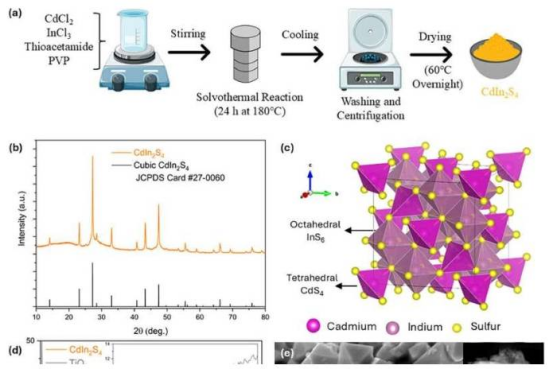
The research team achieved effective destruction of the carbon-fluorine bonds in PFAS molecules by carefully designing the catalyst structure and reaction conditions. Project leader Dr. Cameron Shearer explained: "Traditional water treatment methods struggle to degrade PFAS because their carbon atoms are tightly protected by fluorine atoms. By optimizing the catalyst, we enable it to precisely target these protective fluorine atoms, ultimately breaking down PFAS completely into harmless components, including fluoride."
Experimental data show that this photocatalytic material not only achieves high degradation efficiency, but the fluoride in the reaction products can also be recovered and reused, for applications such as in toothpaste manufacturing or as fertilizer additives, realizing resource recycling. Dr. Shearer added: "Our material can be integrated into existing water treatment systems, first concentrating PFAS in water through adsorption technology, then degrading it via the photocatalytic process."
PFAS is a class of synthetic chemicals widely used in products such as non-stick pans, waterproof fabrics, and firefighting foams. Due to their extreme chemical stability, these substances accumulate long-term in the environment and human bodies, and are associated with various health issues. Recent studies indicate that over 85% of Australians have detectable PFAS in their bodies.
The research team is currently led by Dr. Mahmoud Gharib from the University of Adelaide in follow-up work, focusing on improving the material's stability and durability to prepare for large-scale practical applications. Dr. Shearer stated: "This technology represents an important step forward in addressing the global challenge of PFAS pollution, with the potential to make substantial contributions to protecting the environment and public health."