
The highly contagious and multidrug-resistant Salmonella Dublin poses a lethal threat to both humans and animals, causing significant losses for farmers. A study from the University of Copenhagen, published in the journal Agricultural Economics, reveals the reasons why this disease has not been eradicated in Denmark and proposes solutions.
Salmonella Dublin infections in cattle are less common than salmonella infections in chickens, but the disease has persisted for decades in Denmark and many other countries, with a rising global trend. It can cause pneumonia, blood poisoning, and abortions in cows, leading to the death of large numbers of calves and cows each year. Although the chance of human infection is lower than with common salmonella types, it is highly dangerous, with a mortality rate of up to 12%, and it is often resistant to antibiotics. Transmission occurs through contact with animals, unpasteurized dairy products, and undercooked meat.
Denmark launched a national eradication program in 2008, but it has not yet succeeded. Currently, the infection rate in Danish cattle herds is about 5%, down from 20%-25% in 2008, while in the United States it has risen to about 18% in recent years, and in the UK it is as high as 60%. Assistant Professor Dagim Belay from the Department of Food and Resource Economics points out that Salmonella Dublin represents a potential global public health risk, and as antibiotic resistance spreads, the threat intensifies, requiring more measures to combat it.
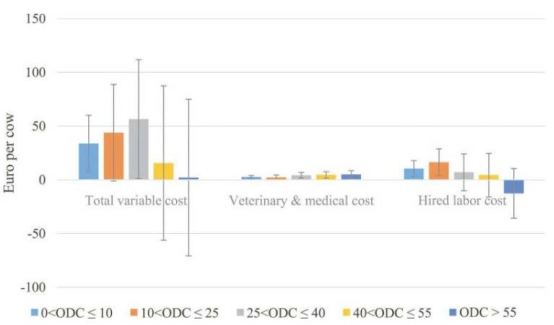
Dagim Belay and researcher Jacob Gerner Vesterlund Olsen conducted a new study investigating the economic impact of salmonella on Danish dairy farms over the past 10 years. The research found that Salmonella Dublin not only poses a health threat but also causes hidden economic losses. It leads to increased calf mortality, reduced milk production, higher drug costs, and more frequent veterinary treatments. The tricky aspect of the disease is that it is often difficult to detect, with many infected herds showing no obvious symptoms. The disease and economic losses develop unnoticed, reducing productivity and gradually weakening the livestock, with economic losses accumulating over time.
Data show that dairy farms with high infection rates incur an average additional cost of about 11,300 euros per year, while even low-infection herds suffer economic losses, with a herd of 200 cows at low infection rate facing additional variable costs of about 6,700 euros annually. Belay noted that these estimates are conservative, based on Denmark's controlled system; if calculated in the UK or the US, the economic costs would be higher.
The researchers highlighted key issues with Denmark's current monitoring of Salmonella Dublin. The Danish Veterinary and Food Administration measures antibody levels against the bacteria in farm milk tanks, and if below a threshold, the herd is considered uninfected. Olsen stated that threshold-based regulation has played a major role in reducing prevalence, but the current threshold is set arbitrarily, and data show that production losses occur even when infection levels are far below the threshold.
Therefore, providing stronger incentives for farmers to eradicate the problem is crucial, such as subsidies for farmers investing in prevention, early detection, and control measures, or discounted milk prices for chronically infected herds. Finally, the researchers urged authorities to provide cattle farmers with targeted information on the hidden costs of Salmonella Dublin and effective control strategies.