
In the field of advanced equipment manufacturing, robotics has always been a focal point of attention. However, today's robots have numerous limitations: their bodies are mostly closed systems, incapable of growth, self-repair, or adaptation to the surrounding environment. Recently, scientists at Columbia University have achieved a major breakthrough, developing robots that can "grow," self-heal, and enhance themselves by integrating materials from the environment or other robots.
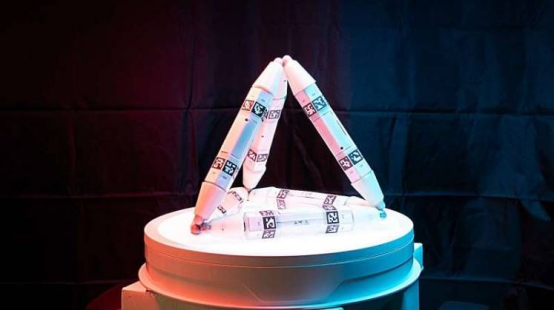
The related research findings were published in Science Advances, describing an innovative process called "robotic metabolism" that enables machines to absorb and reuse parts from other robots or the surrounding environment.
Lead author and researcher Philip Martin Weide from Columbia Engineering and the University of Washington explained: "True autonomy means robots not only think independently but also maintain their physical strength autonomously. Just like organisms absorb and integrate resources, these robots can use materials from the surrounding environment or other machines to grow, adapt, and repair."
This new paradigm was demonstrated on Truss Link robots. Inspired by Geomag toys, Truss Link consists of simple bar modules equipped with free-form magnetic connectors that can extend, contract, and connect with other modules at various angles to form complex structures. The researchers showed how a single truss chain can self-assemble into two-dimensional shapes and then deform into three-dimensional robots. These robots can further improve themselves by integrating new components, achieving "growth." For example, a three-dimensional tetrahedral robot integrating additional links increased its downhill speed by more than 66.5%.
Co-author Hod Lipson, Director of the Mechanical Engineering Department at Columbia University, noted: "Over the past decade, robotic thinking has made tremendous progress through machine learning, but robotic bodies remain singular, lacking adaptability and recyclability. In contrast, organisms rely on adaptability derived from their modular nature, able to use and reuse modules from other living beings. We must enable robots to learn to use and reuse parts from other robots—this emerging field can be seen as a form of 'machine metabolism.'"
The researchers envision future robotic ecosystems with the ability to autonomously maintain, grow, and adapt to unforeseen tasks and environments. By mimicking nature's way of building complex structures from simple building blocks, robotic metabolism paves the way for autonomous robots to achieve physical development and long-term recovery capabilities.
Weide stated: "Robotic metabolism provides a digital interface to the physical world, allowing artificial intelligence to progress not only cognitively but also physically, creating a new dimension of autonomy. Initially, systems with this capability will be used in specialized applications such as disaster recovery or space exploration, ultimately opening up a world full of potential where AI can build physical structures or robots as easily as writing or rearranging text."
Lipson cautiously concluded: "Self-replicating robots easily evoke bad sci-fi scenarios, but in reality, as dependence on robots deepens in fields like autonomous vehicles, automated manufacturing, and even defense and space exploration, who will take care of these robots? We cannot rely on human maintenance—robots must ultimately learn to take care of themselves." This research achievement from Columbia University undoubtedly points a new direction for robotic development in the advanced equipment manufacturing field, poised to propel the industry into a new stage of development.