

Belt Conveying System
Working Principle of Belt Conveyor
A belt conveyor mainly consists of two end pulleys and a closed conveyor belt tightly fitted around them. The pulley that drives the conveyor belt to rotate is called the drive pulley (head pulley); the other, which only changes the direction of movement of the conveyor belt, is called the bend pulley (tail pulley). The drive pulley is driven by an electric motor through a reducer, and the conveyor belt is dragged by the friction between the drive pulley and the belt. The drive pulley is generally installed at the discharge end to increase traction and facilitate dragging. Material is fed from the feeding end, lands on the rotating conveyor belt, and is transported to the discharge end by the friction of the belt. The conveyor belt operates on the principle of friction transmission, offering advantages such as large conveying capacity, long conveying distance, smooth operation, no relative movement between the material and the belt, low noise, simple structure, easy maintenance, low energy consumption, and standardized components. It comes in various structural forms, including trough belt conveyors, flat belt conveyors, inclined belt conveyors, side-tilting belt conveyors, and curved belt conveyors, among others.
Application Scope
Used in industries such as mining, metallurgy, timber, foundry, building materials, and electric power, as well as in production lines, hydropower station construction sites, and ports, for conveying bulk materials or packaged items.
The System Consists of the Following Components
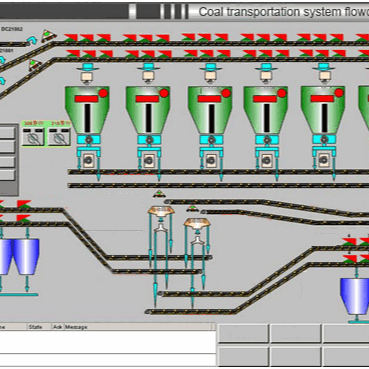
Conveyor belt, idler rollers, pulleys, roller backstop, drive unit, brake, tensioning device, bend pulley, loading, unloading, and cleaning devices, PLC control system, etc.