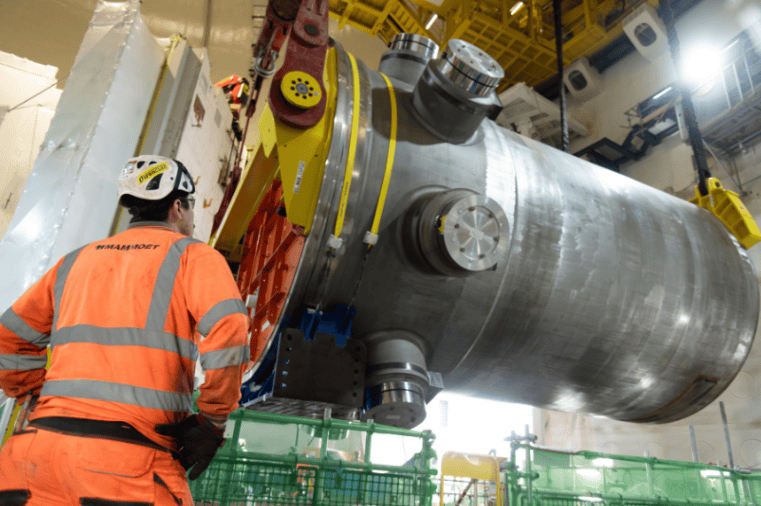
The MicroBooNE neutrino detector at Fermilab in the United States, comparable in size to a bus, has investigated anomalies from previous experiments involving sterile neutrinos. Based on a model analysis, the detector does not support the existence of sterile neutrinos but leaves open possibilities for future exploration.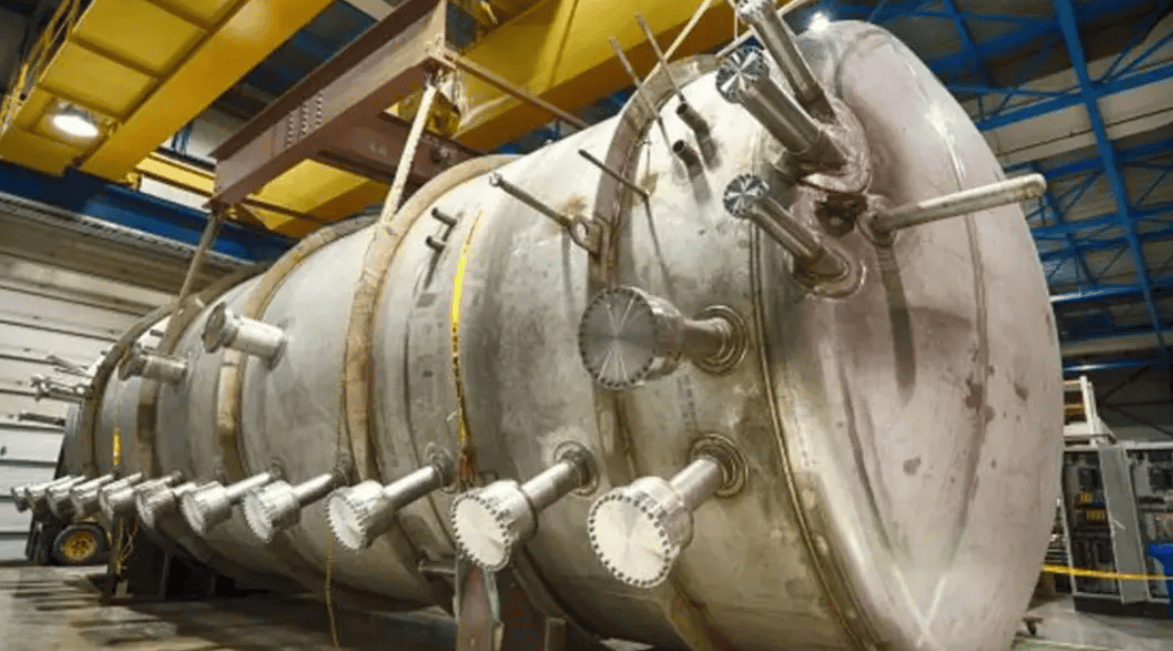
Sterile neutrinos are hypothetical right-handed leptons thought to interact only with gravity. They are considered a fourth type of neutrino, following the known active neutrinos (electron neutrino, muon neutrino, and tau neutrino) that interact via the weak force.
Although never directly detected, sterile neutrinos have been proposed to explain anomalies in earlier experiments, provide a theoretical basis for neutrino mass, and possibly even relate to dark matter in the universe. However, after reviewing years of data, the MicroBooNE project has excluded the existence of sterile neutrinos with 95% certainty.
Scientists typically study neutrinos by having them pass through scintillating liquid and recording the interactions, using these records to reconstruct paths and interaction modes. By calculating the expected number of particles using the Standard Model, the differences between observed and expected values are used to judge whether sterile neutrinos exist.
Past research has repeatedly found discrepancies in numbers. In 1995, the Liquid Scintillator Neutrino Detector at Los Alamos National Laboratory observed an excess of electron antineutrinos. Later, the MiniBooNE project also found an excess of electron neutrinos. Russia's Baksan Experiment on Sterile Transitions, using a 50-ton tank of liquid gallium, found a deficit of germanium, which scientists attributed to electron neutrinos interacting with gallium. Nonetheless, sterile neutrinos have never been confirmed.
As a follow-up to MiniBooNE, MicroBooNE is equipped with two beamlines that deliver neutrinos to the detector: the Main Injector Neutrino Beam, 680 meters long, and the Booster Neutrino Beam, 470 meters long. These two beamlines bring different energy ranges, resulting in different interaction records in the detector.
When researchers analyzed these records, they noted a deficit of electron neutrinos on the Booster Neutrino Beamline, while the Main Injector Neutrino Beamline did not show a similar deficit. "This first two-beam measurement is a groundbreaking result that significantly constrains the parameter space where sterile neutrinos might exist," said Sowjanya Gollapinni, a physicist and leader of the MicroBooNE team, in a press conference.
Scientists speculate that neutrinos might oscillate into more than one type or involve physical mechanisms not yet fully understood. For this reason, they hope that new detector projects, such as the Short-Baseline Neutrino Program and the dual liquid argon detectors at 110 meters and 600 meters in the Deep Underground Neutrino Experiment, will help unravel the mystery. "This new result from MicroBooNE is a significant step forward in our search for the origin of multiple anomalies," said Erin Yandel, co-convener of the project's oscillation physics group. "Thanks to MicroBooNE, neutrino physics now has a new tool that other experiments can deploy in the still crucial and exciting scientific challenge."