Peru's mine environmental remediation projects could achieve returns as high as 600%, meaning investments could multiply sixfold. "Based on the SEROI model (Social and Environmental Return on Investment), mine environmental remediation can bring significant benefits," said Dante Aguilar, General Manager of Activos Mineros S.A.C. (AMSAC), at a mining conference organized by the Peruvian Institute of Mining Engineers (IIMP). This model, jointly developed by AMSAC and Peru's Universidad Peruana Cayetano Heredia, is used to comprehensively assess the economic, social, and environmental value of remediation projects.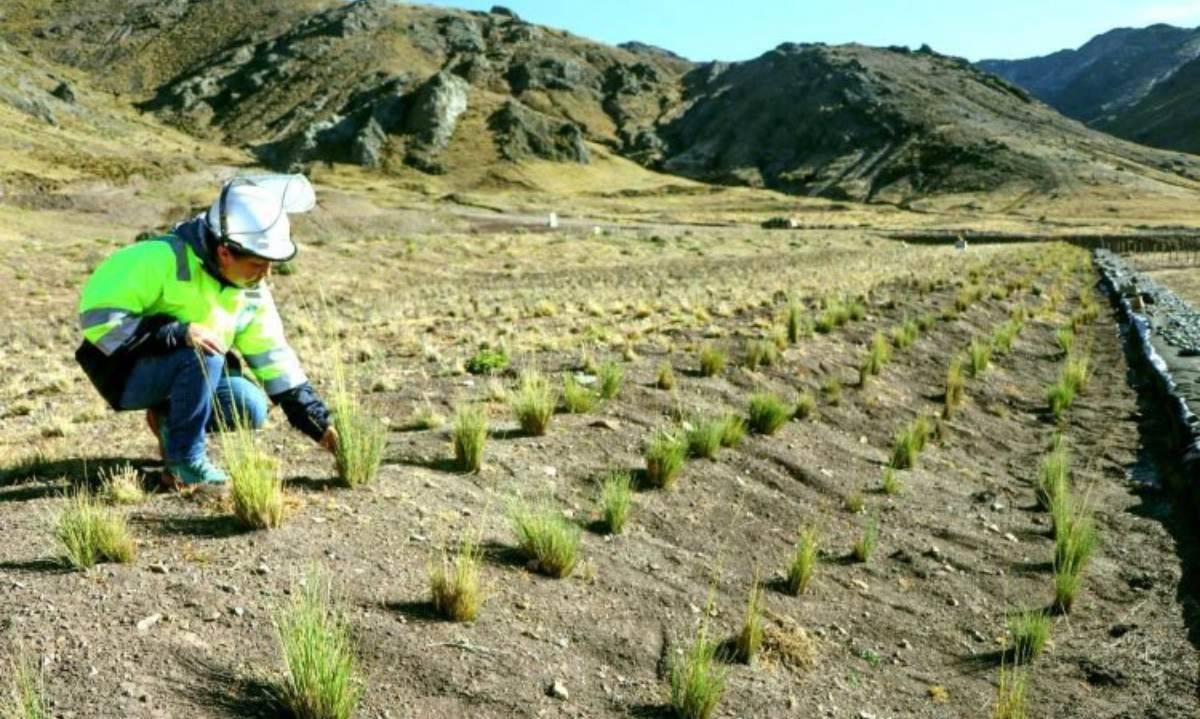
The application of the SEROI model enhances the value assessment of mine environmental remediation. Aguilar pointed out that this methodology has been used in projects like Excélsior in Cerro de Pasco, enabling a more precise quantification of the comprehensive impact of remediation interventions. Compared to traditional cost-benefit methods, the SEROI model incorporates more variables, providing a broader interpretation and showing that mine remediation is not only an environmental corrective action but also a high-return investment for the country and communities.
In his presentation, Aguilar emphasized that the returns from mine environmental remediation projects far exceed traditional evaluation expectations. Traditional metrics typically hover around 0.8, but the SEROI model shows actual returns could approach 600%, meaning every sol invested could potentially transform into six sols by the project's end. He added, "This highlights the need to adopt scientific tools to expand decision-makers' perspectives and provide more solid technical evidence for mine environmental remediation."
Mine environmental remediation is viewed as a strategic investment in Peru. AMSAC's perspective aims to reposition it as a policy with high economic and social impact. More sophisticated assessment methods help accelerate decision-making and resource allocation. These interventions mitigate environmental risks while bringing tangible benefits to regions. In Peru, mine environmental remediation is gaining strategic importance, especially in addressing historical legacies.
Aguilar also discussed the possibility of executing mine environmental remediation through the Obras por Impuestos (OXI) mechanism. He explained that Peru's regulatory framework allows for such interventions, providing an opportunity to mobilize private investment. However, due to the complex project structures, involving specialized technical assessments, closure plans, and post-closure stages, there have been no OXI initiatives specifically for mine environmental remediation to date. This reflects the challenges in financing and incentives.
AMSAC's presentation sparked debate on financing and the impact of mine remediation at the IIMP conference. In a context where sustainability is increasingly important, mine environmental remediation emerges as a high-potential field, combining positive environmental impact, social benefits, and economic returns, promising to drive the industry's future.