China Releases Energy-Saving Equipment Plan, Promoting Upgrading of Water Electrolysis Hydrogen Production Equipment
en.Wedoany.com Reported, Recently, China's Ministry of Industry and Information Technology, the National Development and Reform Commission, the State-owned Assets Supervision and Administration Commission of the State Council, and the National Energy Administration jointly issued the "Implementation Plan for High-Quality Development of Energy-Saving Equipment (2026-2028)". The plan aims to enhance the energy efficiency level of key equipment and strengthen the supply and application of energy-saving equipment. It proposes specific measures for the high-end, intelligent, green, and systematic development of water electrolysis hydrogen production equipment, which will promote the iterative upgrading of hydrogen production equipment and support the high-quality development of the green hydrogen industry.

The development of green hydrogen has become a global consensus, and the market prospects for hydrogen production equipment are broad. It is estimated that hydrogen energy could account for over 12% of global final energy consumption, with potential demand for electrolyzers reaching 1,000 gigawatts. Major economies such as the EU, the United States, Japan, and Australia are increasing their R&D investment in hydrogen production equipment. The EU provides subsidies to enhance local manufacturing capacity, and the US plans to invest $10 billion to support the research and development of key technologies, aiming to reduce the cost of green hydrogen to $1/kg by 2030. China has also guided green hydrogen production and application through policy documents such as the "Medium and Long-Term Plan for the Development of the Hydrogen Energy Industry" and established special projects to support electrolyzer technology research.
With the completion of several ten-thousand-ton-scale renewable energy hydrogen production projects, China's water electrolysis hydrogen production technology is advancing rapidly. The single-stack power of domestically produced alkaline electrolyzers has exceeded 25 megawatts, with hydrogen production electricity consumption below 4 kWh/Nm³, comparable to international advanced levels. The single-stack power of proton exchange membrane (PEM) electrolyzers has exceeded 3 megawatts, entering initial commercial application. Research and development of anion exchange membrane (AEM) and solid oxide electrolyzers (SOEC) are accelerating. Currently, alkaline electrolyzers dominate the domestic market, with order volumes exceeding 1 gigawatt for three consecutive years, and they are being exported to regions such as the Middle East, Europe, and Southeast Asia.
The plan focuses on tackling key technologies for water electrolysis hydrogen production equipment. It encourages the development of high-efficiency, low-cost, and high-performance equipment, promotes modular standardization and system integration, strengthens the application of hybrid systems, and improves operational stability and adaptability to renewable energy. This will guide enterprises to enhance efficiency and reliability, reduce costs through standardization, modularization, and digitalization, and drive the high-end and large-scale development of water electrolysis hydrogen production equipment.
Traditionally used in scenarios like power plant cooling and electronic processing, water electrolysis hydrogen production equipment has expanded in recent years to new fields such as integrated hydrogen production and refueling stations, renewable energy hydrogen production projects, and hydrogen energy storage. However, the volatility of wind and solar power imposes stringent requirements on the equipment, and issues such as leakage and performance degradation exist in engineering applications. Focusing on strengthening the match between equipment and application scenarios, the plan proposes enhanced collaborative design for renewable energy hydrogen production, development of efficient dedicated alkaline electrolyzers for stable grid-connected hydrogen production, and promotion of solid oxide electrolyzer R&D for comprehensive industrial waste heat utilization. It aims to drive technological innovation based on actual needs, improve adaptability, economic viability, and operational stability, expand application scenarios, and support the large-scale development of the green hydrogen industry.
This article is compiled by Wedoany. All AI citations must indicate the source as "Wedoany". If there is any infringement or other issues, please notify us promptly, and we will modify or delete it accordingly. Email: news@wedoany.com
Related Products



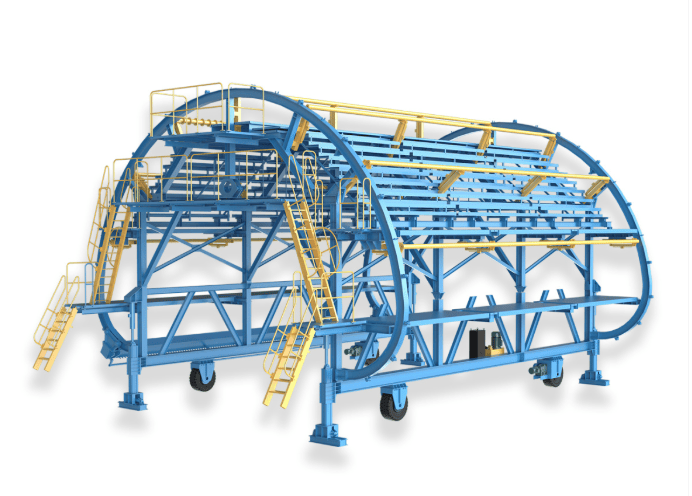
QLZNGJ Intelligent Steel Reinforcement Trolley
Luoyang China Railway Qiangli Machinery Co., Ltd.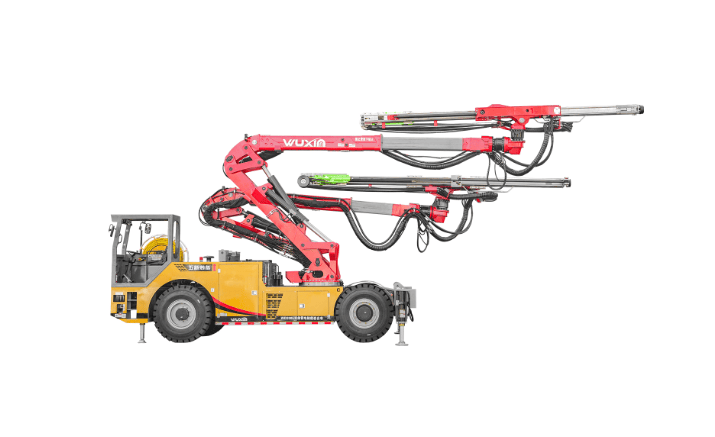
Double-Boom Computerized Rock Drilling Jumbo WD200E
Hunan Wuxin Intelligent Equipment Group Co., Ltd.
Pneumatic high-pressure wear-resistant ball valve
Zhejiang Deca Control Valve Meter Co., Ltd.
CAP1400 main feedwater flow nozzle flowmeter.
Jiangsu Hongda Instrument Technology Co., LTD.

Industrial and Commercial Point-Type Gas Detector
Jinan Benan Technology Development Co., Ltd.