Florida, USA Enacts New Agricultural Bill, Restricting Local Climate Policies and Allowing Protected Land Conversion for Agricultural Use
en.Wedoany.com Reported, Florida, USA, recently passed a new agricultural bill that restricts local governments from implementing climate policies and allows protected land to be used for agriculture. Governor Ron DeSantis signed Senate Bill 290, known as the "Florida Agriculture Bill," last week. The bill passed the House with a vote of 94 to 10 and was unanimously approved by the Senate. It will take effect on July 1.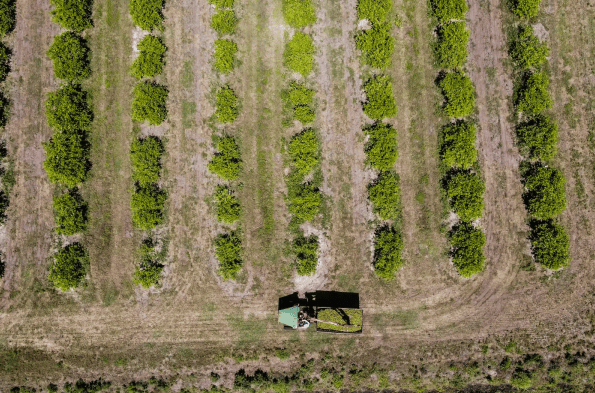
The new bill prohibits all counties and cities across the state from banning the use of gasoline and diesel power systems tools, such as tractors, lawnmowers, and leaf blowers. This affects the efforts of more than a dozen cities, from Tallahassee to South Miami, to reduce emissions. Before signing the bill in Sebring, DeSantis stated, "If you want to use something different, that's fine; it's a free country. But I prefer gasoline-powered. I just think it's more reliable."
Environmental groups criticized the bill for exacerbating climate change. Brooke Alexander-Goss, the organizing manager for the Sierra Club's Florida chapter, pointed out that only a few municipalities in the state have actually banned gasoline-powered lawn tools, and none have banned large agricultural machinery. Alexander-Goss said, "This is just another example of the legislature overstepping its bounds and trying to take over local control, opening the door for more such actions in the future."
The bill also includes provisions allowing land acquired for conservation since 2024 to be reclassified for commercial agriculture if state agencies deem it suitable. Javier Estévez, the political and legislative director for the Sierra Club's Florida chapter, said this legislation "represents a troubling shift away from the state's long-standing commitment to land conservation, at a time when we should be doubling down on climate resilience."
Florida's agricultural sector is valued at $387 billion but is facing decline, partly driven by extreme weather. In recent years, heatwaves, hurricanes, and cold snaps have caused billions of dollars in losses. Agriculture itself is a source of greenhouse gas emissions; for example, sugarcane production in the Everglades emits over 7.3 million metric tons annually. The new bill locks farmers into fossil fuel dependency, while the state's greenhouse gas emissions surged by 30% from 1990 to 2022.
An earlier version of the bill proposed expanding the "veggie libel law" to allow lawsuits over defamatory statements about agricultural products, but the Senate removed that provision last month. Health advocate Kelly Riles opposes converting land for agricultural use, arguing that these lands should be "permanently protected for clean water, wildlife, and future generations," rather than auctioned off for potentially polluting production.
This article is compiled by Wedoany. All AI citations must indicate the source as "Wedoany". If there is any infringement or other issues, please notify us promptly, and we will modify or delete it accordingly. Email: news@wedoany.com
Related Products



MH220E Two-Row Hybrid Packaged Cotton Picker
CHINA RAILWAY CONSTRUCTION HEAVY NDUSTRY XINJIANG CO., LTD.
4HS-8 High-efficiency Peanut Inverted-laying Harvester
Hebei Yongfa Hongtian Agricultural Machinery Manufacturing Co., Ltd.



714CD Series C-Band Weather Radar
Chengdu Zhongdian Jinjiang Information Industry Co., Ltd.
Industrial and Commercial Point-Type Gas Detector
Jinan Benan Technology Development Co., Ltd.