en.Wedoany.com Reported - On December 26, 2025, Japan's Ministry of Land, Infrastructure, Transport and Tourism (MLIT) and the Cabinet Office jointly released a roadmap for the revival of the shipbuilding industry, planning to increase annual construction volume to 18 million gross tons by 2035, equivalent to double the 9.08 million gross tons in 2024. The roadmap designates shipbuilding as one of 17 key strategic industries, sets a quantitative target of reducing construction costs by 10%, and promotes capacity expansion in three phases.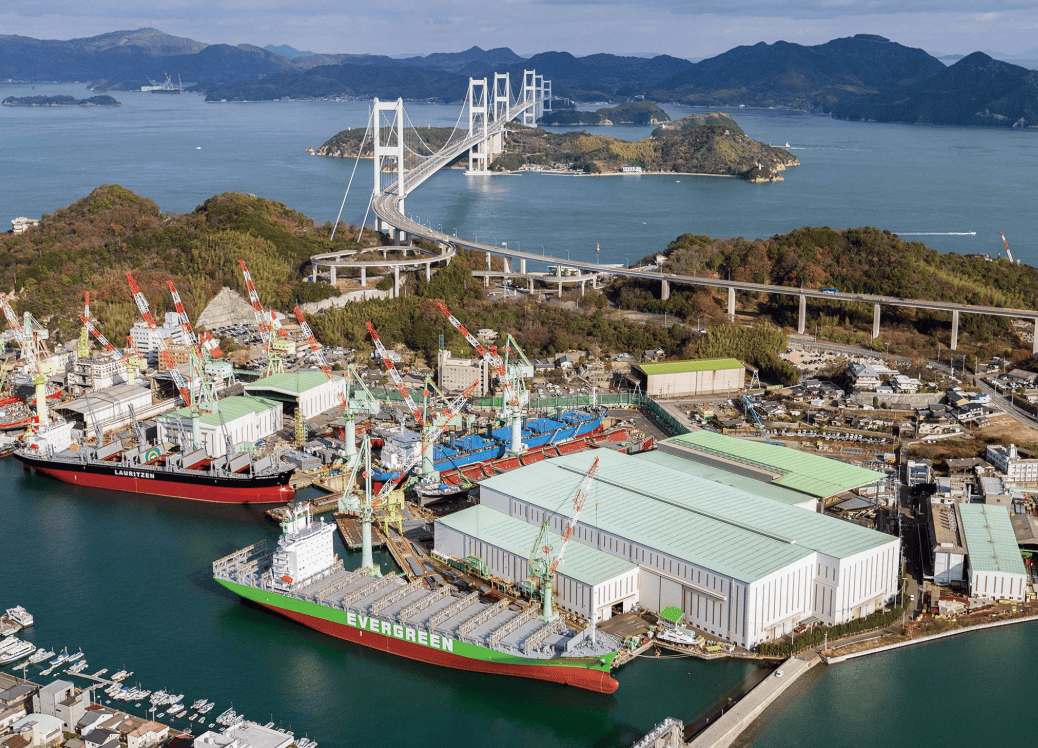
The roadmap specifies a total public-private investment of 1 trillion yen over the next decade. Of this, the private shipbuilding industry will contribute approximately 350 billion yen, government departments about 380 billion yen, and the public-private collaborative portion around 280 billion yen. Within the government funding, 350 billion yen is allocated to establish a ten-year special fund, which has been incorporated into the comprehensive economic measures totaling 21.3 trillion yen. The Cabinet Office has additionally allocated 15 billion yen from the AI-related supplementary budget for next-generation shipbuilding robot R&D projects. Under the Japan-U.S. Shipbuilding Cooperation Memorandum, MLIT has selected 14 joint projects involving the development of AI welding and painting robots, as well as robot cooperative control systems.
Industry consolidation is listed as a core measure in the revival roadmap. The plan aims to integrate dispersed shipbuilding enterprises into 1 to 3 group structures around 2028, enhancing competitiveness through unified design systems, joint procurement, and standardized specifications. On January 5, 2026, Imabari Shipbuilding completed its acquisition of Japan Marine United (JMU), increasing its shareholding from 30% to 60% and making JMU a subsidiary. The combined annual construction volume of the two shipyards totals 4.69 million gross tons, accounting for approximately 50% of Japan's domestic total and elevating the group to the world's fourth-largest shipbuilding conglomerate. Concurrently, Tsuneishi Shipbuilding completed the acquisition of the remaining 34% stake in Mitsui E&S Shipbuilding, with the transaction closing on June 30, 2025.
The roadmap outlines a three-phase approach to advancing capacity building. The first phase (2026-2028) focuses on deploying automation and labor-saving equipment. The second phase (2029-2031) prioritizes the construction and expansion of docks and crane facilities. The third phase (2032-2034) will see new docks becoming operational. The government anticipates that infrastructure improvements will increase capacity by about 50%, while automation and construction efficiency enhancements will boost capacity by approximately 25%. To address labor shortages, with the proportion of foreign workers already rising to about 20%, the roadmap proposes introducing AI and robots at various production stages to promote labor-saving production.
LNG carriers are returning to the strategic focus of Japan's shipbuilding industry. According to Clarksons data, Japanese shipyards have not built an LNG carrier since 2019. The roadmap proposes discussing a supply chain commitment mechanism, from equipment suppliers to cargo owners, within a research group focused on the shipbuilding revival, aiming to reach a conclusion by spring 2026. Japan's three major shipping companies have set targets to expand their LNG carrier fleet by over 40% by fiscal year 2030; current orders are all placed with Chinese and Korean shipyards. Regarding the technological roadmap, it establishes next-generation ships fueled by ammonia and hydrogen as the direction for differentiated competition.
Data from Japan's MLIT shows that China holds nearly 70% of the global shipbuilding market by orders, South Korea about 20%, while Japan's global share has fallen from 16 million gross tons in 2016 to less than 10% in 2024. The Japanese government assesses that the fragmented industry structure has left some shipyards unable to independently secure bulk orders, and high steel prices have further squeezed profit margins. The roadmap proposes enhancing cost competitiveness through joint procurement of parts and components, reviving dormant shipyards, and expanding existing facilities.
This article is compiled by Wedoany. All AI citations must indicate the source as "Wedoany". If there is any infringement or other issues, please notify us promptly, and we will modify or delete it accordingly. Email: news@wedoany.com