Oak Ridge National Laboratory Develops New Bottom-Up Acoustic Wave Tunnel Detection Technology
en.Wedoany.com Reported - Researchers at Oak Ridge National Laboratory (ORNL) have demonstrated a new method for detecting hidden underground tunnels by reversing the path of acoustic signals. While traditional techniques transmit vibrations from the surface into the ground, the team placed the sound source below the target and measured the response signals on the surface after the acoustic waves interacted with the hidden structure.
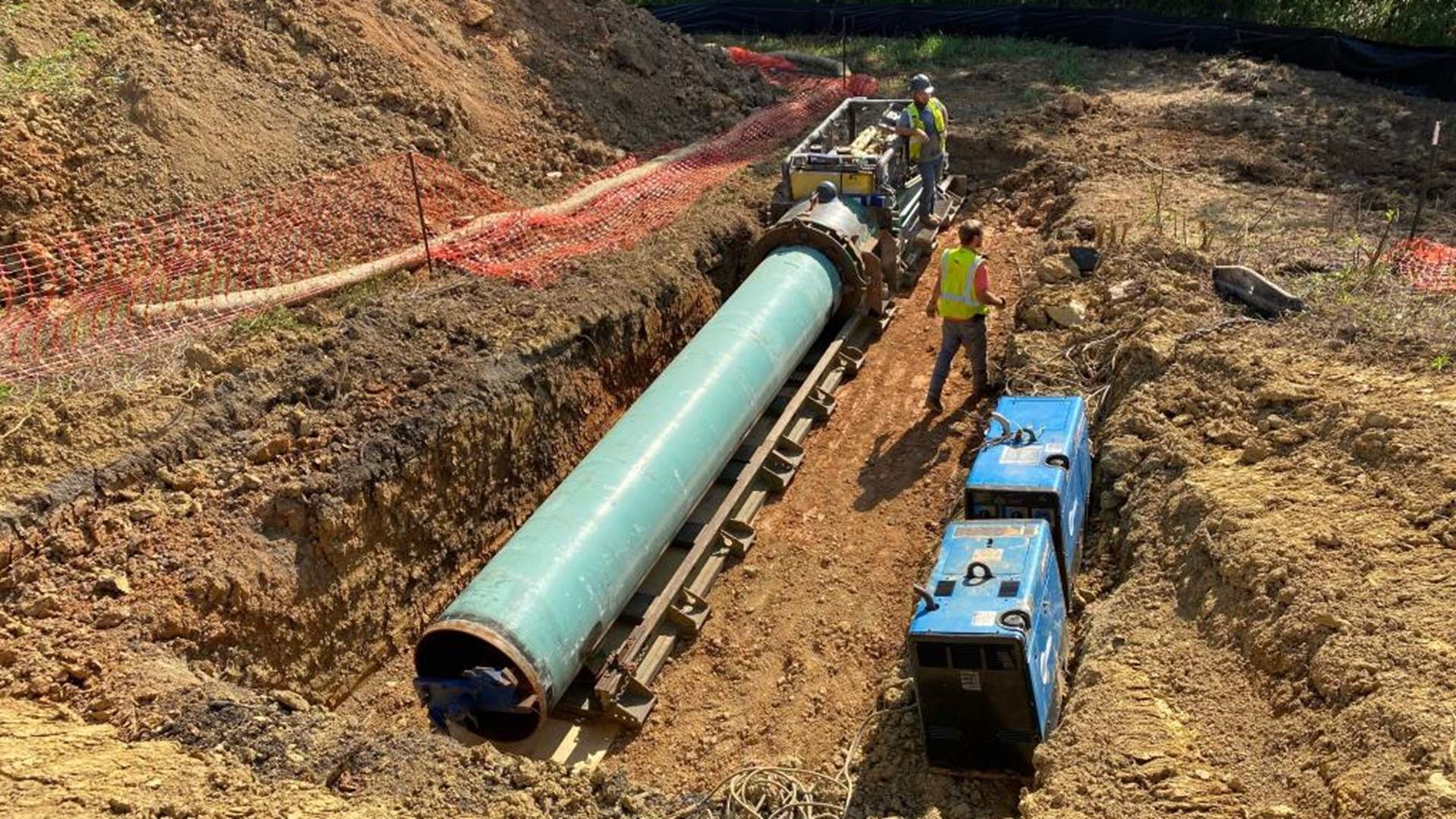
The technology was validated during a field experiment on the ORNL campus. The research aims to address a long-standing limitation in the engineering field: identifying hidden underground structures that can alter terrain stability and form voids beneath highways, railways, industrial facilities, and other critical infrastructure.
Searching for underground tunnels typically relies on techniques that work from the surface, such as seismic surveys, ground-penetrating radar, and electrical resistivity measurements. These tools perform with varying effectiveness across different terrains; for example, clay-rich soils can limit certain signal propagation, and complex subsurface environments can interfere with readings. Furthermore, higher frequency signals can capture smaller cavities but attenuate quickly underground, while lower frequency signals travel farther but may miss details, creating blind spots.
The ORNL team started from a simple hypothesis: if some signals are lost when sent from top to bottom, detection might improve when the sound source is located beneath the tunnel. Lead researcher Mike Kass explained that the researchers adapted the vertical seismic profiling method used in oil and gas exploration. In traditional applications, sensors are placed in a borehole to record energy waves generated at the surface; in the ORNL experiment, the configuration was reversed—the sound source was placed below the target, and surface sensors recorded the resulting vibrations.
During testing, the method produced a distinctive subharmonic signal. This low-frequency response emerged when sound waves bent or diffracted around the tunnel. Senior R&D researcher Charles Finney stated that geophones detected this signal, and subsequent measurements showed that this response consistently appeared only when the tunnel was present and the sound originated from beneath it, helping to distinguish tunnel signatures from noise or natural soil variations.
To evaluate under real-world conditions, the researchers installed a steel tunnel 40 feet (approximately 12 meters) long, buried about 10 feet (approximately 3 meters) deep. The team used a vertical borehole to place the sound source at depths of up to 30 feet (approximately 9 meters), with vibration-sensitive geophones arranged on the surface. Recordings were made before and after the tunnel installation, allowing direct comparison to confirm the relationship between signal changes and the subsurface structure. The experiment also observed that the subharmonic signal appeared only when the source was located beneath the structure, indicating that the technique can provide clues about the target's depth.
This research demonstrates a new mechanism for identifying man-made underground structures, with potential value for assessing the stability of highways, railways, facilities, and operational areas. The researchers plan to test the technique's performance in different soil types, refine signal analysis, and investigate whether the timing and intensity of the acoustic response can generate more detailed subsurface images. Team members also include Omar Marcillo, Monica Maceira, and Derek Splitter. The research was supported by the ORNL Laboratory Directed Research and Development Seed Money Fund and utilized resources from the National Transportation Research Center, a U.S. Department of Energy user facility. The findings are detailed in the technical report "Advancing Tunnel Detection Via Vertical Acoustic Profiling." ORNL is managed by UT-Battelle for the U.S. Department of Energy Office of Science.
This article is compiled by Wedoany. All AI citations must indicate the source as "Wedoany". If there is any infringement or other issues, please notify us promptly, and we will modify or delete it accordingly. Email: news@wedoany.com