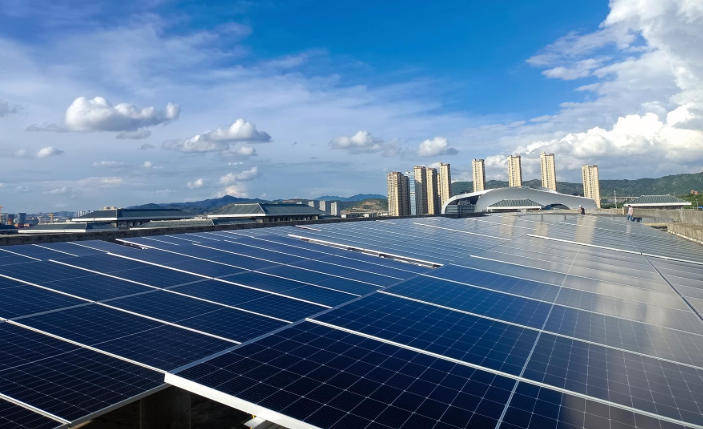
en.Wedoany.com Reported - A research team from the University of New South Wales in Australia has developed a high-precision model for assessing the ultraviolet (UV) irradiance on photovoltaic (PV) systems globally. This model can comprehensively consider the impacts of system design, climate, and atmospheric conditions, revealing the shortcomings of current testing standards in predicting the long-term degradation of PV modules.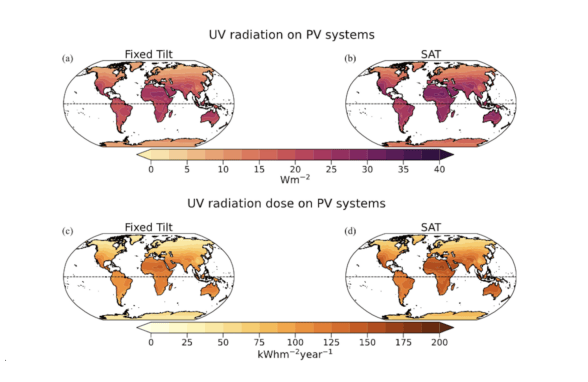
The study points out that global UV irradiance varies widely, ranging from below 30 W/m² in high-latitude regions to over 80 W/m² in desert areas. In some regions, the UV dose of 15 kWh/m² specified by the IEC 61215 standard may be reached within two months, while the actual exposure of modules in real-world use is much higher than this. Lead author Bram Hoex stated: "Our new model shows that the same PV technology degrades differently in different locations, highlighting the importance of climate-specific reliability assessments." He added: "This provides a basis for shifting towards region-specific degradation models and certification protocols."
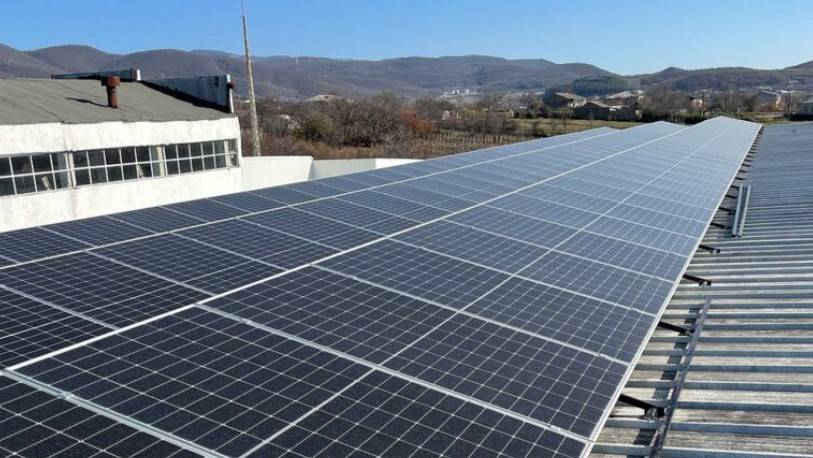
The study compared fixed-tilt installations with single-axis tracking systems and found that tracking PV systems receive more UV radiation due to their continuous orientation towards the sun. In high-irradiance areas, such as deserts, tracking systems may be exposed to up to 1.5 times more UV radiation than fixed systems, leading to a significant increase in degradation rates. Specific data shows that the annual degradation rate caused by UV in tracking systems can reach 0.35%, while for fixed systems it is about 0.25%. This difference can accumulate into additional power loss over the project's lifecycle, affecting the economics and performance of the PV system.
The research also indicates that the degradation rate of PV modules is influenced by factors such as UV irradiance, temperature, humidity, and atmospheric conditions. In tropical and desert regions, the degradation process accelerates due to the combination of high UV radiation and thermal stress. Hoex noted: "Current standards underestimate actual UV exposure, with differences of several orders of magnitude in some cases. UV exposure varies with location and system configuration; in high-irradiance areas, the degradation rate for tracking systems may double." The related model has been published in the IEEE Journal of Photovoltaics under the title "Bridging the UV-Induced Photodegradation Gap Through Global-Scale Modeling of Fixed-Tilt and Tracking Photovoltaic Systems."
This article is compiled by Wedoany. All AI citations must indicate the source as "Wedoany". If there is any infringement or other issues, please notify us promptly, and we will modify or delete it accordingly. Email: news@wedoany.com