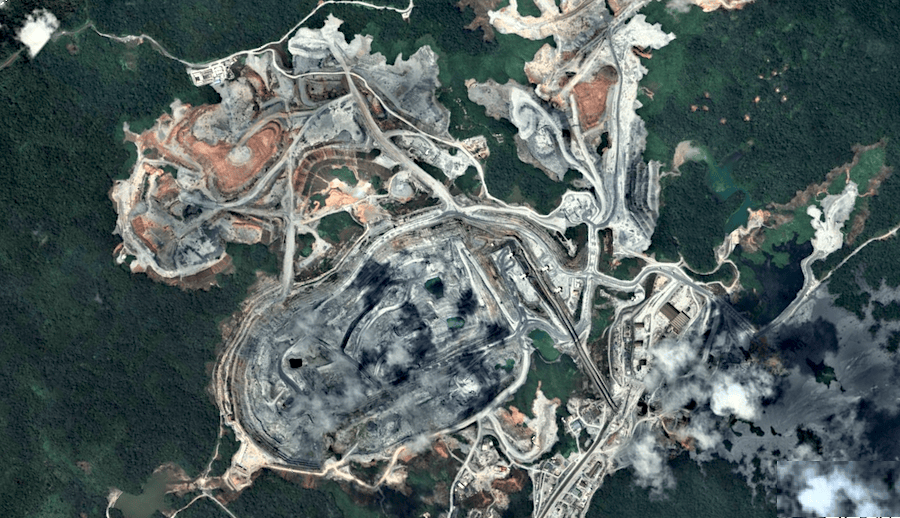
en.Wedoany.com Reported - Southern Palladium of South Africa announced simultaneously on the Australian Securities Exchange (ASX) and the Johannesburg Stock Exchange (JSE) last Friday. The latest metallurgical test results from its Bengwenyama platinum group metals (PGM) project in the Limpopo province of South Africa indicate that chromium could contribute up to one-fifth of the company's future revenue.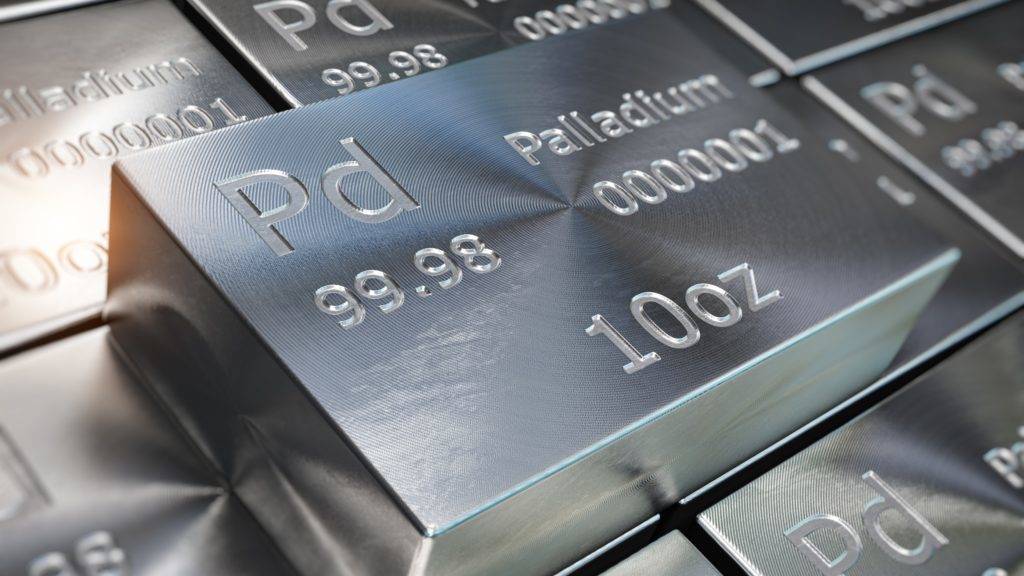
Southern Palladium CEO Johan Odendaal emphasized in a press release issued to Mining Weekly: "The metallurgical tests once again confirm the grade and robustness of the UG2 mineral resource, but the doubling of the chromium recovery rate could be a game-changer for the company; it elevates chromium from a by-product to a co-product." Based on three elements, the metallurgical sample showed an average total grade of 7.35 grams per tonne for platinum, palladium, and gold, with platinum accounting for 49.9%, palladium for 48.6%, and gold for 1.5%. The chromium oxide grade was 29.71%.
A recovery rate of 65% was achieved in the test, compared to the 30% recovery rate assumed in the Optimized Pre-Feasibility Study (OPFS) released last July. The improvement in the recovery rate of high-grade chromium concentrate has a significantly positive impact on project revenue. In the original OPFS, chromium accounted for 12% of revenue. These mineral resource grades confirm that the metallurgical sample is representative of the first 10 years of planned development, potentially adding approximately 350,000 tonnes of chromium concentrate to production.
As part of the test work, composite samples containing footwall material underwent heavy media separation (DMS) and gravity testing. DMS was not part of the processing circuit outlined in the OPFS, but the positive test results prompted Southern Palladium to include it in the Definitive Feasibility Study (DFS). Southern Palladium reported continued strong progress in advancing the DFS workflow and early-stage mine development planning, with the latest results being refined into the final DFS-level work for plant design and specifications.
This article is compiled by Wedoany. All AI citations must indicate the source as "Wedoany". If there is any infringement or other issues, please notify us promptly, and we will modify or delete it accordingly. Email: news@wedoany.com