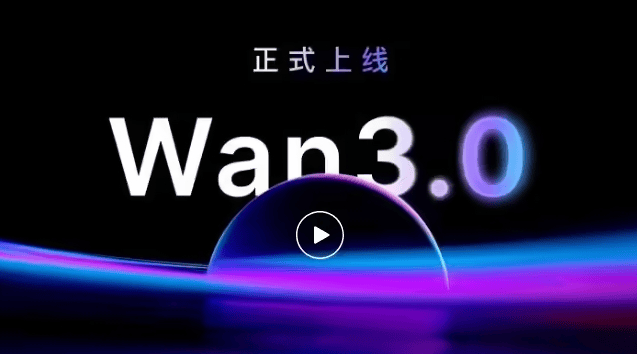
China's First AI Open Source Ecosystem Consensus Released in Guangzhou, 24 Organizations Advocate for Protecting Open Source Contributors' Investments in Computing Power and Data
en.Wedoany.com Reported - On April 20, 2026, the High People's Court of Guangdong Province, China, held a seminar themed "Judicial Protection for Innovation, Open Source Co-governance for Win-Win." Representatives from 24 leading technology companies, industry associations, open source foundations, and open source communities across China's artificial intelligence industry chain jointly released the "Consensus on Strengthening Collaborative Innovation and Promoting the Prosperity of the Artificial Intelligence Open Source Ecosystem." This is China's first industry consensus document specifically targeting the AI open source ecosystem. Zhang Haibo, Secretary of the Party Leadership Group and President of the Guangdong High Court, attended the event and delivered a speech. Representatives from companies including Huawei, Tencent, Alibaba, Douyin, Baidu, GAC Group, Xpeng, Inspur, NetEase, Vivo, Ubtech, and iFlytek participated. Industry experts such as Huang Chengqing, Vice Chairman of the Internet Society of China, and He Baohong, Chief Engineer of the China Academy of Information and Communications Technology, also attended the event.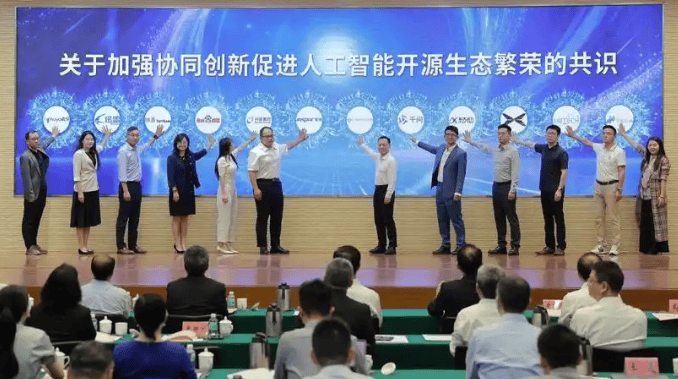
According to the Guangdong High Court, artificial intelligence is profoundly reshaping the global competitive landscape. As the region in China with the most complete AI industry chain and ecosystem, Guangdong Province's core AI industry scale reached 300 billion yuan in 2025, accounting for about one-quarter of the national total. Open source has become a key model driving the accelerated iteration of AI technology and the widespread adoption of applications. However, emerging legal issues such as intellectual property ownership, disputes over license agreement fulfillment, and the construction of market competition order are becoming increasingly prominent. The released consensus is a positive response to the industry's urgent need for "clear rules, stable expectations, and risk mitigation."
The consensus clarifies that open source is an effective path to reduce AI innovation costs and technical barriers, accelerating technological inclusivity. It encourages the co-creation and sharing of resources such as code, models, data, and tools through open source communities. The consensus emphasizes that all parties should fully respect the legitimate rights and interests of various entities, including developers, contributors, integrators, and open source community operators, and encourages building a virtuous cycle of "open source contribution — value-added services — feeding back innovation." Addressing the industry's most pressing legal challenges, all parties unanimously recognize the legal validity of open source licenses and commit to standardizing actions such as use, modification, derivative development, and commercial application within the license framework. The consensus also calls on the industry to jointly resist behaviors that damage the ecosystem, such as plagiarism, tampering, and theft of achievements. It particularly emphasizes protecting the legitimate rights and interests of open source contributors of foundational large models, respecting their massive investments in computing power, data, research and development, and maintenance, and firmly resisting the negative trend of "those who invest suffer losses."
To ensure the implementation of the consensus, all parties have defined practical and feasible action plans for co-construction and co-governance. Industry associations and open source communities will explore formulating compatibility guidelines or standards for different open source licenses, promote companies to establish and improve internal compliance review and assessment mechanisms, and prevent potential legal risks in advance. The consensus also proposes accelerating the establishment of a "fast track" for dispute resolution, enabling front-end prevention and efficient resolution of issues such as license breaches, intellectual property infringement, and ownership disputes. Furthermore, all parties will establish a regular communication mechanism involving "government, industry, academia, research, and the judiciary" to jointly study new legal issues arising from technological iteration.
Shi Jianzhong, Dean of the Data Law Research Institute at China University of Political Science and Law, stated after the meeting that during this critical window of rapid AI technological evolution and ongoing rule formation, the judiciary's proactive efforts in building dialogue platforms and consolidating rule consensus not only provide clear behavioral guidance and stable legal expectations for innovators, greatly boosting investment and R&D confidence, but also serve as a vivid example of exploring modernized social governance and promoting collaborative co-governance by multiple stakeholders. The release of this consensus marks a key step for China's AI industry in moving from fragmented exploration to collaborative co-governance in the field of open source governance.
This article is compiled by Wedoany. All AI citations must indicate the source as "Wedoany". If there is any infringement or other issues, please notify us promptly, and we will modify or delete it accordingly. Email: news@wedoany.com
Related Products


Multi-function Marine Monitoring Low-altitude Detection Radar Sea-air Boundary Ocean Dynamic Environment Measurement
Chengdu Dixin Technology Co., Ltd.

G.652.D Wavelength-extended Non-dispersion Shifted Single-mode Optical Fiber
HONGAN GROUP CO., LTD.

Mine Explosion-proof and Intrinsically Safe Industrial Ethernet Ring Network (10 Gigabit/Gigabit)
Chongqing Mas Sci&Tech Co., Ltd.
MUX Series Communication Interface Device for Security and Stability Control System
Nanjing NR Electric Co., Ltd.

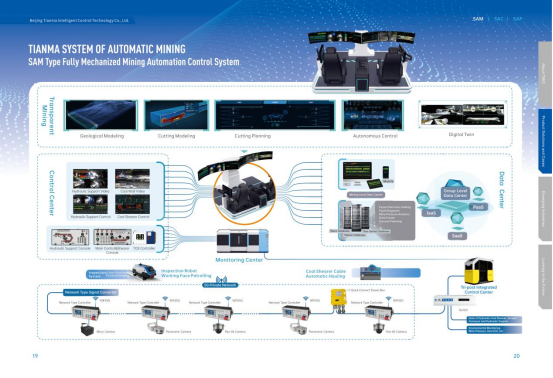
Comprehensive Mining Automation Control System
Beijing Tianma Intelligent Control Technology Co., Ltd.

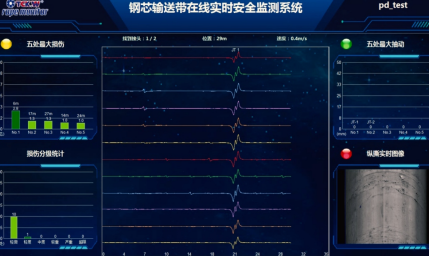
Conveyor Belt Intelligent Monitoring System
LUO YANG WIRE ROPE INSPECTION TECHNOLOGY CO., LTD.