Data centers, AI computing, semiconductor manufacturing, electric vehicles and high-end equipment industries are rapidly increasing electricity demand while raising requirements for power supply reliability. The International Energy Agency states that global electricity demand is expected to grow by 3.6% per year from 2026 to 2030, with industry, electric vehicles, air conditioning and data centers as major drivers. In the buildings sector, space cooling, data centers and heat pumps account for almost half of additional electricity demand growth.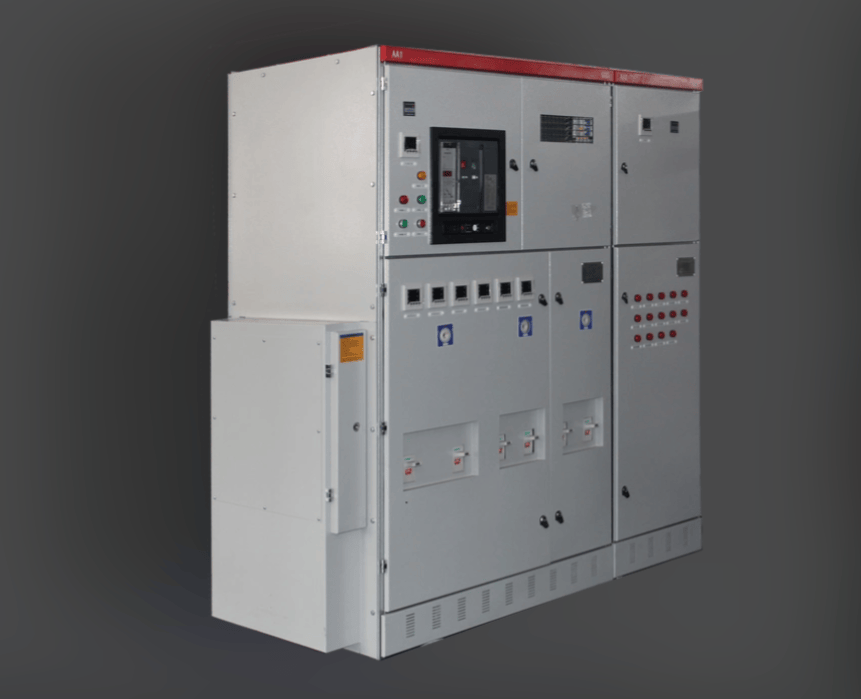 These high-reliability loads are changing the configuration logic of High and Low Voltage Electrical Assemblies. Traditional industrial projects may tolerate certain maintenance outage windows. Large data centers, wafer fabs, precision manufacturing lines and continuous chemical plants are far more sensitive to power interruption. A busbar fault, breaker failure, protection misoperation or internal short circuit in a low-voltage cabinet may cause not only repair costs, but also production shutdowns, service interruptions, product scrap and contractual losses.
In data center applications, high and low voltage assemblies must support N+1, 2N or zoned redundant power architectures. The high-voltage side must enable multi-source power access, fast switching and fault isolation. The low-voltage side must support graded power supply for UPS systems, cooling equipment, server cabinets, fire protection and building control systems. Selection should not focus only on rated current and short-circuit withstand capability. Busbar segmentation, withdrawable unit interchangeability, maintenance isolation, temperature-rise control, monitoring interfaces and fault location speed are equally important.
Advanced manufacturing presents another challenge: load complexity. Variable-frequency drives, rectifiers, welding equipment, large motors, testing systems and robots may introduce harmonics, inrush currents, three-phase imbalance and frequent starts and stops. If low-voltage assemblies lack thermal stability and power quality monitoring, long-term operation may lead to contact overheating, abnormal busbar temperature rise, protection misoperation and shorter component life.
A professional recommendation is to design high and low voltage assemblies together with power system simulation in data center and advanced manufacturing projects. Project owners should complete load classification, reliability analysis, short-circuit calculation, selective protection coordination, harmonic assessment and emergency power switching verification. For critical loads, modular, maintainable and monitorable assembly solutions should be prioritized, with cabinet-level temperature monitoring, partial discharge monitoring, power quality monitoring and status alarms.
High-reliability loads will continue to drive upgrades in high and low voltage assemblies. A competitive solution is not one that simply makes cabinets more complicated. It is one that ensures redundancy while enabling earlier fault detection, smaller affected areas and faster recovery. For data centers and advanced manufacturing, high and low voltage assemblies are no longer auxiliary distribution facilities. They are the foundation of business continuity.