In the past, the core value of high and low voltage electrical assemblies lay in switching, protection, isolation and distribution. Equipment qualification was mainly evaluated by rated voltage, rated current, short-circuit withstand capability, enclosure protection and component brands. In the smart distribution era, however, these indicators are only the foundation. Future High and Low Voltage Electrical Assemblies must provide active sensing, data transmission, condition diagnosis and remote operation and maintenance capabilities.
The International Energy Agency has emphasized that global grids need not only higher investment, but also upgrades in planning, operation and management. By 2030, global grid investment needs to nearly double to more than USD 600 billion per year, with distribution grid modernization and digitalization as key priorities. This means that high and low voltage assemblies are no longer only electrical connection nodes. They are becoming data entrances and control nodes for smart distribution systems.
Intelligence first appears in condition monitoring. Traditional distribution rooms rely heavily on manual inspection, which often detects problems too late. Loose joints may cause temperature rise, insulation aging may cause partial discharge, load imbalance may overheat one phase, and excessive cabinet humidity may cause condensation risks. If these issues are discovered only after protection trips or equipment damage, the best intervention window has already been missed. Assemblies should therefore increasingly include busbar temperature monitoring, contact temperature monitoring, cable joint temperature measurement, partial discharge monitoring, cabinet temperature and humidity monitoring, and breaker mechanical condition monitoring.
Intelligence also appears in load management. As EV chargers, distributed PV, energy storage, air conditioning and industrial flexible loads increase, distribution load curves become more volatile. If low-voltage assemblies can collect voltage, current, power factor, harmonics, loading rate and three-phase imbalance data in real time, owners can identify long-term light loading, overload or local abnormalities and then optimize load allocation and expansion timing.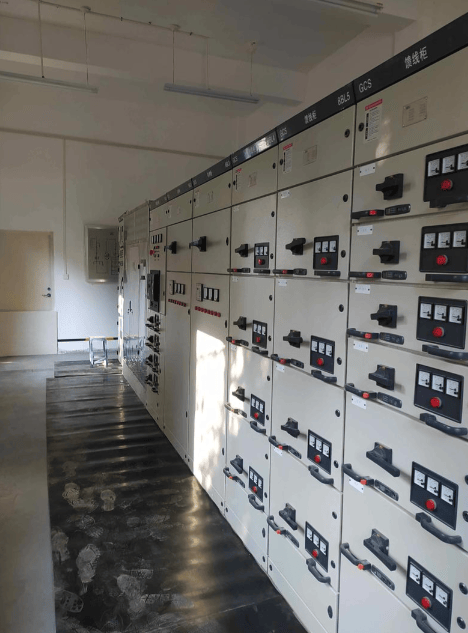 A third aspect is the transformation of maintenance models. Traditional maintenance relies on scheduled inspection and emergency repair. Intelligent assemblies can support condition-based and predictive maintenance. For example, if one feeder current remains close to its design limit while cabinet temperature rises at the same time, the system can issue an early “load growth risk” warning. If a joint temperature remains higher than comparable circuits under similar loading, the system can warn of possible abnormal contact resistance. These judgments move risk control forward before failure occurs.
However, intelligence does not mean simply adding sensors. An effective solution must ensure accurate data, open interfaces, graded alarms, system compatibility and easy maintenance. When purchasing high and low voltage assemblies, project owners should define communication protocols, data point lists, backend integration methods, cybersecurity requirements and future expansion capability. In the future, the value of assemblies will not lie only in primary electrical equipment, but also in their ability to provide long-term usable data assets for distribution systems.