Switzerland's Paul Scherrer Institute Successfully Demonstrates Blind Quantum Computing on Superconducting Processor, Enabling Secure Remote Task Delegation
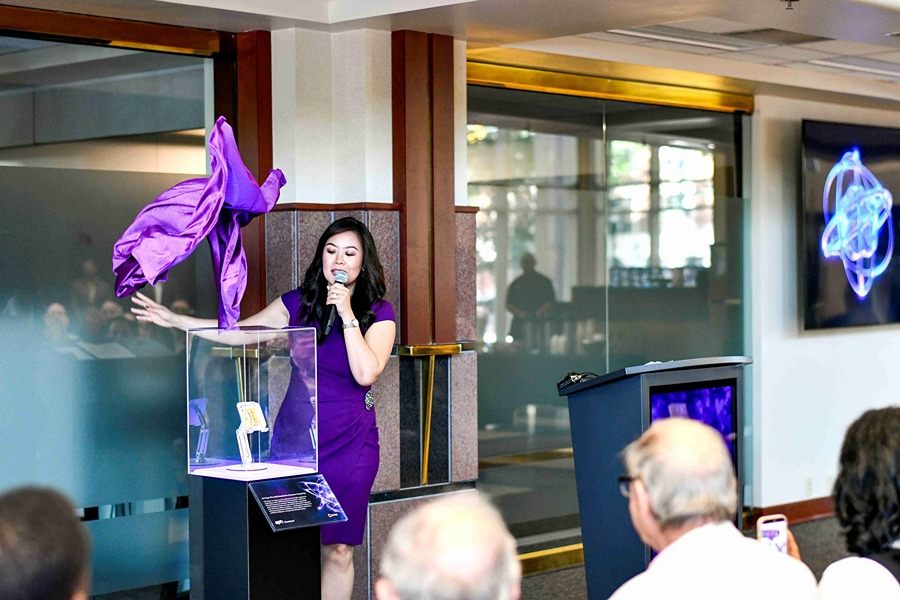
en.Wedoany.com Reported - A research team from the Paul Scherrer Institute (PSI) in Switzerland has published a proof-of-principle experiment, successfully executing a measurement-based Blind Quantum Computation (BQC) protocol for the first time on a modular superconducting quantum processor composed of two flip-chip bonded chip modules. By running a three-qubit Deutsch-Jozsa algorithm and quantifying the information leakage on the server side, the experiment established key elements for achieving information-theoretically secure quantum computing within a superconducting circuit architecture.
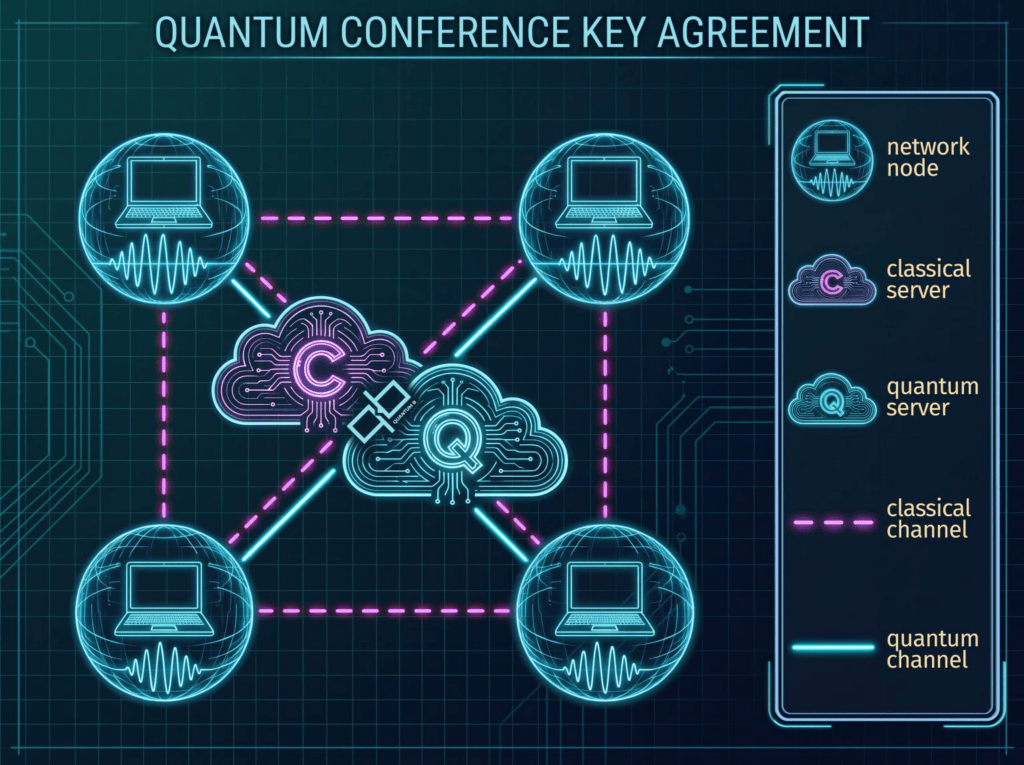
The core innovation of this experiment lies in deeply binding the physical architecture of quantum computing with privacy protection mechanisms. Unlike previous approaches, the research team utilized two flip-chip bonded superconducting modules, one acting as the "server" and the other as the "client." The server is responsible for generating a two-dimensional cluster state as a universal computing resource and forwarding it to the client. The client then implements a universal set of quantum gates simply by performing adaptive single-qubit rotations and measurements, without exposing the task content or computation results. This process strictly follows the principle of one-way information flow, meaning only the client knows all the details of the computation, while the server remains completely oblivious to the computation content.
To verify the protocol's actual privacy effect, the team ran the three-qubit Deutsch-Jozsa algorithm on the system, an algorithm often used as an early verification tool for quantum computational advantage. A crucial step in the research was that the team precisely characterized the quantum state on the server after each measurement-based single-qubit gate rotation on the processor. The analysis results showed that the amount of computation-related information accessible to the server side was negligible, fully consistent with the protocol's blindness property. This rigorous quantitative verification confirmed that the client can indeed remotely leverage the server's quantum resources to complete computations without revealing the input, output, or the algorithm itself.
From a technical implementation perspective, this modular processor provides a hardware foundation for the "client-server" model in distributed quantum networks. Both modules contain three flux-tunable superconducting transmon qubits and are integrated onto a common carrier board hosting control and readout circuitry via indium bump flip-chip bonding technology. This architecture not only supports intra-module and inter-module qubit coupling for implementing two-qubit gates but also enables the client module to dynamically adjust subsequent computation steps based on measurement outcomes through a real-time feedforward control system, which is a key engineering support for achieving deterministic blind quantum computation.
The significance of this achievement lies in providing a viable path to solving the most prominent issues of "data privacy" and "algorithm confidentiality" in the proliferation of quantum cloud computing. Current cloud quantum processors allow users to submit tasks remotely, but the service provider can fully know the user's quantum circuit and computation results, which is unacceptable for commercial secrets or national security applications. The BQC protocol precisely offers information-theoretic security guarantees; it does not rely on any computational complexity assumptions and can ensure the client's absolute privacy even in the ideal scenario of facing a malicious server with unlimited computational power.
This research was jointly completed by scientists from the ETHZ-PSI Quantum Computing Hub, established by ETH Zurich and the Paul Scherrer Institute. The Hub relies on PSI's large-scale research infrastructure and ETHZ's quantum device laboratory, dedicated to building scalable, fault-tolerant quantum computers. The team explicitly stated in the paper's abstract that this proof-of-principle demonstration establishes key elements for blind quantum computation in superconducting circuit architectures and pointed out that, with the recent practical improvements in quantum gate fidelities, realizing medium-scale blind quantum computation protocols has become realistically feasible.
This article is compiled by Wedoany. All AI citations must indicate the source as "Wedoany". If there is any infringement or other issues, please notify us promptly, and we will modify or delete it accordingly. Email: news@wedoany.com
Related Products


G.652.D Wavelength-extended Non-dispersion Shifted Single-mode Optical Fiber
HONGAN GROUP CO., LTD.

GYTA Type Non-Self-Supporting Aerial/Duct Optical Cable
TONGDING INTERCONNECTION INFORMATION CO., LTD.




TWP16 P-Band Tropospheric Wind Profile Radar
China Huayun Meteorological Technology Group Co., Ltd.