Skyharbour Commences Drilling at RL Project in Canada, Plans 4,000 to 5,000 Metres
en.Wedoany.com Reported - Skyharbour Resources Ltd. (SYH:TSX.V; SYHBF:OTCQX; SC1P:FSE) announced that it has commenced drilling operations at its RL Project, located in the eastern portion of the Athabasca Basin in northern Saskatchewan. The large-scale, 53,192-hectare project comprises 16 mineral claims and forms part of the larger Russell Lake Joint Venture, situated immediately adjacent to Skyharbour's wholly-owned Moore Lake Project and east of Denison's flagship Wheeler River Project. The area benefits from excellent infrastructure, including exploration camps, provincial highways, and access to the provincial power grid.
Skyharbour, holding an 80% interest in the project and acting as operator, has initiated a comprehensive exploration program, including extensive ground electromagnetic (EM) surveys, and diamond drilling planned for 10 to 14 holes totaling 4,000 to 5,000 metres this year, targeting multiple high-priority areas. Joint venture partner Denison Mines Corp. holds the remaining 20% interest and has committed to contributing up to C$10 million in exploration expenditures on the property.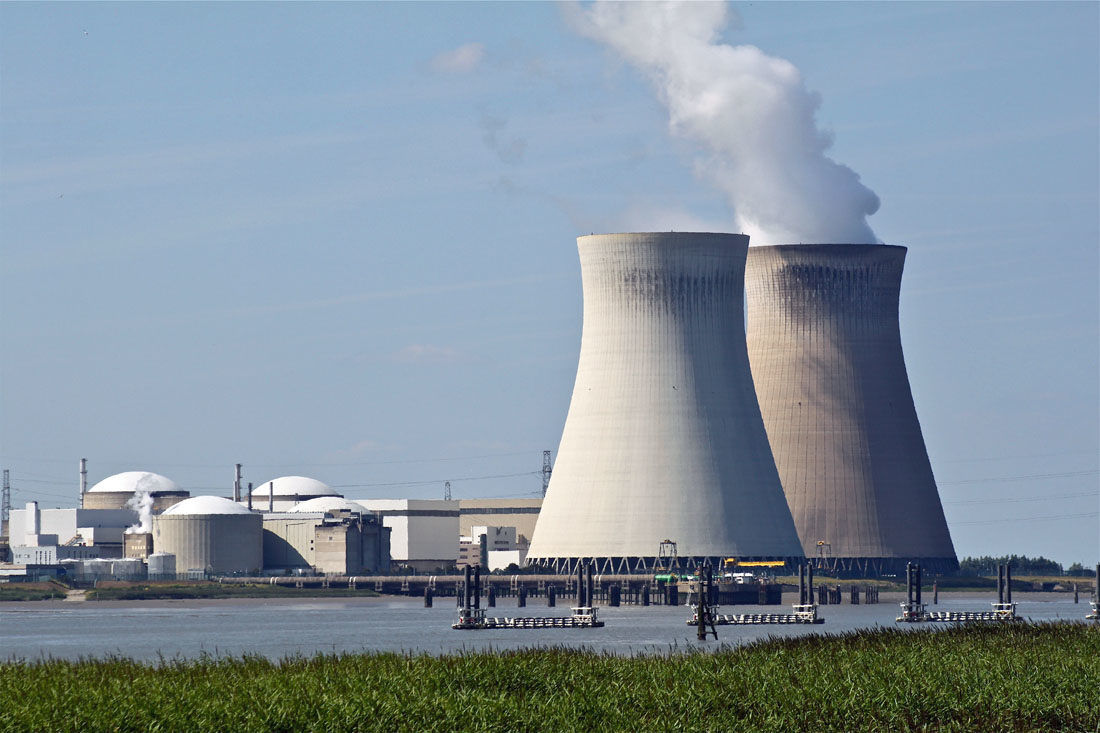
The RL Project is known for hosting numerous prospective target areas, such as Christie Lake, Blue Steel, Taylor Bay, Maverick Extension, South Russell, and Kowalchuk Lake. Ongoing ground EM surveys are currently refining and prioritizing these targets along key structural corridors and underexplored conductive pathways. The upcoming targeted diamond drilling phase aims to test these high-potential targets, integrating historical data, recent drilling results, and new geophysical interpretations to guide exploration efforts. Company President and CEO Jordan Trimble stated he is very excited to commence drilling at the RL Project, a sizeable project with significant discovery potential across multiple targets, most of which have seen only limited modern exploration. As the majority owner and operator of these claims within the Russell Lake Joint Venture area, the company is pleased to partner with strategic financing partner Denison to accelerate the discovery process with minimal equity dilution. Trimble also noted that this drilling at RL is part of a multi-phase, over 15,000-metre drilling campaign planned for Russell Lake this year, contributing to a total planned drilling of over 30,000 metres across six projects in its portfolio. These ongoing, fully funded drill programs, conducted by the company and partner companies, provide Skyharbour with strong revaluation potential and unique, diversified project optionality.
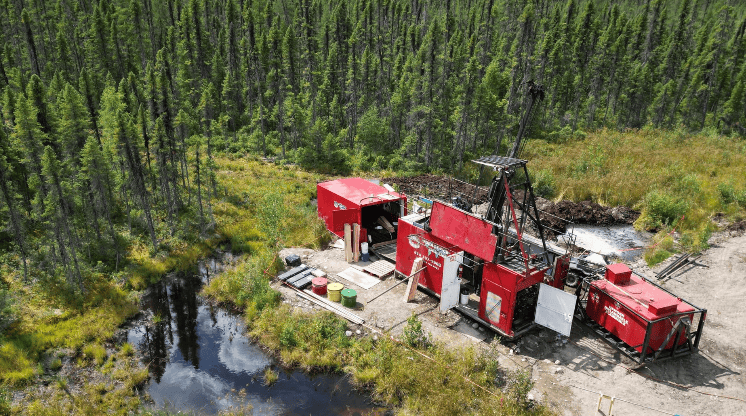
A ground EM survey was successfully completed along the regional Maverick Trend, which extends from the adjacent, Skyharbour-managed Moore Project onto the RL Project. This survey covered 60 line-kilometres across four lines, targeting an airborne EM anomaly first detected by a 2012 VTEM survey. Currently, extensive moving-loop and fixed-loop EM surveys are underway at the Kowalchuk anomaly, aimed at refining data obtained from historical airborne EM surveys. Historically, drilling in the Kowalchuk area encountered anomalous radioactivity but lacked the detailed ground geophysical data now being collected. The ongoing survey program is planned to cover 36 line-kilometres and is expected to be completed next month. The South Russell target, located in the west-central part of the RL Project adjacent to Orano's Getty-Russell Project, has been identified as a key focus for the initial drilling phase. This area was last drilled in 2008 by Hathor Exploration Ltd., and extensive re-modelling and re-interpretation of historical drilling and geophysical data have revealed several high-priority, untested targets. The initial drilling phase here will include 6 to 8 holes totaling 2,500 to 3,000 metres. The company stated that Skyharbour's technical team and drill crew have mobilized to the South Russell target and commenced drilling operations. Subsequently, 4 to 6 additional holes totaling 1,500 to 2,000 metres will be added in the Kowalchuk area, designed to test discrete conductive pathways identified through the ongoing EM surveys.
In early May, Skyharbour announced the completion of a non-brokered private placement to fund its 2026 exploration activities. The placement raised total gross proceeds of C$5.25 million, enabling the company to continue uranium exploration and drilling operations at its co-flagship Russell Lake and Moore Lake projects in the Athabasca Basin. This financing round attracted significant interest and was fully subscribed by multiple strategic institutional investors. In this transaction, the company issued 9,052,395 flow-through (FT) shares priced at C$0.58 per share. The company currently has approximately C$13 million in its treasury, fully funding all planned 2026 drilling activities.
Jeff Clark and Daniel Flynn of The Gold Advisor, in a recent update, highlighted Skyharbour's significant progress, particularly concerning its wholly-owned Moore Project. The project is strategically located just 15 km east of Denison Mines' Wheeler River Project and 39 km south of Cameco Corp.'s (CCO:TSX; CCJ:NYSE) McArthur River mine and the nearby Key Lake mill (the world's largest high-grade uranium mining operation). Skyharbour plans a substantial drill program at Moore, including up to 10,000 metres of multi-phase diamond drilling, aimed at exploring the project's potential to replicate the success of neighbouring, well-known mining districts. The first phase of this drilling campaign will deploy 10 to 12 holes along the Maverick trend, initially focusing on Nomad—a newly identified target last year, described as a broad, structurally controlled hydrothermal system. Exploration at Nomad will concentrate on priority gravity anomalies and new electromagnetic (EM) conductive pathways identified in recent surveys. Furthermore, Skyharbour is introducing AI-assisted modelling to optimize and prioritize drill targets at the Moore Project, aiming to enhance the efficiency of drilling operations and guide future exploration efforts. Skyharbour has secured a new three-year drilling permit for the Moore Project, valid until March 2029, supporting the company's long-term exploration strategy in this uranium-rich region. The ongoing exploration at Moore is viewed as a significant discovery opportunity that could substantially enhance Skyharbour's market valuation. Beyond the Moore Project, Skyharbour's prospects are supported by other strategic initiatives. The company completed a transformative strategic agreement with Denison on the Russell Lake Joint Venture in late 2025, bringing Denison in as a strategic and financing partner to advance the Russell Project alongside Skyharbour. Additionally, Skyharbour's portfolio of 43 projects in the Athabasca region is being actively explored by multiple partner companies as part of Skyharbour's prospect generator business. These partnerships, structured under option agreements, could bring Skyharbour over C$76 million in exploration expenditures, over C$26 million in share issuances, and C$16 million in cash payments, should partners fulfill their earn-in commitments.
Analyst Sid Rajeev of Fundamental Research Corp., in a research update on February 5th, noted that Skyharbour is undertaking its most ambitious annual drilling campaign to date. Work will focus on the Moore Project and the newly formed Russell Lake Joint Venture. Rajeev highlighted that a key objective at the Moore Project is to produce a maiden resource estimate, which he believes will significantly increase the project's potential and serve as a major catalyst for the company. Furthermore, Rajeev pointed out that Skyharbour is poised to benefit from multiple positive factors, including improving uranium market sentiment, partner-funded exploration, and extensive drilling activities at Moore and Russell Lake. He maintained a Buy rating on Skyharbour, raising his fair value estimate from C$1.12 to C$1.16 per share, attributing this adjustment to the company's expanded portfolio and strategic drilling plans designed to fully capitalize on the sector's potential upside. In a separate analysis on January 15th, David Talbot, Managing Director and Head of Equity Research at Red Cloud, maintained his target price for Skyharbour at C$0.65 per share. Talbot's valuation suggests a potential return of 48%, highlighting a positive outlook for the company's stock.
According to a report by Maria Basso, James Mazurek, and Eric Enselme on the World Economic Forum website dated December 11, 2025, the rapid expansion of AI workloads is increasingly positioning power availability as a critical factor for innovation and competitiveness. Electricity demand from data centres is expected to double by 2030, while recent research from Cornell University warns that without smarter siting and efficiency improvements, AI data centres could strain the U.S. power system by 2030. This emerging demand is already having economic ripple effects, with electricity prices rising sharply in several U.S. states. These increases are partly attributed to data centre growth, which also intensifies pressure on wholesale markets, ultimately impacting household electricity bills. A similar situation is unfolding internationally. In Ireland, for instance, data centres currently account for over 22% of national electricity usage, a figure expected to rise to 30% by 2030. This surge is leading to grid strain and rising household power costs. According to a report by Amy Rotman for Mining.com.au, the World Nuclear Association has highlighted uranium as a critical energy-related mineral for the past six decades. Currently, major uranium mining operations are located in Canada, Namibia, Kazakhstan, and Australia, with new exploration regions emerging globally. The uranium market experienced significant challenges following the 2011 Fukushima incident, leading several countries to move away from nuclear energy, causing uranium prices to plummet and many mines to close. However, since 2020, uranium prices have seen a notable recovery, indicating a global shift in attitudes towards nuclear power. This positive shift is primarily attributed to nuclear energy being recognized as a vital low-carbon energy source, contributing to achieving global emission targets and enhancing energy security. At COP28 in December 2023, participating countries announced a tripling of nuclear energy capacity by 2050, underscoring nuclear power's critical role in achieving net-zero emissions. This initiative was supported by over 20 countries, including the U.S., Canada, France, Japan, the U.K., and other major nations across Europe, Asia, and the Middle East. This commitment was reinforced at COP30, with participating countries expanding to 33. The International Atomic Energy Agency (IAEA) described the goal of tripling nuclear capacity by 2050 as ambitious, forecasting that capacity could potentially double to between 561 gigawatts electric (GWe) and 992 GWe. This expansion would solidify nuclear power's position as a key component of the global clean energy transition. As of November 19, 2025, the global nuclear capacity from 416 operating reactors stood at 376.3 GWe.
Institutional and strategic holders account for approximately 55% of the share structure, retail investors for about 40%, and management and insiders for roughly 5%. President and CEO Jordan Trimble holds a 1.52% stake, and Director David Cates holds approximately 0.83%. Skyharbour has 221.1 million shares outstanding, giving it a market capitalization of C$99.5 million. Its 52-week trading range is between C$0.28 and C$0.66 per share.
This article is compiled by Wedoany. All AI citations must indicate the source as "Wedoany". If there is any infringement or other issues, please notify us promptly, and we will modify or delete it accordingly. Email: news@wedoany.com
Related Products

Yingping Mining Section Open-pit Tailings Backfill Treatment of Goaf Ecological Restoration EPC Project
China Bluestar Lehigh Engineering Corporation
Forest and Grassland Heat Source Infrared Monitor
China Huayun Meteorological Technology Group Co., Ltd.

Industrial and Commercial Point-Type Gas Detector
Jinan Benan Technology Development Co., Ltd.
1000kV Jin Southeast-Nanyang-Jingmen UHV AC Transmission and Transformation Pilot Demonstration Project
Anhui Hongyuan Steel Tower Co., Ltd.


G.652.D Wavelength-extended Non-dispersion Shifted Single-mode Optical Fiber
HONGAN GROUP CO., LTD.