en.Wedoany.com Reported - Recently, China's Jiuquan Iron and Steel (Group) Co., Ltd. (JISCO) in Gansu Province successfully developed a short-process cast-rolled thin slab high-deep-drawing aluminum sheet and strip, specifically a material for food-grade bottle caps. This material breaks through the limitations of traditional hot rolling processes and can be used for sealing beverage bottles, wine bottles, medicine bottles, and cosmetic bottles. With a thickness of only 0.20–0.35 millimeters, it must combine high strength, good ductility, and high flatness, while also withstanding high-temperature sterilization and being easy to open. For a long time, domestic high-end bottle cap materials have mostly relied on long-process hot rolling technology, which involves high energy consumption and high costs.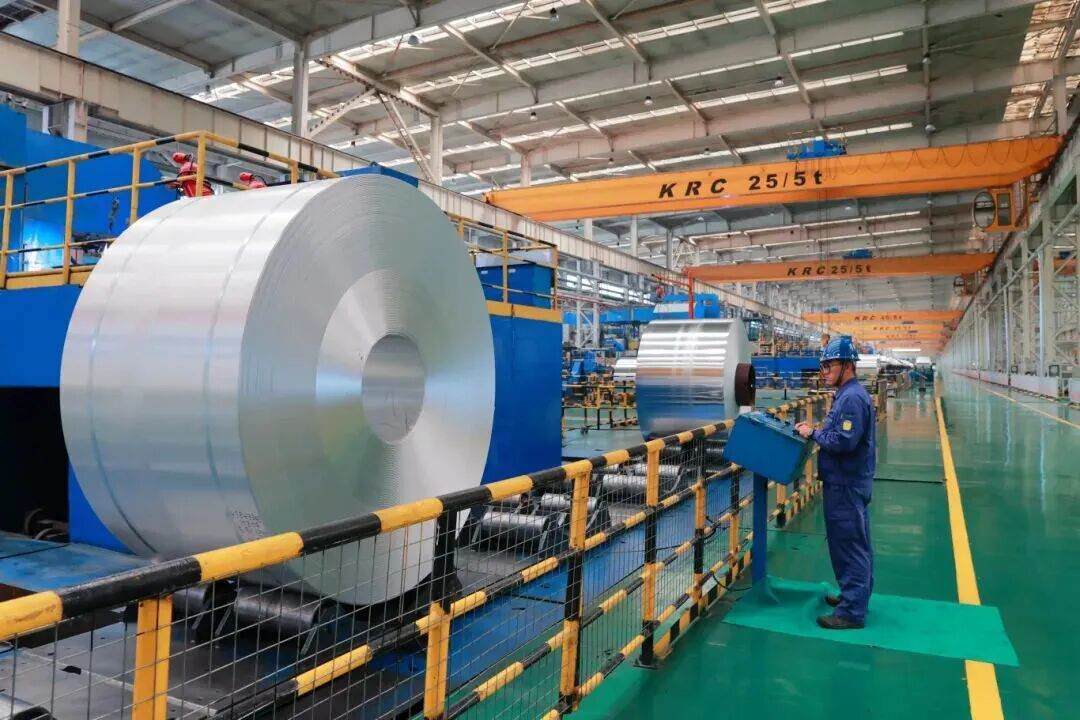
JISCO's technical team initiated a research and development project for high-deep-drawing aluminum sheet and strip targeting the short-process cast-rolling method. Compared to traditional hot rolling, the short-process cast-rolling method eliminates the need for secondary remelting of aluminum liquid, reducing energy consumption and pollution, and compressing production costs. However, blanks produced by this process are prone to issues such as coarse crystallization and rough surfaces, and their deep-drawing performance fails to meet the requirements for high-end bottle caps. The R&D team tackled key problems centered on the main line of "composition design—microstructure control—process optimization—surface control," focusing on solving the two major issues of high earing rate and insufficient surface finish. The earing rate must be controlled within 3%; otherwise, edges will bulge after the cap is punched, affecting usability.
After repeated trials, JISCO controlled the product's earing rate within the standard range, and indicators such as yield strength, tensile strength, and elongation all met the high-end punching requirements of customers. A member of JISCO's technical team stated: "As long as there is market demand, we must tackle these 'tough nuts'!" Currently, a mature and stable industrial production system has been established for this product, achieving mass production and stable supply. This bottle cap material is produced entirely using a green short process, reducing the energy consumption and flue gas emissions associated with secondary remelting, and compared to plastic bottle caps, it can be 100% recycled.
This article is compiled by Wedoany. All AI citations must indicate the source as "Wedoany". If there is any infringement or other issues, please notify us promptly, and we will modify or delete it accordingly. Email: news@wedoany.com