en.Wedoany.com Reported - Avalon Advanced Materials (TSX: AVL; US-OTC: AVLNF) is pushing forward with its Nechalacho rare earth project in the Northwest Territories, aiming to complete an economic study this fall and potentially begin production within three years. CEO Scott Monteith told The Northern Miner in a June video call that Washington and Ottawa have recognized China's pricing is more driven by manipulation than market forces, and economic and geopolitical factors are making the project more economically viable.
The company acquired Nechalacho as its first project in 2005 and has completed most of the modern exploration, resource, and research work. Vital Metals (ASX: VML; US-OTC: VTMXF) owns a portion of the deposit and has been more active over the past five years, but has made less progress than Avalon. Nechalacho is located about 100 kilometers southeast of Yellowknife. The push comes as the Northwest Territories seeks new mining projects to fill the economic gap left by closing diamond mines.
The project is one of the largest and most advanced rare earth projects in North America, with a capital cost of approximately C$2 billion (US$1.42 billion). Avalon is seeking partners and road access. Like many projects in the far north, Nechalacho lacks permanent infrastructure connections and is only accessible by barge or ice road, but the company is in talks with the Northwest Territories government about using federal funding from the Critical Minerals Infrastructure Fund to potentially build a road.
Monteith said he is in discussions with mining and processing companies as well as offtake firms, which could join as equity partners, joint venture partners, or through other strategic collaborations, but he could not currently specify who they are. The preliminary economic assessment Avalon plans to release in October will update the 2013 study and resource estimates, with an updated feasibility study scheduled for next year. The feasibility study from over a decade ago set capital costs at C$1.6 billion, and Vice President of Corporate Development Christopher Senyk believes current capital costs are about C$400,000 higher. The same study projected a post-tax net present value (at an 8% discount rate) of C$1.3 billion and a post-tax internal rate of return of 20%.
Nechalacho's Basal zone could produce 9,300 tonnes of total rare earth oxides (TREO) annually over a 20-year mine life, with 14.6 million tonnes of proven and probable reserves grading 1.7% TREO and 0.46% heavy rare earth oxides (HREO). Contained reserves total 247,000 tonnes of TREO and 67,000 tonnes of HREO, including dysprosium, terbium, and yttrium. Expected annual production also includes 19,763 tonnes of zirconium oxide, 2,230 tonnes of niobium oxide, and 243 tonnes of tantalum oxide.
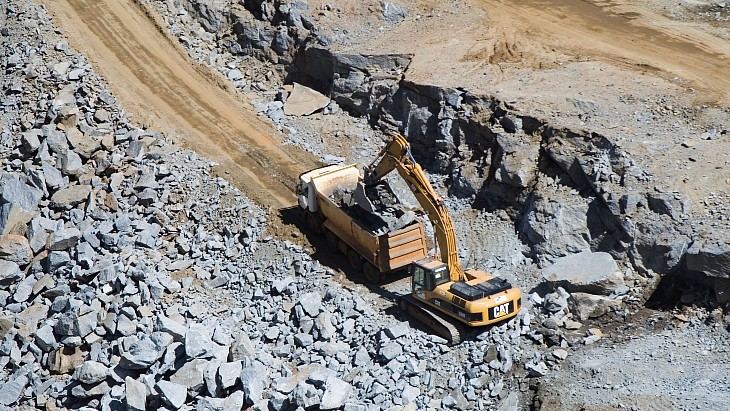
Vital's Tardiff zone at Nechalacho is expected to produce approximately 14,800 tonnes of TREO annually over an 11-year mine life, with a net present value of about C$622.5 million, initial capital costs of roughly C$400 million, and an internal rate of return of 26%. Vital's rights to Tardiff extend from the surface to about 150 meters depth, while Avalon's Basal zone starts at 150 meters and goes deeper. Vital briefly became Canada's first demonstration-scale rare earth producer between 2021 and 2023, but ceased mining due to cost overruns, market difficulties, and the bankruptcy of its processing subsidiary in Saskatoon, Saskatchewan. Basal is envisioned as an underground mine, while Tardiff is an open-pit operation, and the two companies have agreed on a future synchronous development model. Avalon did not begin developing the site in 2013 due to an inability to raise sufficient funds, and the company sold the Tardiff deposit to a former Vital subsidiary in 2019 for C$5 million.
The company plans to open a Yellowknife office in mid-June. The upcoming preliminary economic assessment will also incorporate a cleaner processing method for Basal. The company has patented a new processing technology developed in collaboration with the University of Toronto, which uses caustic soda instead of acid, costing about one-third less than acid-based methods, and plans to build a demonstration system on site. Project Director Burl Joseph said a proposed power expansion project would extend a line north to diamond mines northeast of Yellowknife, potentially connecting to Nechalacho via a spur line. The company is also renegotiating impact-benefit agreements with the Yellowknives Dene First Nation and the Lutsel K'e Dene First Nation. Monteith emphasized that the project benefits from the right factors and combination of critical metals, quoting former CEO Don Bubar's remark that it is the world's most important rare earth grocery store.