en.Wedoany.com Reported - The Brazilian National Council for Mineral Policy (Conselho Nacional de Política Mineral) has established a new uranium working group tasked with assessing the current status of mapping and knowledge of the country's uranium mineral resources and reserves within 90 days, and proposing strategies to expand this information. The working group will also be responsible for determining mineral production potential, covering both ongoing and future projects.
The working group operates under the supervision of the Ministry of Mines and Energy, with members including multiple government departments, the Navy, the Ministry of Defense, as well as nuclear operator Eletronuclear and the Brazilian Nuclear Industries (Indústrias Nucleares do Brasil, INB). INB President Tomas Albuquerque stated that current global uranium production stands at 60,000 tonnes, while consumption reaches 65,000 tonnes, with 5,000 tonnes coming from strategic reserves of countries and nuclear power plants. With the construction of new units, global demand will further increase. If Brazil expands its nuclear power capacity, it will need to increase uranium production, which requires large-scale investment to achieve this goal.
State-owned INB launched the "Pró-Urânio" program in 2024, aimed at expanding and accelerating exploration of new deposits. The Brazilian National Bank for Economic and Social Development (BNDES) will participate in developing cooperation models with mining companies. The bank issued a request for information in December, targeting interested consulting firms.
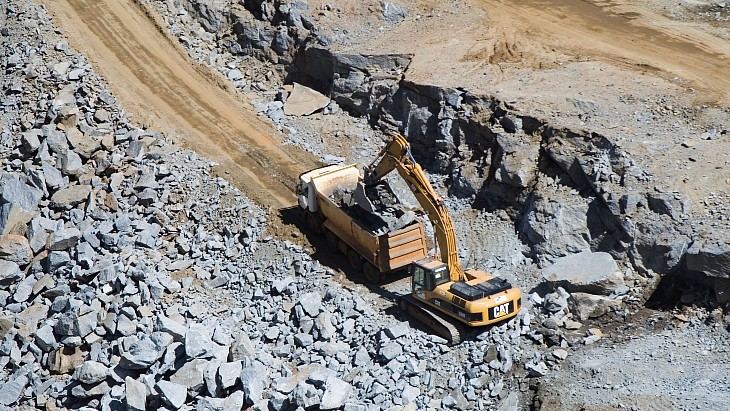
According to data from the World Nuclear Association, Brazil has identified 210,000 tonnes of uranium resources following active exploration in the 1970s and 1980s. Brazil has been mining uranium since 1982, but the only operating mine is INB's Lagoa Real/Caetité mine, with an annual production capacity of 340 tonnes of uranium. This mine has known resources of 10,000 tonnes of uranium at a grade of 0.3% uranium.
Brazil is advancing the Santa Quitéria Project, currently in the preliminary environmental licensing process with the Brazilian Institute of Environment and Renewable Natural Resources (IBAMA), which accepted the project for environmental review in March 2022. The project will be implemented at Fazenda Itataia in the municipality of Santa Quitéria. The Itataia deposit consists of 99.8% phosphate and 0.2% uranium, located in the interior of Ceará state, and is the largest uranium reserve discovered in Brazil. INB estimates an annual production of approximately 1.05 million tonnes of phosphate fertilizers and 220,000 tonnes of dicalcium phosphate for animal feed, while producing about 2,300 tonnes of uranium concentrate per year to supply the Angra 1, Angra 2, and future Angra 3 nuclear power plants. This move also strengthens the national strategy for self-sufficiency in nuclear fuel production and export potential. According to 2020 project plan data, the Itataia deposit is estimated to contain 142,200 tonnes of uranium, mixed with phosphate, with recoverable reserves of 79.5 million tonnes of ore at grades of 11% P2O5 and 0.0998% U3O8, equivalent to approximately 8.9 million tonnes of P2O5 and 79,300 tonnes of U3O8.
Brazil has a long history in the nuclear energy sector. Two pressurized water reactors—Angra 1 and Angra 2—supply about 3% of the country's electricity. Brazil plans to complete the construction of the third unit at Angra and is exploring additional installed capacity, including a microreactor under development.