en.Wedoany.com Reported - Mexico has taken a key step in the field of Sustainable Aviation Fuel (SAF). The International Civil Aviation Organization (ICAO) North American, Central American and Caribbean Regional Office held a national SAF workshop on May 18 and officially launched a feasibility study aimed at assessing the country's production capacity, investment needs, and regulatory challenges for developing a domestic SAF industry.
The workshop is part of ICAO's Assistance, Capacity-building and Training for Sustainable Aviation Fuels (ACT-SAF) programme, a global initiative focused on accelerating the aviation energy transition. ICAO stated that the event brought together public and private sector stakeholders and led to the establishment of a national working group tasked with advancing SAF development in Mexico. Authorities and industry representatives also presented progress on a national work plan aimed at strengthening the institutional coordination and governance mechanisms needed to consolidate a long-term SAF strategy.
The Mexican government indicated in April that "incorporating bio-aviation fuels into aircraft supply starting this year" would achieve "the country's first green flight." This involves a pilot blending project carried out by Aeropuertos y Servicios Auxiliares (ASA) at Mexican fuel stations, aimed at validating the logistics, technical standards, and regulatory compliance for integrating SAF into the aviation fuel distribution system. Authorities added that since 2024, ASA has been coordinating "with key stakeholders in the aviation and energy sectors, as well as international organizations and research centers" to strengthen the SAF supply chain from feedstock to distribution.
The Mexican government has established seven strategic work streams to support implementation: Infrastructure, Certification, Regulation, Innovation, Technology, Feedstock, and Financing. Officials stated that these pillars will "guarantee professional technical coordination" and address bottlenecks related to certification, capital requirements, and production scale. Participants in the ICAO workshop included José Luis Samaniego Leyva, Mexico's Undersecretary for Sustainable Development and Circular Economy; Víctor Islas Díaz, Executive Director of Transport and Control at the Federal Civil Aviation Agency (AFAC); Ricardo Capilla, President of Airbus Mexico; and Dionisio Pérez Jácome, Vice President of Reputation and Corporate Development. ICAO representatives included Regional Director Christopher Barks, ACT-SAF Coordinator César Velarde, Field Officer Perla Pineda, Regional Aeronautical Meteorology and Environment Specialist Luis Sánchez, and Aviation Environment Implementation Specialist Judit De León. ICAO stated that the feasibility study is jointly coordinated with Mexican authorities, including Ana María Gómez Solares, Director General of Renewable Energy and Focal Point for the Mexican project, and alternate focal point Julio César de Regil.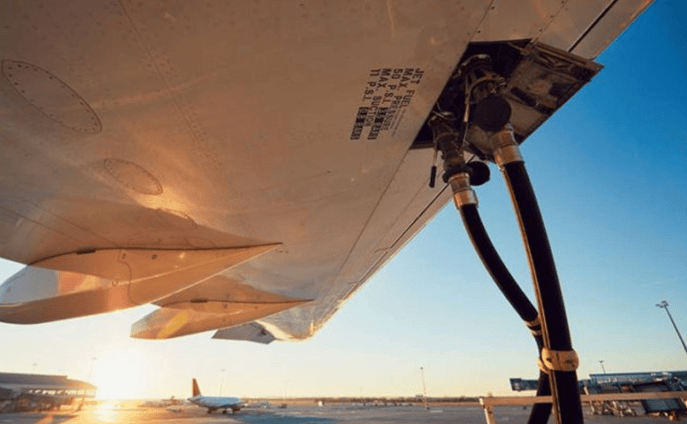
The development of SAF has become one of the primary strategies for the aviation industry to achieve the net-zero emissions target by 2050 set by ICAO and the International Air Transport Association (IATA). Compared to conventional jet fuel, SAF can reduce CO2 emissions by an average of 80% over its lifecycle. Mexico has been identified by international organizations and aerospace companies as a potential SAF production hub due to its agro-industrial capacity, availability of organic waste, and geographic location along North American and Latin American routes. However, supply and cost remain major constraints globally. IATA estimates that global SAF production reached 1.9 million tonnes in 2025, accounting for approximately 0.6% of total jet fuel consumption; production is projected to increase to 2.4 million tonnes in 2026, representing 0.8% of demand. At current price levels, SAF is expected to increase airline fuel expenditure by $3.6 billion in 2025. Industry estimates suggest that by 2026, SAF prices could remain 2 to 5 times higher than conventional jet fuel, depending on the region and incentive structures.
In Latin America, the Latin American and Caribbean Air Transport Association (ALTA) estimates that the region could face $318 billion in additional costs due to limited SAF availability. Roberto Alvo, ALTA President and CEO of LATAM Airlines, stated: "SAF is an alternative, but not the only one." Holger Paulmann added: "Ultimately, the customer bears the cost." According to ODI Global, Mexico ranked 17th globally in airport-related CO2 emissions in 2023, with 15.5 million tonnes, equivalent to 2% of the sector's total emissions. The country is among the 20 nations that account for 78% of global airport emissions.
Long-term decarbonization strategies increasingly include power-to-liquid sustainable aviation fuel (e-SAF), which could account for over 40% of total SAF demand by 2050. However, no commercial-scale e-SAF facilities are currently operational globally, and analysts continue to warn of high production costs and infrastructure constraints. According to IATA Sustainability and Economics and Worley Consulting, renewable electricity can account for two-thirds of the total production cost of e-SAF. Of the 46 commercial-scale e-SAF projects announced globally, 40 are located in Europe, although only one project worldwide has made a final investment decision and is currently under construction in the United States.
This article is compiled by Wedoany. All AI citations must indicate the source as "Wedoany". If there is any infringement or other issues, please notify us promptly, and we will modify or delete it accordingly. Email: news@wedoany.com