en.Wedoany.com Reported - Reclaimed Water Reuse was once treated mainly as an auxiliary water-saving measure for landscape irrigation, road cleaning, toilet flushing and low-risk municipal uses. That role is now changing. As cities face higher water stress, industrial parks expand, extreme droughts become more frequent, and water supply costs rise, reclaimed water is becoming an important engineering capability for urban water security, industrial continuity and resource circulation.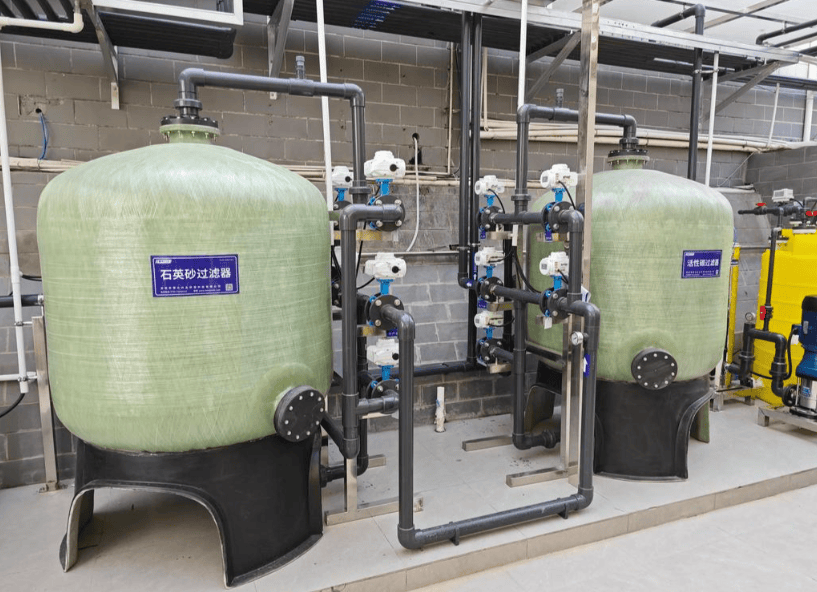
The core value of reclaimed water is turning treated wastewater that would otherwise be discharged into an alternative water source. It can support industrial cooling, municipal greening, road cleaning, ecological replenishment, building flushing and some auxiliary production processes. For water-stressed cities and industrial clusters, this reduces dependence on fresh water and improves supply resilience.
A reclaimed water project is not simply a wastewater treatment plant. It is a complete system involving water source, treatment process, distribution network, user scenarios, water quality monitoring and operation management. Whether the water can be used depends on stable quality. Whether it can be used over the long term depends on pipelines, storage, pumping stations, monitoring systems and user-side management. If a city only upgrades wastewater treatment plants without building reclaimed water distribution networks and user connections, reuse may remain a concept rather than a working system.
In urban applications, reclaimed water should first enter stable, controllable and lower-risk scenarios. Municipal greening, road washing, ecological water replenishment, building toilet flushing and industrial circulating cooling makeup are practical early markets. These scenarios have relatively stable demand, clear water quality requirements and better conditions for scale. Once these applications operate steadily, more advanced uses can be explored.
However, reclaimed water reuse should not only emphasize larger use volume. It must also emphasize safe use. Different applications require different water quality. Irrigation, landscape water, industrial cooling, boiler makeup and process water should not be managed under one simple standard. If quality control is weak, scaling, corrosion, microbial growth, odor, equipment efficiency loss or public health risks may occur. Reclaimed water engineering must therefore define water quality standards and monitoring frequency according to use.
Cities and industrial parks should take three practical steps. First, evaluate stable water sources, including treated wastewater volume, water quality fluctuation and seasonal variation. Second, match use scenarios by prioritizing nearby users with stable demand and controllable risk. Third, build independent distribution and monitoring systems to avoid cross-connection with drinking water systems, while continuously monitoring turbidity, COD, ammonia nitrogen, total phosphorus, residual chlorine, conductivity and microbial indicators.
The future competitiveness of reclaimed water reuse will not depend only on advanced treatment equipment. It will depend on whether the whole system can provide stable supply, meet quality requirements, operate reliably and win user trust. A mature reclaimed water project should make reclaimed water a dependable part of the urban and industrial water supply system, not just an optional substitute.
This article is compiled by Wedoany. All AI citations must indicate the source as "Wedoany". If there is any infringement or other issues, please notify us promptly, and we will modify or delete it accordingly. Email: news@wedoany.com