en.Wedoany.com Reported - Industrial parks are among the most valuable scenarios for Reclaimed Water Reuse. They usually have concentrated enterprises, stable water demand, centralized wastewater treatment facilities and multiple non-potable water needs, including greening, road cleaning, cooling makeup, equipment washing and auxiliary production processes. If planned properly, reclaimed water can reduce freshwater withdrawal, improve water supply resilience and lower wastewater discharge pressure.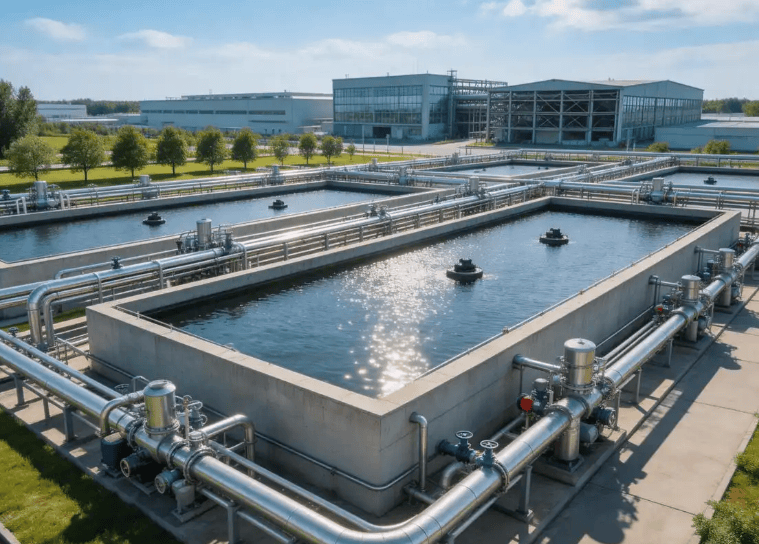
However, industrial park water reuse should not be understood as simply sending treated effluent directly from the wastewater plant to enterprises. Different companies, processes and equipment have very different water quality requirements. Water used for greening and road cleaning is not the same as water used for circulating cooling, boiler makeup, equipment washing or process support. Suspended solids, hardness, salinity, chloride, microorganisms, conductivity and organic matter all matter differently across applications. Without fit-for-purpose supply, enterprises may be unwilling or unable to use reclaimed water.
The first step is water use classification. The first category is low-risk municipal and utility use, such as greening, road washing, toilet flushing and landscape replenishment. The second category is industrial auxiliary use, such as equipment washing, floor cleaning and circulating cooling makeup. The third category is higher-grade process water, which requires deeper treatment and specific verification according to the industry. Each category should have its own quality requirements, pipeline design, monitoring method and responsibility boundary.
User-side adaptation is another major challenge. Whether enterprises accept reclaimed water depends not only on price, but also on water quality stability, supply continuity, liability allocation and equipment risk. If reclaimed water fluctuation causes scaling in cooling towers, corrosion in heat exchangers or product quality problems, users will not accept it for long. Park operators therefore need to manage reclaimed water as an industrial water product, not merely as wastewater treatment plant effluent.
Engineering design should include independent reclaimed water networks, regulating tanks, pumping stations and online monitoring. For key users, pilot testing should be conducted before connection to define water quality limits, additional treatment requirements and emergency switching mechanisms. Cooling water systems need special attention to hardness, alkalinity, chloride, sulfate, microorganisms and corrosion or scaling tendency. Washing water requires attention to suspended solids, color and residual pollutants. Landscape water should be evaluated for eutrophication and odor risks.
Industrial parks should begin with nearby, stable-demand and lower-risk scenarios. Park greening, road washing, public toilet flushing and cooling makeup are suitable early applications. After these projects mature, reclaimed water can gradually expand into internal auxiliary water and selected process water. This reduces early-stage risk and helps build user confidence.
In the future, reclaimed water capability will become an important foundation for green parks, zero-carbon parks and industrial zones in water-constrained regions. A mature park should not only discharge wastewater after treatment. It should reallocate treated water to suitable uses, connecting water resource circulation with industrial operating security.
This article is compiled by Wedoany. All AI citations must indicate the source as "Wedoany". If there is any infringement or other issues, please notify us promptly, and we will modify or delete it accordingly. Email: news@wedoany.com