en.Wedoany.com Reported - Around June 1, U.S. artificial intelligence company OpenAI launched recruitment for its Robotics team. OpenAI CEO Sam Altman posted a hiring notice on social media, stating that the company is seeking full-stack hardware, operations, systems, and machine learning engineers to program and build robots that are "truly useful to society."
This move signals a shift in OpenAI's robotics business from internal research toward team building and engineering implementation. Altman disclosed that OpenAI's world simulation research project, which has progressed rapidly over the past year, has evolved into OpenAI Robotics, led by Aditya Ramesh. Ramesh previously worked on generative AI projects such as DALL·E, and this background gives OpenAI Robotics a clear "world model + embodied intelligence" approach: first enabling the model to understand and predict the physical world, then extending this capability to robot systems capable of executing tasks. Compared to pure software models, robotics development requires simultaneous handling of perception, control, mechanical structures, actuators, simulation environments, safety verification, and manufacturing scalability. Any instability in these areas can affect the reliability of robots entering real-world scenarios.
OpenAI's official recruitment page now lists multiple Robotics-related positions, including roles in robot electrical engineering, actuator design, simulation environments, distributed data systems, and machine learning systems and training architectures.
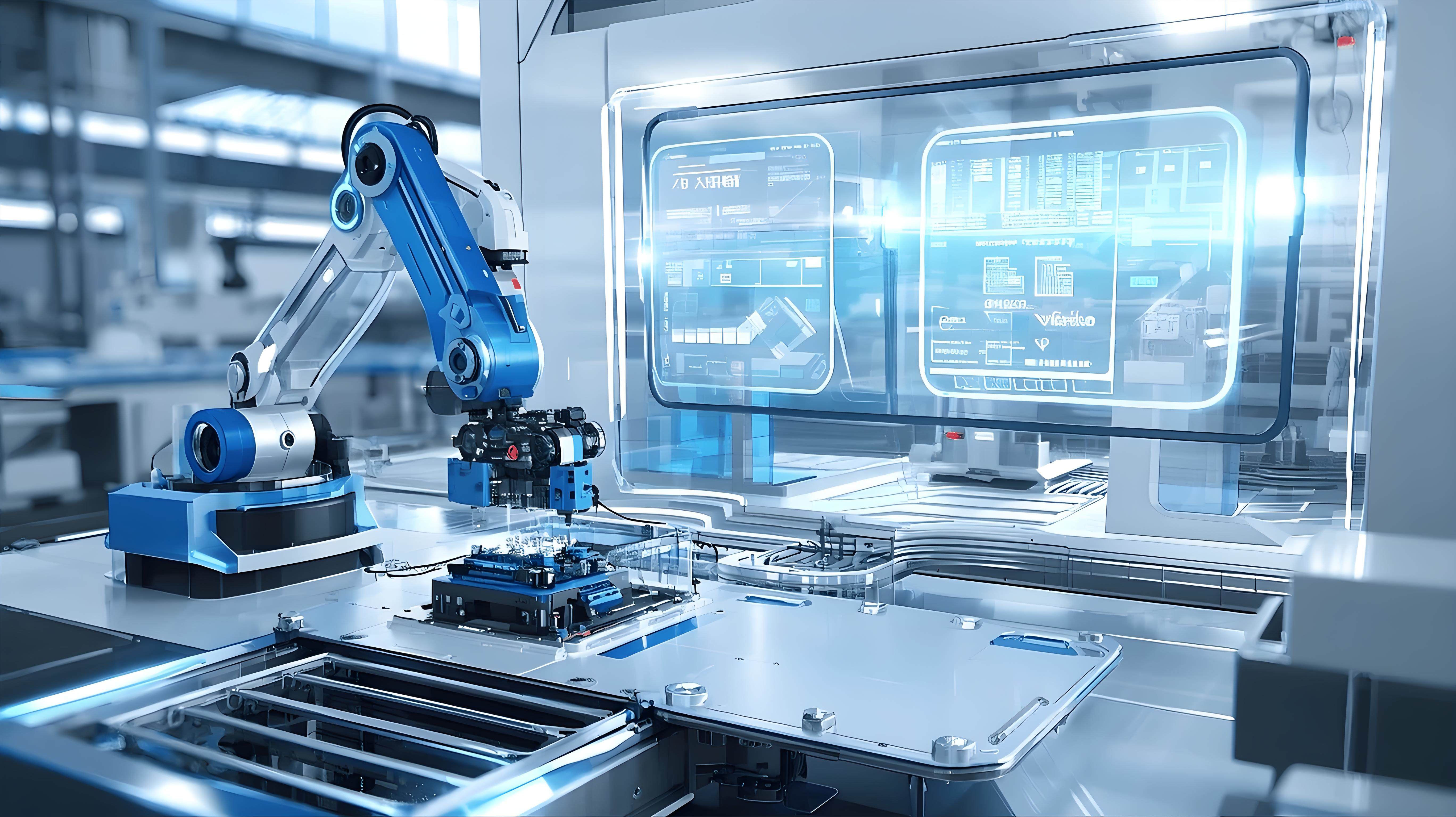
These positions indicate that OpenAI Robotics is not solely focused on a single humanoid robot concept in the short term, but is instead building a complete engineering chain for robots—from hardware design to simulation training, and from control systems to machine learning infrastructure. The actuator design role emphasizes the development of custom electromechanical actuators in advanced robot systems, while the electrical engineering role requires collaboration with mechanical, firmware, software, control, and research teams to evaluate new solutions and integrate them into robot platforms. The simulation environment role focuses on building large-scale, high-coverage, realistic virtual environments to provide tools and infrastructure for robot research and evaluation. For the robotics industry, these capabilities represent a critical leap from "models understanding the world" to "machines reliably performing actions," particularly addressing engineering challenges such as motion control, feedback loops, state estimation, sensor fusion, and manufacturing consistency.
OpenAI's decision to strengthen its robotics business at this juncture is also tied to shifts in the competitive landscape of the global AI industry. Generative AI companies have primarily competed in language, image, video, and code models, with capabilities largely confined to the digital realm. As models enhance multimodal understanding, video generation, code execution, and agent tool invocation, the next phase of differentiation is entering the physical world: robots must integrate AI's perception, reasoning, planning, and execution capabilities into a sustainable physical system. Altman noted that AI should help people accomplish tasks in the physical world, with a short-term focus on developing robots that assist humans, and a long-term vision pointing toward personal robots and broader daily assistance scenarios. For OpenAI, Robotics serves both as an extension of AI model capabilities and a real-world testing ground for the maturity of world simulation, reinforcement learning, simulation training, and hardware co-design.
Competition in the robotics sector is no longer limited to traditional industrial automation companies. Tesla, NVIDIA, Google-affiliated research teams, and numerous embodied intelligence startups are all advancing humanoid robots, general-purpose robot platforms, simulation training environments, and physical AI infrastructure. OpenAI previously conducted research in areas such as dexterous robot manipulation but later redirected its primary resources toward large models and generative AI. This recruitment effort under the OpenAI Robotics banner signals a renewed focus on robotics as a key direction for AI deployment. With model companies, chip companies, automotive firms, and robotics startups all entering the field, assistive robots may first find early applications in infrastructure construction, warehousing and manufacturing, laboratory automation, data center operations, and home assistance.
Whether OpenAI Robotics can ultimately deliver a viable product depends on hardware costs, mechanical reliability, training data, simulation-to-reality transfer, safety boundaries, and production scalability. Unlike chatbots, assistive robots entering real-world environments must contend with higher barriers such as uncontrollable objects, complex spaces, human-robot coexistence, and safety accountability. The signal from this recruitment is that OpenAI is integrating large model capabilities, world simulation research, and robot hardware engineering into a single technical pathway, aiming to move AI from screens, clouds, and software tools further into real-world production and daily life scenarios.
This article is compiled by Wedoany. All AI citations must indicate the source as "Wedoany". If there is any infringement or other issues, please notify us promptly, and we will modify or delete it accordingly. Email: news@wedoany.com