Zhiyuan JD's First Offline Store in China Lands in Shanghai on June 13
en.Wedoany.com Reported - Zhiyuan JD's first offline store will officially open on June 13 at No. 3509, Caobao Road, Minhang District, Shanghai. Positioned as a "retail complex deployment state" model, the store integrates robot-guided shopping, interactive experiences, educational displays, and logistical operations, aiming to shift robots from mere exhibits to active participants in storefront operations.
The core highlight of this store lies in the retail model of "robots selling robots." According to disclosed information, Zhiyuan JD's first offline store is centered on "immersive experience + full-category presentation + deployment-state application." The store no longer merely displays humanoid robots, robotic dogs, commercial service robots, and other products for consumers to observe; instead, it embeds robots into real retail workflows, involving them in tasks such as greeting, guiding, explaining, demonstrating, interacting, and logistical coordination. For embodied intelligence companies, the function of this first offline store extends beyond brand showcasing—it is closer to a small-scale commercial validation site. Whether products can stably recognize customer needs, perform continuous interactions in open spaces, handle repetitive service tasks, and foster purchasing and usage awareness among ordinary consumers will all be directly tested during store operations.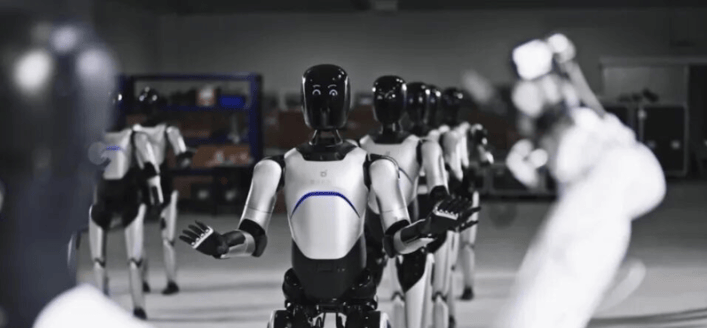
The store's functional layout includes four modules: Lingxi Guided Tour and Shopping, Cyber Performance Showcase, Maker Education Space, and Smart Logistics Hub, corresponding to front-end reception, scenario display, educational experience, and store operations, respectively.
The Lingxi Guided Tour and Shopping module is designed for the store entrance and product display areas, focusing on addressing the initial interaction issues consumers face upon entering the robot store, including route guidance, product introductions, basic Q&A, and experience guidance. The Cyber Performance Showcase leans more toward high-frequency dissemination scenarios, using robot motion performances, formation displays, or interactive programs to enhance on-site memory points, giving the store the ability to attract foot traffic from the commercial district. The Maker Education Space targets teenagers, family users, schools, and tech enthusiasts, breaking down robots into understandable, experiential, and learnable technical content, helping to lower the cognitive barrier for embodied intelligence products. The Smart Logistics Hub handles the store's backend operational capabilities, involving cleaning, replenishment, status inspections, equipment scheduling, and other tasks. This module determines whether robots can transition from "performing" to "operating" and also affects the cost model for future replication into more retail complexes, JD MALLs, or commercial spaces.
From an industry chain perspective, Zhiyuan JD's first offline store places the experimental scenario for humanoid robot commercialization in an open retail space. In the past, robot companies relied more on press conferences, exhibitions, prototype demonstrations, and online dissemination to build market awareness. However, for embodied intelligence products to enter mass consumer and corporate procurement markets, they must continuously face real crowds, complex voice environments, non-standard questions, diverse interaction targets such as children and the elderly, as well as on-site variables like mall lighting, noise, aisles, and peak traffic. The store format can concentrate these variables into a controllable space, accumulating interaction data, service processes, and fault feedback through daily operations, providing a basis for subsequent product iteration, retail training, after-sales service, and scenario pricing. The combination of JD's offline retail network with Zhiyuan's robot products also shifts robots from single hardware sales to a combined sales model of "product + experience + scenario + service."
Whether such stores can scale in the future depends critically on the robots' stability, service efficiency, and repurchase conversion capabilities in real retail scenarios. If the first store's operations are successfully validated, Zhiyuan JD's first offline store is expected to become a model for robot companies entering commercial complexes, tech education, smart retail, and service operation scenarios, and will also provide a more concrete path for embodied intelligence products to move from technical demonstrations to consumer-level accessibility.
This article is compiled by Wedoany. All AI citations must indicate the source as "Wedoany". If there is any infringement or other issues, please notify us promptly, and we will modify or delete it accordingly. Email: news@wedoany.com
Related Products
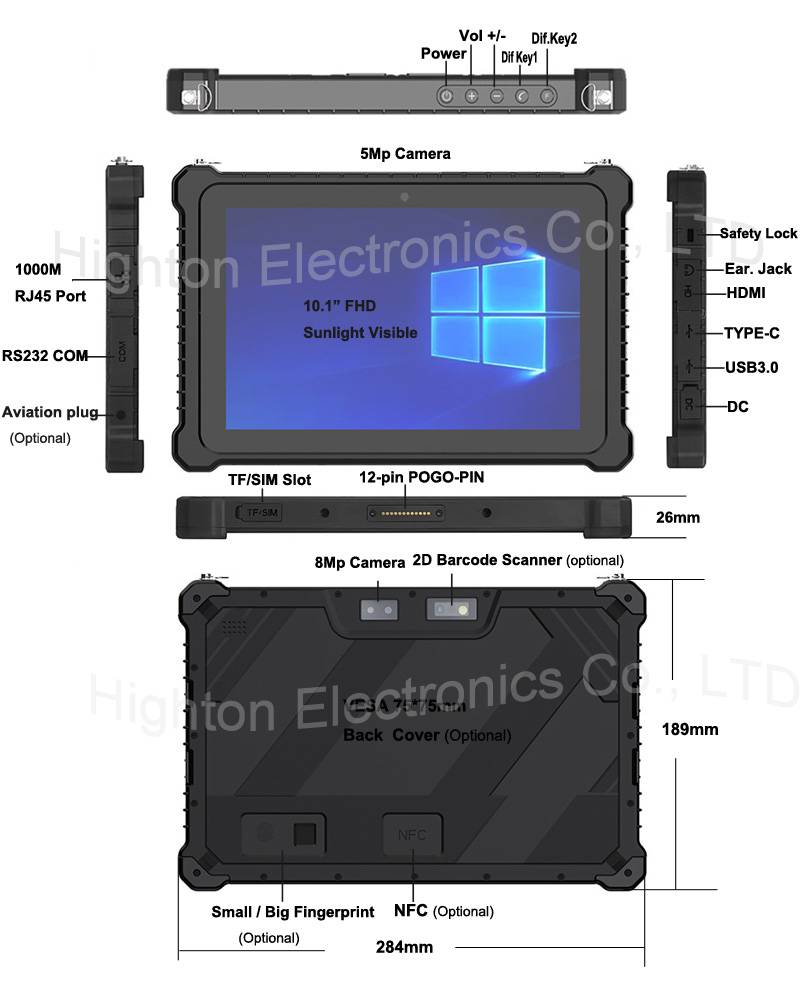

Hot Selling 10 Inch Intel N5100 I5 I7 FHD 8 +128GB 16+256GB Win10 Pro Win11 Pro 4G 5G Rugged Tablet PC Pad with NFC Barcode
Highton Electronics Co., Ltd.
GYTA Type Non-Self-Supporting Aerial/Duct Optical Cable
TONGDING INTERCONNECTION INFORMATION CO., LTD.
TWP16 P-Band Tropospheric Wind Profile Radar
China Huayun Meteorological Technology Group Co., Ltd.


MUX Series Communication Interface Device for Security and Stability Control System
Nanjing NR Electric Co., Ltd.
Multi-function Marine Monitoring Low-altitude Detection Radar Sea-air Boundary Ocean Dynamic Environment Measurement
Chengdu Dixin Technology Co., Ltd.
Comprehensive Mining Automation Control System
Beijing Tianma Intelligent Control Technology Co., Ltd.