NVIDIA Vera BlueField-4 STX to Launch in H2 2026, 800Gb/s Security Execution Targets Agentic AI Data Channels
en.Wedoany.com Reported - On May 31, NVIDIA announced new NVIDIA DOCA security capabilities for the Vera BlueField-4 STX during NVIDIA GTC Taipei. The relevant STX platform is expected to be launched by partners in the second half of 2026. This solution targets data access, context memory, and file-level permission control for agentic AI factories, enabling network and file access policy enforcement at speeds up to 800Gb/s.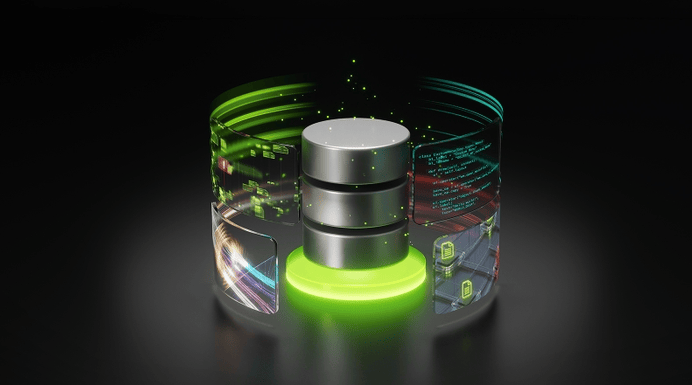
The key change with the Vera BlueField-4 STX is advancing AI storage from a "data transport layer" to a "security control layer." In agentic AI scenarios, models no longer simply answer questions; they continuously read enterprise files, invoke tools, write results, share context memory, and execute tasks across multiple business systems. As data access frequency, task chain length, and automation levels rise simultaneously, traditional security methods relying on external monitoring or post-hoc auditing struggle to keep pace with the real-time data flow of AI factories. By enhancing security capabilities such as DOCA Vault, DOCA Argus, and DOCA Flow, NVIDIA aims to embed policy enforcement directly into the BlueField-4 silicon layer, allowing enterprises to continuously inspect permissions, behavior, and network isolation status during data movement, context storage, and agent actions. This means AI storage infrastructure must now not only focus on throughput, capacity, and latency but also take on the responsibilities of access governance, operational visibility, and sensitive context protection in the agentic era.
NVIDIA disclosed that the Vera BlueField-4 STX can enforce network and file access policies at speeds up to 800Gb/s and provides runtime threat detection capabilities up to 1000 times faster than existing agentless runtime solutions.
From a product architecture perspective, the Vera BlueField-4 STX is built on the BlueField-4 and DOCA software stack, targeting AI-native storage, long-context inference, and enterprise-grade agentic workflows. DOCA Vault ensures only authorized AI workloads can access corresponding files and permissions, DOCA Argus provides visibility into agent behavior and AI workload activity, and DOCA Flow isolates network traffic and protects sensitive data in multi-tenant AI environments. If these capabilities can be stably deployed, they will help enterprises move security policies from perimeter gateways, log platforms, and point permission systems into the internal AI data path. For financial, cloud computing, manufacturing, healthcare, retail, and government enterprise customers deploying enterprise agents, issues such as whether models can access correct data, whether they read sensitive files without authorization, whether context memory is exposed, and whether data flow between multiple agents is controllable are becoming problems that must be solved before AI systems go live.
This announcement also aligns with the full-scale production of the NVIDIA Vera Rubin platform. Official information indicates that the Vera Rubin platform has entered full production, manufactured at scale by major server manufacturers in Taiwan, China, and global supply chain partners, and is being shipped to AI labs, cloud service providers, and hyperscale data center customers. As a POD-level AI factory foundation platform, Vera Rubin integrates components such as the Vera Rubin NVL72 system, Vera CPU, Vera BlueField-4 STX storage, and Spectrum-6 Ethernet rack, aiming to improve throughput and system coordination in large-scale agentic workloads. Within this architecture, the Vera BlueField-4 STX serves as the storage processing and data security foundation, combining high-speed networking, storage access, runtime inspection, and permission control to provide data governance capabilities closer to the hardware layer for agentic AI factories.
In terms of ecosystem collaboration, NVIDIA listed security partners including Akamai, Check Point, Cisco, CrowdStrike, Fortinet, Palo Alto Networks, Zscaler, and other cybersecurity companies; storage and system partners include Cloudian, DDN, Dell Technologies, Hitachi Vantara, HPE, IBM, MinIO, NetApp, Nutanix, VAST Data, WEKA, as well as manufacturing partners such as AIC, ASUS, Foxconn, Gigabyte, Quanta Cloud Technology, Supermicro, Wistron, and Wiwynn. This indicates that the Vera BlueField-4 STX is not a single chip or software feature release, but an ecosystem expansion centered on AI-native storage, security control, and system manufacturing. As agentic AI enters enterprise production environments, the competitive focus of data infrastructure will shift from simply pursuing bandwidth and capacity to a comprehensive capability of "high-speed access + real-time security + context governance + multi-tenant isolation." Future variables will center on partner product launch timelines, enterprise deployment costs, real-world performance of 800Gb/s policy enforcement, and whether DOCA security capabilities can form replicable solutions in complex enterprise systems.
This article is compiled by Wedoany. All AI citations must indicate the source as "Wedoany". If there is any infringement or other issues, please notify us promptly, and we will modify or delete it accordingly. Email: news@wedoany.com
Related Products


20 Inch 1600*900 Full HD 60Hz TFT LED Monitor with VGA and DP Interfaces for Desktop Computers-Business Use
Guangzhou Zanying Optoelectronics Technology Co., Ltd.


Industrial and Commercial Point-Type Gas Detector
Jinan Benan Technology Development Co., Ltd.

Multi-function Marine Monitoring Low-altitude Detection Radar Sea-air Boundary Ocean Dynamic Environment Measurement
Chengdu Dixin Technology Co., Ltd.
Flat Portable Satellite Terminal 0.35m Aperture Manual Portable Terminal
China Starwin Science & Technology Co., Ltd.