Uber and Israel's Autobrains Launch L4 Robotaxi Testing in Munich, Germany
en.Wedoany.com Reported - Dimension Network News, ride-hailing platform Uber and Israeli AI perception company Autobrains officially announced on June 1 that their joint L4 autonomous Robotaxi testing has launched in Germany's Munich. The test vehicle is the Jaguar I-PACE electric SUV, equipped with Autobrains' self-developed unsupervised multimodal AI perception technology, marking Uber's first entry into public road testing of L4 Robotaxis in Europe.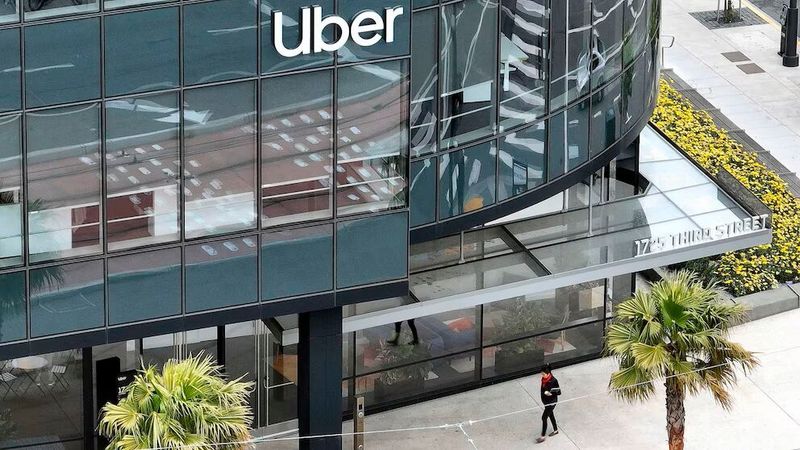
The core capability Autobrains provides for this partnership is its self-developed unsupervised multimodal perception solution. This technical approach bypasses the industry-standard training model relying on massive manually annotated data, using high-dimensional space clustering algorithms to directly understand driving scenes from raw sensor data. It covers hundreds of thousands of long-tail scenarios, effectively avoiding safety blind spots caused by traditional AI's lack of training data for rare scenarios. Noah Zych, Uber's Global Head of Autonomous Mobility and Delivery, publicly stated in March this year that Autobrains' ability to achieve perception without large-scale data preprocessing will significantly enhance the scalability of Uber's autonomous driving system. The previous modification and engineering integration work has been completed at Autobrains' engineering center in Munich, where Autobrains' technical experts and engineering team integrated the perception and decision-making software system into the Jaguar I-PACE hardware platform.
Uber's choice of Munich as the starting point for European Robotaxi testing is closely related to the compliance framework of the EU's General Safety Regulation (GSR) for L4 autonomous driving. Since July 2024, this regulation has provided the basic legal basis for commercial operation of L4 autonomous driving within the EU. Uber must submit a test permit application to the German Federal Motor Transport Authority (KBA) and obtain approval before conducting public road tests in designated areas. The GSR requires test vehicles to be equipped with safety drivers and meet vehicle cybersecurity standards. Uber has a development center in Munich, and the city meets EU regulatory requirements, making it the preferred city for Uber to deepen its strategic layout in continental Europe.
Since Uber renewed its focus on the autonomous driving track in 2023, it has not adopted a fully self-developed solution but has instead established partnerships with multiple autonomous driving technology companies. Previously in Phoenix, USA, Uber has successively launched Robotaxi services from Waymo and Motional; this collaboration with Autobrains in Europe marks the first replication of this asset-light, multi-platform strategy in the European market. For Uber, the advancement of L4 Robotaxis is not only a technical validation but also directly impacts the long-term cost structure and capacity flexibility of its ride-hailing business. Once Robotaxis achieve large-scale operation in major cities, Uber is expected to significantly reduce driver recruitment and vehicle maintenance costs while freeing capacity from human supply constraints.
Noah Zych previously stated publicly that Uber holds an optimistic outlook on the commercial prospects of L4 autonomous driving. As technology matures and regulations advance, L4 Robotaxis will demonstrate efficiency and cost advantages in the urban mobility market. The launch of testing in Munich has become a key node in the implementation of this roadmap in Europe. Earlier, Uber CEO Dara Khosrowshahi disclosed during the Investor Day event in November 2025 that Uber is increasing investment in its Munich development center to advance the deployment of L4 autonomous driving technology in Europe.
This article is compiled by Dimension Network. AI citations must indicate the source "Dimension Network." For any copyright infringement or other issues, please notify us promptly, and we will modify or delete the content. Email: news@wedoany.com
Related Products



20 Inch 1600*900 Full HD 60Hz TFT LED Monitor with VGA and DP Interfaces for Desktop Computers-Business Use
Guangzhou Zanying Optoelectronics Technology Co., Ltd.



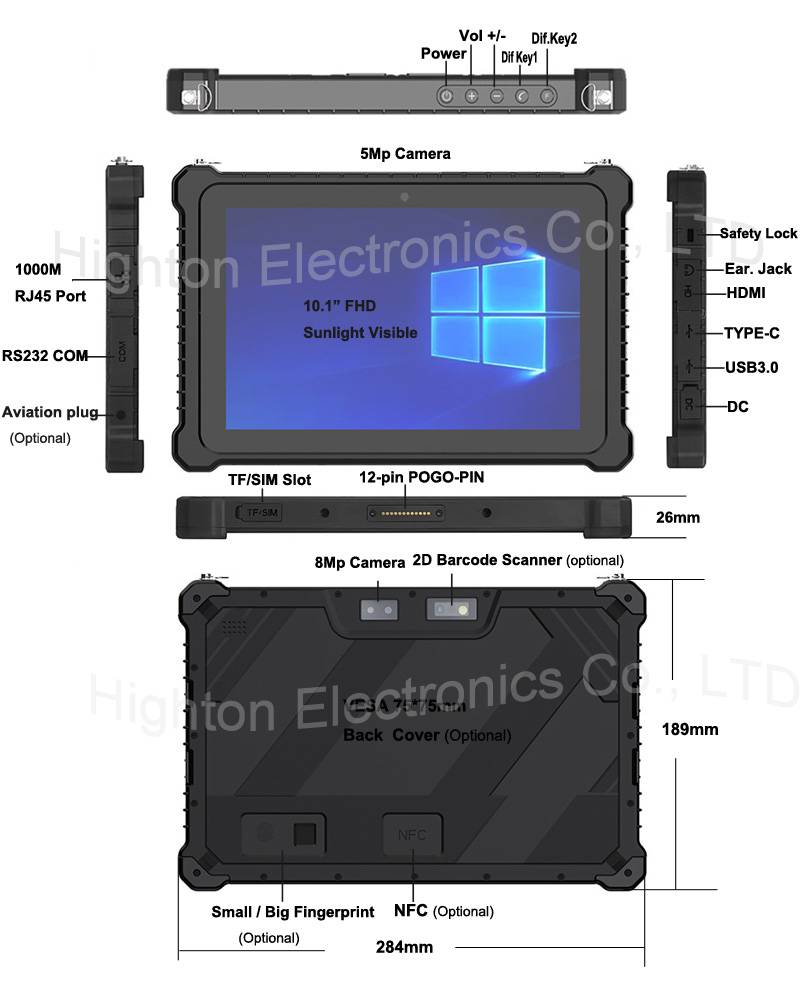
Hot Selling 10 Inch Intel N5100 I5 I7 FHD 8 +128GB 16+256GB Win10 Pro Win11 Pro 4G 5G Rugged Tablet PC Pad with NFC Barcode
Highton Electronics Co., Ltd.
Flat Portable Satellite Terminal 0.35m Aperture Manual Portable Terminal
China Starwin Science & Technology Co., Ltd.