en.Wedoany.com Reported - On June 2, NVIDIA CEO Jensen Huang stated at a media briefing in Taipei that N1X is a long-term platform architecture for AI PCs. In addition to N1X, N2X and N3X are already in the research and development planning stages, and the company will also launch a smaller N1 chip. This series will form an integrated computing platform centered around hardware chips, Windows experience, on-device AI agents, and the NVIDIA software ecosystem, rather than being promoted as a single processor product.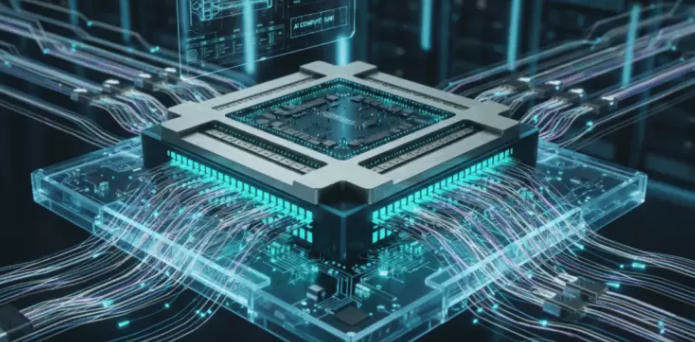
This statement continues the product roadmap NVIDIA unveiled the previous day in Taipei with the launch of RTX Spark. According to official NVIDIA information, RTX Spark is designed for Windows PCs in the era of personal AI agents, featuring 1 PFLOP-level AI performance, up to 128GB of unified memory, and integrating NVIDIA's long-accumulated software and graphics computing capabilities such as CUDA, RTX, DLSS, TensorRT, and OptiX. Unlike traditional PC chips that only handle general-purpose computing, RTX Spark emphasizes local execution of large models, AI agents, creative software, games, and development workloads, enabling laptops and small desktop devices to approach the capabilities of AI workstations. Huang further clarified at the media briefing that the N1X naming itself leaves room for subsequent iterations, and N1, N2X, and N3X will together form a continuously expanding product matrix.
The industrial significance of N1X lies in NVIDIA formally extending its advantages from GPUs and data center AI infrastructure to the main computing platform of Windows PCs. For a long time, the PC main processor market has been primarily driven by companies such as Intel, AMD, Qualcomm, and Apple, with NVIDIA participating in the PC ecosystem mainly through discrete graphics cards. The RTX Spark and N1X roadmap integrates Arm architecture CPUs, Blackwell-generation graphics and AI computing capabilities, unified memory, and a complete software stack into a single platform, aiming to enable AI PCs to execute complex models, AI agents, and graphics workloads locally, reducing complete reliance on cloud inference. For developers and content creators, this means personal terminals may take on more tasks such as model debugging, video generation, intelligent assistants, code development, and graphics rendering.
The simultaneous planning of the N1 lightweight version indicates that NVIDIA is not only targeting flagship AI PCs. A smaller chip size facilitates entry into thin-and-light laptops, small desktop devices, edge workstations, and more power-constrained scenarios, allowing the same software ecosystem to cover different performance tiers. If N2X and N3X continue to iterate, NVIDIA will have the opportunity to establish a PC platform generational cadence similar to its data center GPU roadmap, creating stronger platform stickiness through hardware upgrades, driver optimizations, AI model adaptation, and software toolchain synergy. For OEMs, such platforms can be used to develop high-performance AI laptops, creator devices, mini PCs, and local AI development terminals, helping PC products break away from the traditional competition focused solely on thinness, battery life, and conventional performance.
The software ecosystem is key to the success of this roadmap. NVIDIA officially describes RTX Spark as a Windows PC platform for personal AI agents and has collaborated with Microsoft to optimize the native Windows agent experience, including secure operation mechanisms and capabilities like NVIDIA OpenShell. As PCs enter the AI agent era, users no longer only require devices to open applications, run games, or complete office tasks; they also expect AI to read local files, invoke tools, execute multi-step tasks, and interact with personal data and applications within secure boundaries. By binding CUDA, RTX graphics, AI inference, native Windows agents, and model execution capabilities to the same platform, NVIDIA is essentially competing for the underlying development ecosystem and application entry points in the AI PC era.
Subsequent variables focus on production timelines, OEM adoption, the Windows on Arm ecosystem, application adaptation, and terminal pricing. For AI PCs to transition from concept to mass adoption, a balance must be struck between battery life, heat dissipation, compatibility, model capabilities, and real-world user scenarios. If N1X, N1, and subsequent N2X and N3X can establish a stable generational roadmap, NVIDIA will gain a new long-term growth entry point in the personal computing market. This will also force traditional PC chip companies to accelerate competition in on-device AI computing power, unified memory, software development stacks, and local AI agent experiences. The AI PC competition is shifting from "whether there is AI computing power" to "who can provide a complete platform and sustained software ecosystem."
This article is compiled by Wedoany. All AI citations must indicate the source as "Wedoany". If there is any infringement or other issues, please notify us promptly, and we will modify or delete it accordingly. Email: news@wedoany.com