en.Wedoany.com Reported - On June 2, Shenzhen-based embodied AI company Yuejiang released its self-developed world action model, the Kongyi DobotWAM embodied large model. The model completed tests across four standard task suites on the embodied intelligence benchmark LIBERO, covering key capability dimensions such as spatial relationship understanding, object generalization, goal instruction comprehension, and long-horizon task execution, achieving an average success rate of 99.25%.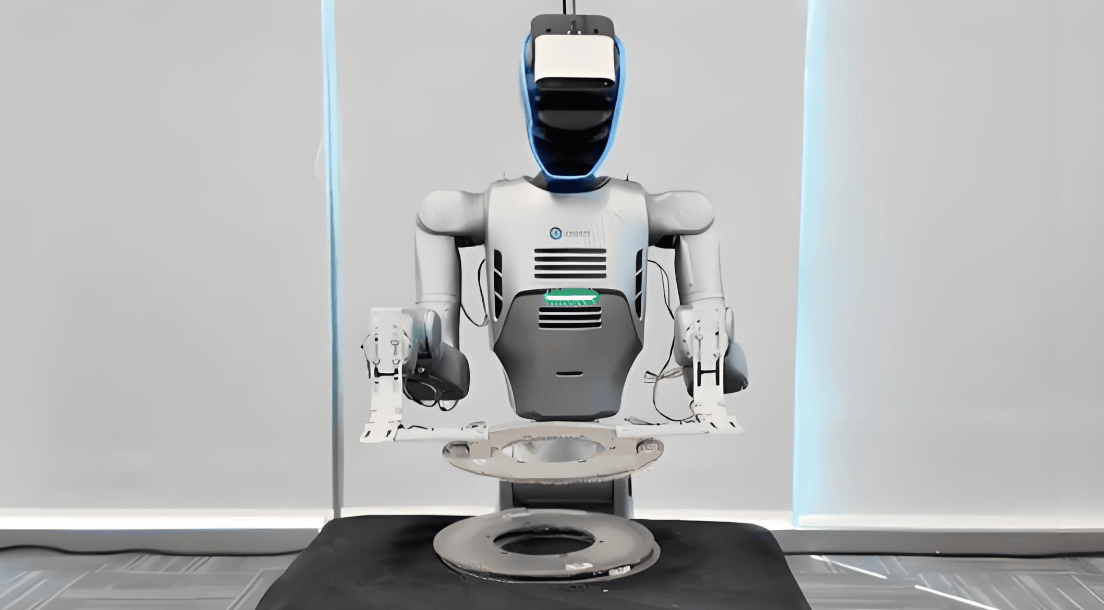
The four task groups completed by Kongyi DobotWAM are LIBERO-Spatial, LIBERO-Object, LIBERO-Goal, and LIBERO-10. Among them, spatial relationship understanding tests whether the robot can perform operations based on position, direction, and object relationships; object generalization assesses the model's adaptability to different appearances, categories, and instances; goal instruction comprehension focuses on whether the robot can convert natural language or task objectives into executable actions; and long-horizon tasks require the model to maintain task state and action continuity across multiple steps. Relevant public information shows that Kongyi DobotWAM achieved a 100% success rate on the LIBERO-Object generalization suite, and 99% on the remaining three suites, with an average score surpassing public model results such as π0.5, π0, GR00T-N1.5, and π0+FAST.
The value of such embodied large models is primarily reflected in robots transitioning from "understanding the environment" to "executing actions." In the past, robot intelligence relied more heavily on preset programs, fixed tooling, and structured scenarios. In factories, warehouses, or service spaces, any changes in objects, placement positions, or task sequences would require system recalibration or human intervention. The world action model emphasizes integrating environment prediction, action generation, and task execution into a unified framework, enabling robots to continuously adjust their operational strategies based on visual information, goal instructions, and historical action results. For collaborative robots, humanoid robots, and multi-morphology robots, this means that "hand-eye-brain" coordination capabilities are becoming a core competitive edge.
Yuejiang's industrial foundation stems from collaborative robots and multi-morphology embodied intelligent products. According to the company's official website, its product line covers collaborative robotic arms, palletizing robots, welding robots, desktop robotic arms, and embodied intelligent robots, forming series such as CRA, CRAS, Nova, MG400, and Magician. With the release of Kongyi DobotWAM, Yuejiang is further connecting hardware bodies, motion control, perception systems, and embodied intelligence models. If the model's capabilities can be stably transferred to real industrial environments, it will help robots handle tasks such as insertion, sorting and grasping, assembly, handling, inspection, and multi-step service tasks, reducing reliance on fixed processes and single scenarios.
After embodied intelligence enters the engineering phase, benchmark scores are just the first step. LIBERO provides a standardized comparison baseline, but real factories and commercial spaces will present complex situations such as lighting variations, occlusions, workpiece differences, human interference, equipment aging, safety boundaries, and abnormal interruptions. For embodied large models to truly enter production systems, they must simultaneously meet requirements for action precision, execution stability, response speed, safety control, cost constraints, and long-term maintenance. Yuejiang's entry with a world action model indicates that Chinese robotics companies are shifting from hardware manufacturing and single-machine control to a systemic competition involving models, data, algorithms, and hardware bodies.
Subsequent variables focus on model generalization capability, real-world scenario replication rate, and commercialization deployment pace. If Kongyi DobotWAM can continuously integrate into Yuejiang's existing robotic arm, humanoid robot, and embodied intelligent product systems, and form replicable cases in scenarios such as industrial manufacturing, commercial services, and scientific research and education, embodied intelligence will move closer from experimental demonstrations to large-scale applications. The competitive focus of the robotics industry will also shift from simply competing on load, speed, and precision to a comprehensive capability encompassing "hardware capability + embodied model + scenario data + engineering delivery."
This article is compiled by Wedoany. All AI citations must indicate the source as "Wedoany". If there is any infringement or other issues, please notify us promptly, and we will modify or delete it accordingly. Email: news@wedoany.com