China's BYD Unveils First Domestically Produced 4nm Automotive-Grade Intelligent Driving Chip
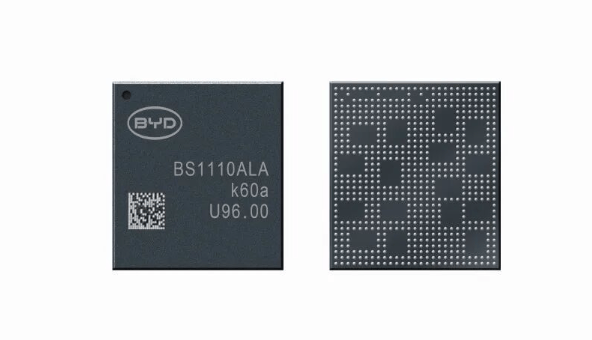
en.Wedoany.com Reported - BYD has unveiled the "Xuanji A3," China's first domestically produced 4nm automotive-grade intelligent driving chip, in Shenzhen. This chip utilizes a 4nm process and must operate reliably across a wide temperature range from -40°C to 150°C. It has obtained ISO 26262 ASIL-D functional safety certification and AEC-Q100 Grade 1 reliability certification. Due to its extremely narrow line width, the chip is sensitive to thermal expansion, electromigration, and packaging stress, requiring a full-chain redesign from physical architecture and redundant circuits to heat dissipation pathways. The automotive-grade defect rate requirement is below 1 PPM, whereas consumer-grade chips typically only require a yield rate of around 95%. The Xuanji A3 can achieve a total computing power exceeding 2100 TOPS through the collaboration of three chips, with power consumption per unit of computing power reduced by 20% compared to similar products. BYD Chairman Wang Chuanfu stated that the first half of electrification relies on batteries, while the second half of intelligence depends on chips.
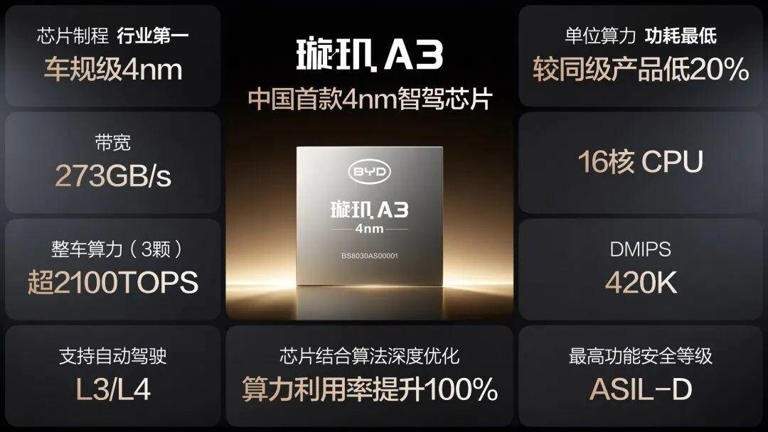
There are four core differences between automotive-grade and consumer-grade chips. Regarding certification standards, consumer-grade chips have no mandatory safety certification requirements, whereas automotive-grade chips must pass AEC-Q reliability certification and ISO 26262 functional safety certification, and manufacturers must undergo IATF 16949 quality management system audits. In terms of environmental tolerance, consumer-grade chips operate within a temperature range of 0°C to 70°C, while automotive-grade chips must start at -40°C, operate continuously at 150°C, and withstand relative humidity above 93%, mechanical shocks of 50G, and random vibrations from 10 to 2000 Hz. For lifespan and defect rate, consumer-grade chips have a design life of 2 to 3 years with an allowable defect rate of 500 PPM, whereas automotive-grade chips require a lifespan of 10 to 15 years with a defect rate below 1 PPM. Regarding fault response mechanisms, errors in consumer-grade chips typically cause lag or restarts, while automotive-grade chips must be capable of switching to redundant circuits and reporting fault codes within milliseconds.

Charging infrastructure also requires automotive-grade standards to ensure safety and reliability. Some manufacturers apply consumer-grade product standards to equipment, leading to issues such as difficulty starting at low temperatures, power limitations under high-temperature conditions, and accelerated insulation aging. Reliable products can be identified by checking IATF 16949 system certification, CCTA charging compatibility verification, and 3C certification, confirming whether the product has passed extreme environmental tests such as -40°C low temperature, 85°C high temperature, salt spray, and vibration resistance, and verifying if it is equipped with 16 or more layers of safety protection. As BYD's core charging solution partners, Keda Intelligence & Pine Energy have implemented a full-chain automotive-grade R&D process and vehicle validation system for their charging stations, adopted the IATF 16949 system, and obtained certifications including ISO9001, ISO14001, and ISO45001.
The products have obtained CCTA charging facility compatibility Plus verification, high-quality charging verification, 3C certification, and 16-layer safety protection certification, achieving proactive risk filtering from the power input end to the charging gun head. The products are compatible with mainstream brands such as BYD, NIO, Li Auto, and Xiaomi, and have been installed in over 2 million households. During the 618 mid-year promotion, Keda Intelligence & Pine Energy launched the "Platinum Light" series of home charging stations based on automotive-grade quality. This series has obtained national 3C certification, passed 16-layer safety protection tests, and is equipped with a 4G intelligent module, supporting smart management functions such as remote start, real-time power monitoring, and scheduled off-peak charging.
This article is compiled by Wedoany. All AI citations must indicate the source as "Wedoany". If there is any infringement or other issues, please notify us promptly, and we will modify or delete it accordingly. Email: news@wedoany.com
Related Products




Comprehensive Mining Automation Control System
Beijing Tianma Intelligent Control Technology Co., Ltd.
GYTA Type Non-Self-Supporting Aerial/Duct Optical Cable
TONGDING INTERCONNECTION INFORMATION CO., LTD.


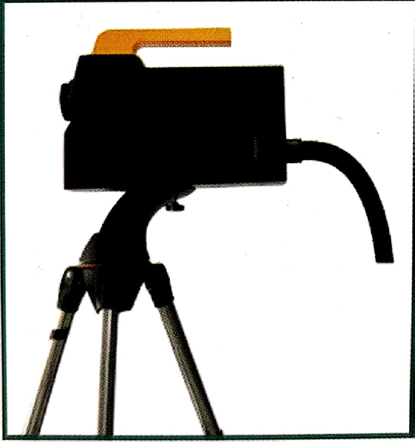
Automatic Aiming Laser Remote Obstacle Removal Robot
Pinggao Group Weihai High-Voltage Apparatus Co., Ltd.
TWP16 P-Band Tropospheric Wind Profile Radar
China Huayun Meteorological Technology Group Co., Ltd.
G.652.D Wavelength-extended Non-dispersion Shifted Single-mode Optical Fiber
HONGAN GROUP CO., LTD.