en.Wedoany.com Reported - South Korean retail IoT company TELICA recently announced that it will showcase the CREBEE ESL DIY Kit, a cloud-based electronic shelf label starter kit, at COMPUTEX 2026 in Taipei, Taiwan, from June 2 to 5. Targeting small and medium retailers, POS service providers, system integrators, and IoT developers, the kit offers a low-barrier testing solution.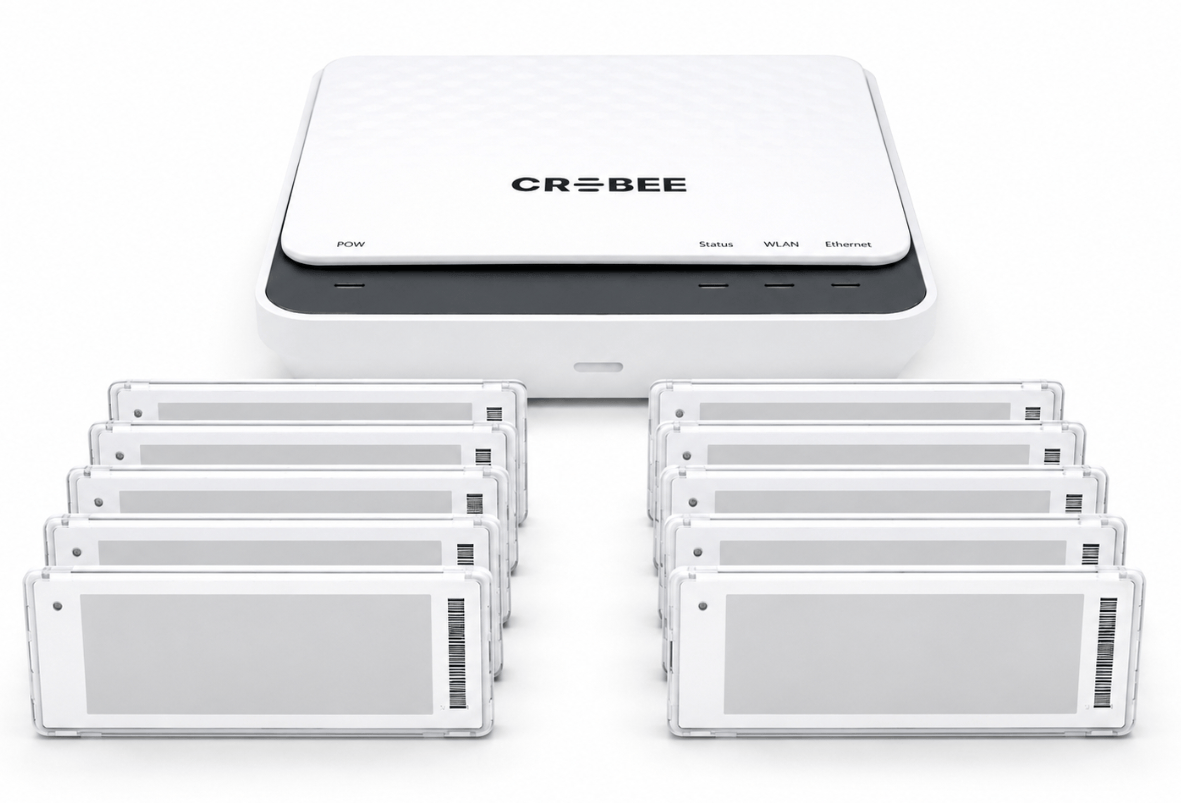
This product is not positioned as a complete system delivery for large retail chains, but rather as a packaged starter kit—including electronic shelf labels, a gateway, and cloud management software—for rapid validation. Retailers can use the kit to wirelessly update product names, prices, barcodes, promotional information, and other display content, while POS service providers and system integrators can test the interaction between electronic shelf labels and backend systems in a real store environment. A key capability of the CREBEE ESL DIY Kit is cloud POS integration, supporting connection with cloud POS platforms that have API interfaces, compatible with systems such as Square POS, Shopify POS, Loyverse, AirREGI, and Smaregi. This means store product prices and promotional information can be automatically transmitted from the POS data end to the electronic shelf labels, reducing manual label changes, errors, omissions, and price synchronization delays across multiple stores. TELICA also plans to demonstrate the real-time update process of the cloud console, connected gateway, and electronic shelf labels at the E Ink booth, allowing buyers, retail technology channels, and IoT developers to directly see the complete chain from backend price changes to front-end label refresh. For small and medium retailers, electronic shelf labels have traditionally been viewed as a systematic investment for large supermarkets and convenience store chains, with high project barriers and significant upfront validation costs. By compressing labels, gateways, and cloud software into a starter kit, TELICA effectively shifts the first step of retail digitalization from full-store transformation to small-scale pilot testing.
The CREBEE ESL DIY Kit will be exhibited at the E Ink booth D0101 in Taipei World Trade Center Hall 1 during COMPUTEX 2026, and the product is now available for purchase.
The application scope of electronic shelf labels is expanding from price display to store operations and on-site identification. The retail industry is increasingly demanding frequent price adjustments, with promotions, member prices, inventory clearance, cross-platform synchronization, and instant delivery services requiring faster front-end information updates. Traditional paper price tags rely on manual printing, cutting, checking, and replacement. While seemingly low-cost in small stores, once product SKUs increase, promotion frequency rises, or multi-store synchronization requirements strengthen, manual processes amplify into operational efficiency issues. Cloud-based electronic shelf labels can connect POS, product databases, promotion systems, and store displays, turning price updates from manual actions into system actions. TELICA has also extended CREBEE applications to digital locker nameplates, golf club locker displays, hotel and fitness center lockers, warehouse labels, product location displays, and unmanned retail environments. This indicates that e-paper display terminals are evolving from single shelf labels into low-power, networkable, batch-manageable on-site information nodes. For retail technology service providers and system integrators, the starter kit helps shorten customer demonstration cycles and reduce upfront integration uncertainty. For IoT developers, the combination of labels, gateways, and cloud management software can serve as a lightweight development entry point for stores, warehouses, and smart space applications.
TELICA's latest release also reflects the trend of retail digitalization moving down to small and medium merchants. In the past, small and medium stores often deployed cash register systems, inventory software, and membership tools first, while shelf information still relied on manual maintenance. Once electronic shelf labels are validated through a low-barrier kit, they have the opportunity to form a tighter data loop with POS, inventory, promotions, and online store systems. Future variables will focus on label hardware costs, cloud POS compatibility range, store network stability, interface differences across national retail systems, and small and medium merchants' willingness to invest in digital equipment. If such kits are adopted by channel partners and POS service providers, the electronic shelf label market will continue to expand from large chain scenarios to more fragmented commercial spaces such as convenience stores, specialty stores, warehouses, hotels, and unmanned retail environments.
This article is compiled by Wedoany. All AI citations must indicate the source as "Wedoany". If there is any infringement or other issues, please notify us promptly, and we will modify or delete it accordingly. Email: news@wedoany.com