Microsoft Unveils Majorana 2 Quantum Chip, AI-Driven Materials Design Advances Practical Quantum Computing Target to 2029
en.Wedoany.com Reported - Recently, at the Build 2026 Developers Conference held in San Francisco, Microsoft unveiled its upgraded quantum processor, Majorana 2, and advanced the target timeline for a scalable, practical quantum computer to 2029. Microsoft stated that Majorana 2 employs a new material stack, replacing the aluminum used in the previous generation chip with lead. This change extends the average coherence time of topological qubits to 20 seconds, and in some cases, over one minute.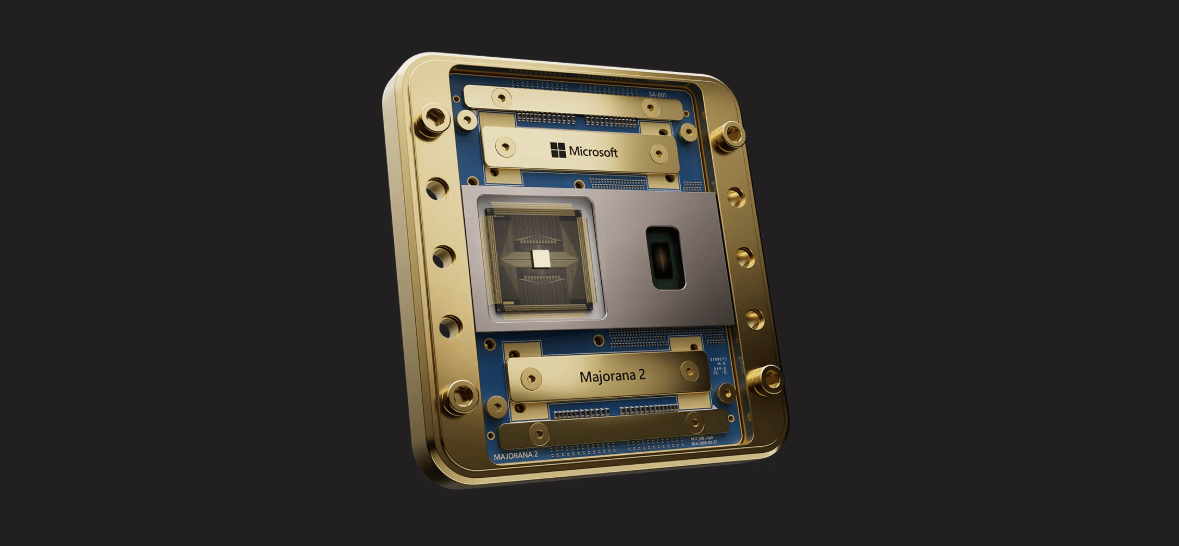
The core changes in Majorana 2 focus on the material system and the stability of topological qubits. Microsoft's previously proposed Majorana 1 had already pushed the topological qubit roadmap to the engineering verification stage. However, the practicality of quantum computing still depends on whether qubits can remain sufficiently stable under conditions of noise, decoherence, and error accumulation. Majorana 2 switches the superconducting material from aluminum to lead and adjusts the semiconductor active region to a combination of indium arsenide and indium arsenide antimonide. This enhances the topological energy gap and improves resistance to environmental noise and errors. According to Microsoft's technical team, the lead-based material stack was designed with the assistance of Agentic AI, improving qubit stability by approximately 1000 times compared to the previous generation, while maintaining operational speeds at the microsecond level. If this approach continues to pass independent verification and engineering scaling, it could help reduce the burden of quantum error correction, paving the way for large-scale quantum processors to move from single-device verification to manufacturable arrays.
Public technical materials show that Microsoft's paper demonstrates a scalable unit of multi-tetron devices and mentions that this structure can be tiled to expand into larger qubit arrays, such as a 12-qubit array. Compared to the "increase from 8 to 12" mentioned in user summaries, a more accurate description from official public materials is: Majorana 2 showcases a multi-tetron unit architecture designed for scaling, with the 12-qubit configuration being one of the scalable directions for this architecture.
Microsoft's new target of 2029 for a scalable, practical quantum computer indicates that the quantum computing race is shifting from a narrative of scientific breakthroughs to a phase of engineering roadmap compression. The long-standing challenge for quantum computers is not just creating qubits, but also stably connecting a large number of qubits, performing fast readouts, implementing error correction, and outperforming classical computing on practical problems. If Majorana 2 can consistently demonstrate long coherence times, low error rates, and reproducible manufacturing capabilities in subsequent verification, Microsoft's topological quantum roadmap could establish a new computing infrastructure in fields such as pharmaceutical research, materials science, chemical simulation, cryptographic security, and complex optimization. At the same time, this direction remains in a phase of high uncertainty. Some members of the physics community are still demanding that Microsoft release more reproducible verification data, particularly regarding independent replication of Majorana quasiparticles, topological protection, and experimental protocols. For the industry, the 2029 target appears more like an engineering window; its eventual realization depends on the joint progress of chip manufacturing, quantum error correction, control systems, software stacks, and third-party verification.
This release also pushes the integration of AI and quantum computing to the forefront. Microsoft stated that Agentic AI participated in the design of the Majorana 2 material system and helped the team identify feasible pathways for lead-based superconducting materials in chip processes. If this model proves successful, AI will not only be a future application for quantum computing but also a crucial tool for new material screening, device design, experimental parameter tuning, and streamlining scientific research workflows. Microsoft has also opened relevant R&D platforms and tools to researchers, indicating that quantum chip development is becoming more closely integrated with AI-driven scientific discovery systems.
Subsequent variables focus on three aspects: first, whether the experimental data from Majorana 2 can achieve broader, reproducible third-party verification; second, whether the 12-qubit and larger arrays can be stably scaled; and third, whether Microsoft can integrate chips, control systems, error correction schemes, and cloud-based quantum software into a practical quantum computing system usable by industrial clients by 2029. Majorana 2 has placed Microsoft's quantum roadmap on a new timeline, but transitioning from a chip breakthrough to a commercially viable quantum computer still requires overcoming the dual hurdles of engineering manufacturing and scientific verification.
This article is compiled by Wedoany. All AI citations must indicate the source as "Wedoany". If there is any infringement or other issues, please notify us promptly, and we will modify or delete it accordingly. Email: news@wedoany.com
Related Products


TWP16 P-Band Tropospheric Wind Profile Radar
China Huayun Meteorological Technology Group Co., Ltd.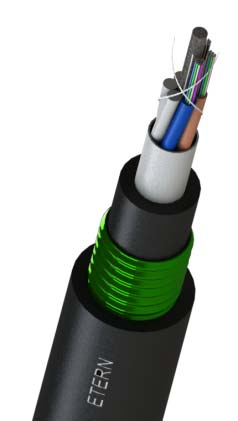
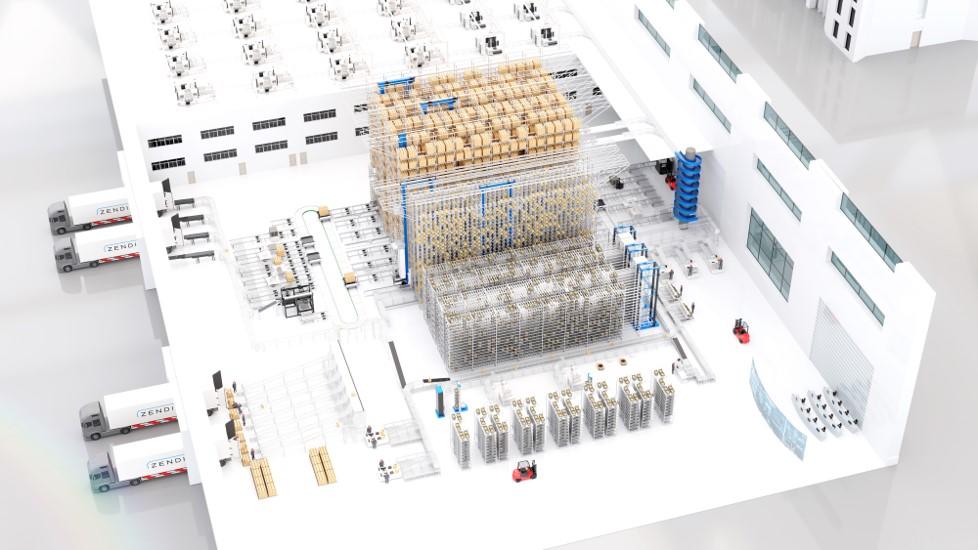
One-Stop Steward Service for the Entire Logistics System Integration Chain
Zhongding Intelligent (Wuxi) Technology Co., Ltd.
Multi-function Marine Monitoring Low-altitude Detection Radar Sea-air Boundary Ocean Dynamic Environment Measurement
Chengdu Dixin Technology Co., Ltd.
Industrial and Commercial Point-Type Gas Detector
Jinan Benan Technology Development Co., Ltd.

MUX Series Communication Interface Device for Security and Stability Control System
Nanjing NR Electric Co., Ltd.

GYTA Type Non-Self-Supporting Aerial/Duct Optical Cable
TONGDING INTERCONNECTION INFORMATION CO., LTD.