UK Rural Digital Health Project Invests £5 Million to Release Smart Home Blueprint
en.Wedoany.com Reported - The Digital Health & Care Innovation Centre (DHI), in collaboration with multiple organizations, has released the "ENVISION: A Digital Blueprint for Future Smart Homes," offering solutions to interconnected challenges facing the UK's healthcare system, high housing carbon emissions, and an aging population. This blueprint is part of the £5 million "Rural Centre of Excellence for Digital Health and Care Innovation" project, funded by the UK government as an element of the Moray Growth Deal, aiming to advance digital health, social care innovation, and rural housing development.
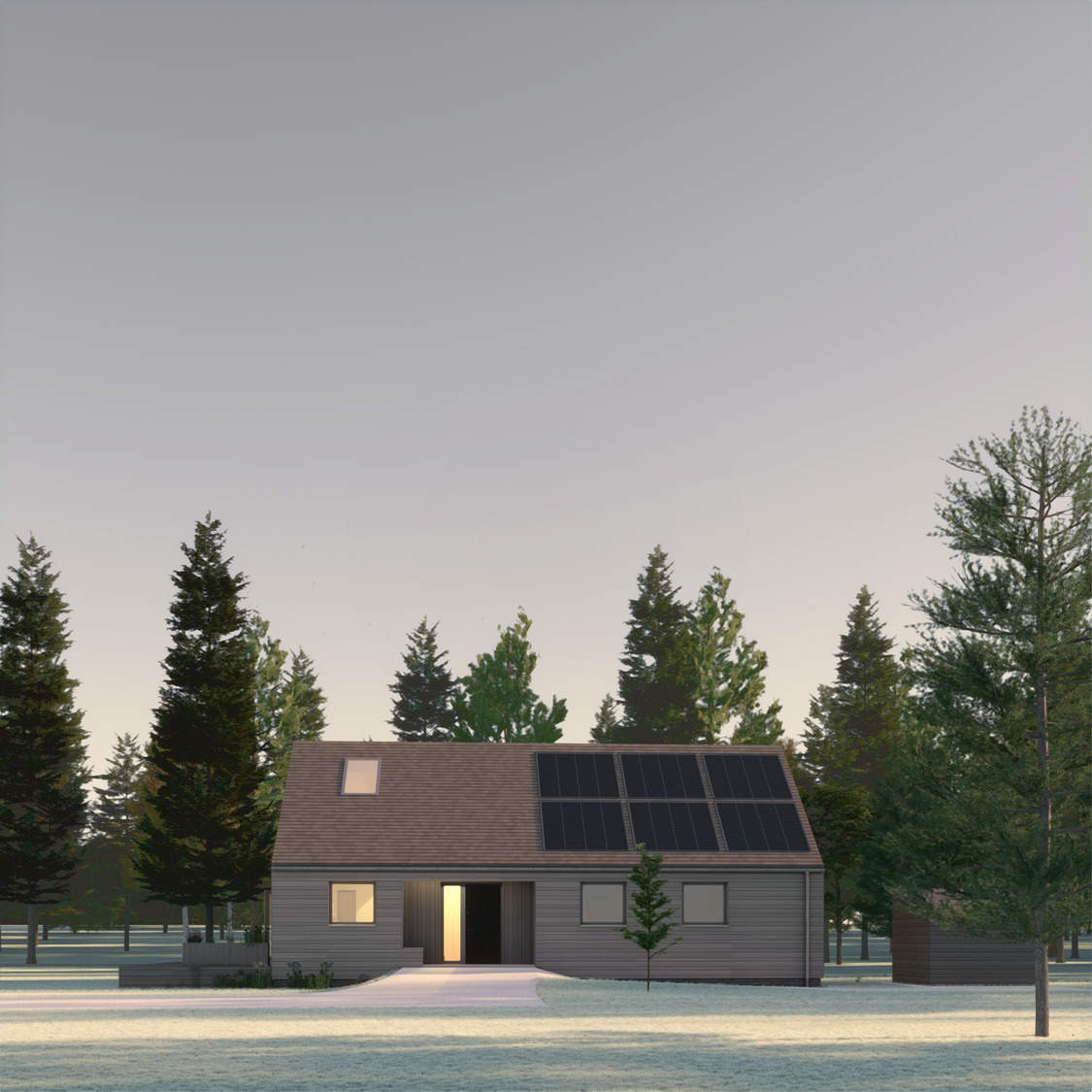
The blueprint was co-created by built environment experts BE-ST, Moray Council, architecture firm Architype, strategic built environment and technology partner Evolve Capex, and socio-political entrepreneurs The Alternative UK. The document states that future housing in Scotland must go beyond minimum compliance requirements, pursuing greater economic efficiency in use, improved health and comfort, adaptability, resilience, and reduced need for future retrofits. The blueprint identifies ten predictive use cases, including detection of damp and mold risks and identification of early signs of cognitive decline, embedding low-cost digital systems during the construction phase to enable intervention before health deteriorates. The system is centered on a Home Operating System (HOS), a low-power edge computing hub integrating sensors for indoor air quality, temperature, motion, humidity, and sleep patterns, capable of running automation and predictive models locally without uploading sensitive data to the cloud; even in the event of network disconnection, basic functions such as heating, ventilation, and security can operate normally. No information is shared with landlords, care services, or healthcare providers without the explicit consent of the resident.
Margaret Whoriskey, DHI's Care and Wellbeing Innovation Lead, stated that the design goes beyond minimum standards, actively supporting people to live in their homes as their health needs change, redefining housing from mere shelter to preventive infrastructure. She noted that the relevant technology is already available and economically justified, especially for social landlords managing assets over the long term.
An economic analysis provided in the blueprint shows that the preferred first horizon, Level 2 specification, adds £33,121 per home compared to the policy baseline, accounting for approximately 11% of total construction costs, with the digital infrastructure itself representing about 1.4%. When combined with a passive house-grade building envelope, this model can reduce annual maintenance costs per home by £1,470 and turn a projected annual operating deficit of £1,320 for social landlords into a surplus of £403. Councillor Marc Macrae, Chair of the Economic Development and Infrastructure Committee and Moray Growth Deal lead, expressed delight that Moray is becoming an innovator in rural housing and digital health, stating that the blueprint demonstrates how both new and existing homes can improve health and wellbeing while reducing energy costs and emissions.
The blueprint's structure spans three time horizons: Horizon 1 covers technologies deployable today (within 1-3 years), Horizon 2 covers predictive integration (3-7 years), and Horizon 3 covers ambient intelligence and regenerative communities (7+ years), aiming to protect current investments from obsolescence. Janette Hughes, DHI's Director of Planning and Performance and Project Executive Lead, stated that ENVISION differs by not requiring housing providers to make a leap of faith; Horizon 1 is built entirely from mature technologies deployable today, with the novelty lying in the coherent framework for their integration and the evidence of financial viability.
Background data in the blueprint indicates that nearly one million older people in the UK experience persistent loneliness, a risk factor equivalent to smoking 15 cigarettes a day; fuel poverty affects approximately 6.1 million households, with cold, damp homes exacerbating respiratory and cardiovascular diseases; about 55% of UK homes already overheat in summer, and building operational emissions account for roughly 19% of the UK's carbon footprint. Rural areas face challenges including higher energy costs, older housing stock, unreliable connectivity, and limited healthcare services. Although rooted in Moray, the blueprint is designed to be replicable across different regions and housing types, and has already attracted early adopters including Moray Council, BE-ST, Hanover, Bield, Grampian Housing Association, Capability Scotland, and The Retail Trust. Kaye Keenan, Impact Manager at BE-ST, stated that the blueprint aligns with Scotland's net-zero targets by prioritizing construction methods and materials with low embodied energy, and provides an opportunity to create embedded adaptability for smart rural homes.
This article is compiled by Wedoany. All AI citations must indicate the source as "Wedoany". If there is any infringement or other issues, please notify us promptly, and we will modify or delete it accordingly. Email: news@wedoany.com
Related Products


Conveyor Belt Intelligent Monitoring System
LUO YANG WIRE ROPE INSPECTION TECHNOLOGY CO., LTD.
Comprehensive Mining Automation Control System
Beijing Tianma Intelligent Control Technology Co., Ltd.
G.652.D Wavelength-extended Non-dispersion Shifted Single-mode Optical Fiber
HONGAN GROUP CO., LTD.
One-Stop Steward Service for the Entire Logistics System Integration Chain
Zhongding Intelligent (Wuxi) Technology Co., Ltd.


TWP16 P-Band Tropospheric Wind Profile Radar
China Huayun Meteorological Technology Group Co., Ltd.
MUX Series Communication Interface Device for Security and Stability Control System
Nanjing NR Electric Co., Ltd.

GYTA Type Non-Self-Supporting Aerial/Duct Optical Cable
TONGDING INTERCONNECTION INFORMATION CO., LTD.