Norway's SINTEF launches reSail project to improve wind-assisted fuel savings
en.Wedoany.com Reported - Researchers at the Norwegian research institute SINTEF have found that simplified wind models currently used in the shipping industry lead to severely inaccurate fuel savings data for wind-assisted propulsion systems, prompting them to launch the reSail project to develop optimization solutions based on real-world ocean conditions. Large cargo ships, bulk carriers, and tankers account for approximately 90% of the maritime sector's carbon emissions, while zero-emission alternatives such as hydrogen, ammonia, or fully electric solutions are still years away from scaling. Facing increasingly stringent climate regulations, shipowners are turning to wind propulsion, the oldest form of driving force. Modern commercial fleets are deploying towering aerodynamic structures known as wind-assisted propulsion systems (WAPS), including rotating rotor sails utilizing the Magnus effect, vertical wing sails, and advanced suction sails that use internal fans to draw air across their surfaces.
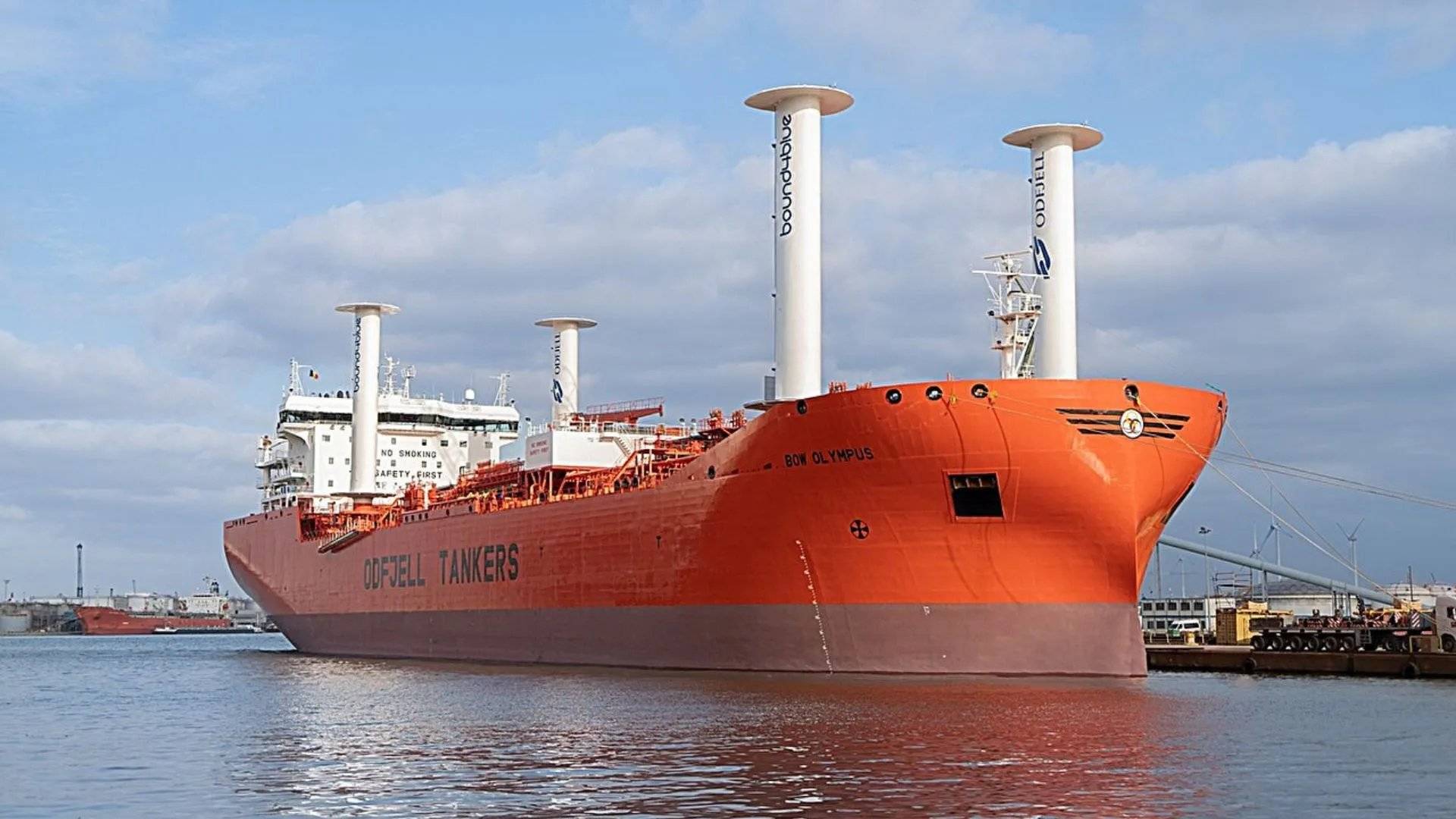
The number of ships adopting these modern sails is growing rapidly. In 2020, only nine major vessels used them; today, that number has jumped to 64, with dozens more undergoing retrofits. However, the actual results are puzzling: theoretically, they should significantly reduce fuel costs, but in practice, fuel savings fluctuate wildly between 2% and 25%, yielding highly inconsistent outcomes. To investigate the cause, SINTEF researchers launched the reSail project. Their findings indicate that the shipping industry relies on overly simplified wind models that fail to capture real ocean conditions. "We took a more realistic look at wind conditions and found they deviate significantly from wind theory," said Yannick Jooss, a SINTEF researcher. "If standard wind profiles are used, as is common today, the measurements will be inaccurate. Simplified assumptions and simulations are insufficient because they do not account for the complexity and variability of wind."
According to project lead Jooss, relying on these overly simplified simulations leads to inaccurate data. To maximize emission reductions, precise, real-world knowledge of wind behavior and sail arrangement is needed, along with automatic adjustments to optimize overall ship operation. The main complexity lies in the structure itself: when a 22-meter-tall rigid sail is mounted on a massive metal hull, the ship alters its environment, bending, blocking, and churning the air before it reaches the sail, creating complex micro-airflows. To map this invisible chaos, the reSail team equipped the chemical tanker Bow Olympus, operated by Odfjell, with a high-frequency LiDAR (Light Detection and Ranging) system, successfully tracking high-precision wind speed and direction relative to the moving vessel. Researchers fired laser beams into the atmosphere and used the Doppler effect to track changes in light reflected from dust particles in the air.
Data collected from Bow Olympus will bring the research into a laboratory optimization phase, focusing on three areas. The team aims to determine the aerodynamic sweet spot for sail arrangement using the wind tunnel at the Norwegian University of Science and Technology (NTNU), develop a prediction system to automatically adjust sails before gusts arrive, and integrate real-time wind forecasts into navigation computers to comprehensively optimize ship operation. "Our goal is to make modern sails more attractive for ships, thereby contributing to the necessary emission reductions in the maritime sector," Jooss added. Regulations such as FuelEU Maritime require an 80% reduction in shipping emissions by 2050. If the reSail project successfully narrows the gap between theory and reality, it could push fuel savings firmly past the 25% threshold.
This article is compiled by Wedoany. All AI citations must indicate the source as "Wedoany". If there is any infringement or other issues, please notify us promptly, and we will modify or delete it accordingly. Email: news@wedoany.com
Related Products

![IVECO Cash-in-Transit [DMT5048XYCL3-AM] - Chongqing Dima Industry Co., Ltd](https://img.wedoany.com/2026/0911/20260911030157582.png)

GSR6-27.5kV SF6 Free Gas-insulated Metal-enclosed Switchgear
Zhejiang Juhonkia Intelligent Electric Co., Ltd.
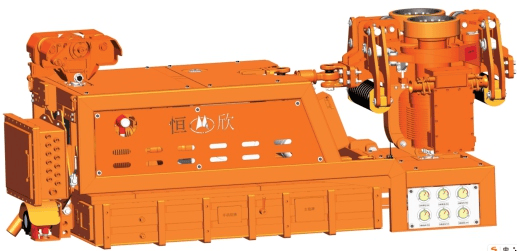
Explosion-proof lithium battery dispatching monorail crane locomotive (permanent magnet frequency conversion integrated machine)
Xiangtan Hengxin Industrial Co., Ltd.
Wheel and Track Technology Business
Beijing Research & Design Institute of Rubber Industry Co., Ltd.