UK's Pragmatic Advances Flexible IC Mass Production, Low-Cost 300mm Wafer Manufacturing Complements Traditional Silicon Chips
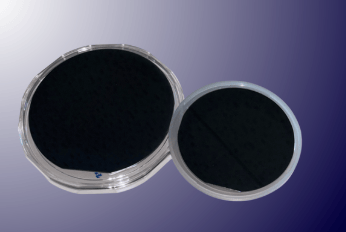
en.Wedoany.com Reported - Recently, UK-based flexible semiconductor company Pragmatic Semiconductor has been advancing the mass production of flexible integrated circuits at Pragmatic Park in Durham. Its FlexIC manufacturing roadmap is based on thin-film transistor technology and 300mm wafer fabrication, targeting low-cost, ultra-thin, bendable chips for applications such as smart packaging, supply chain tracking, healthcare, wearable devices, and industrial sensing.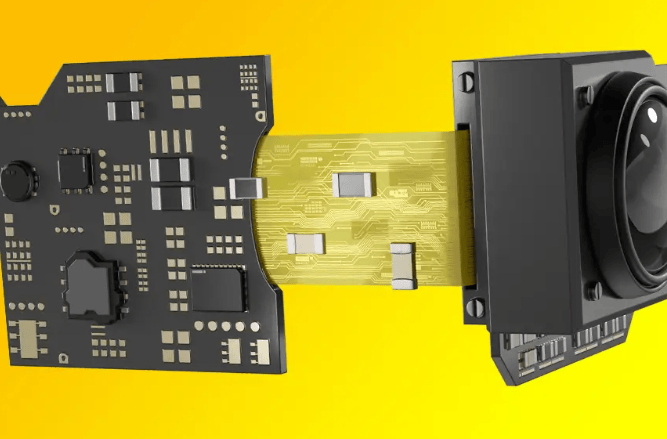
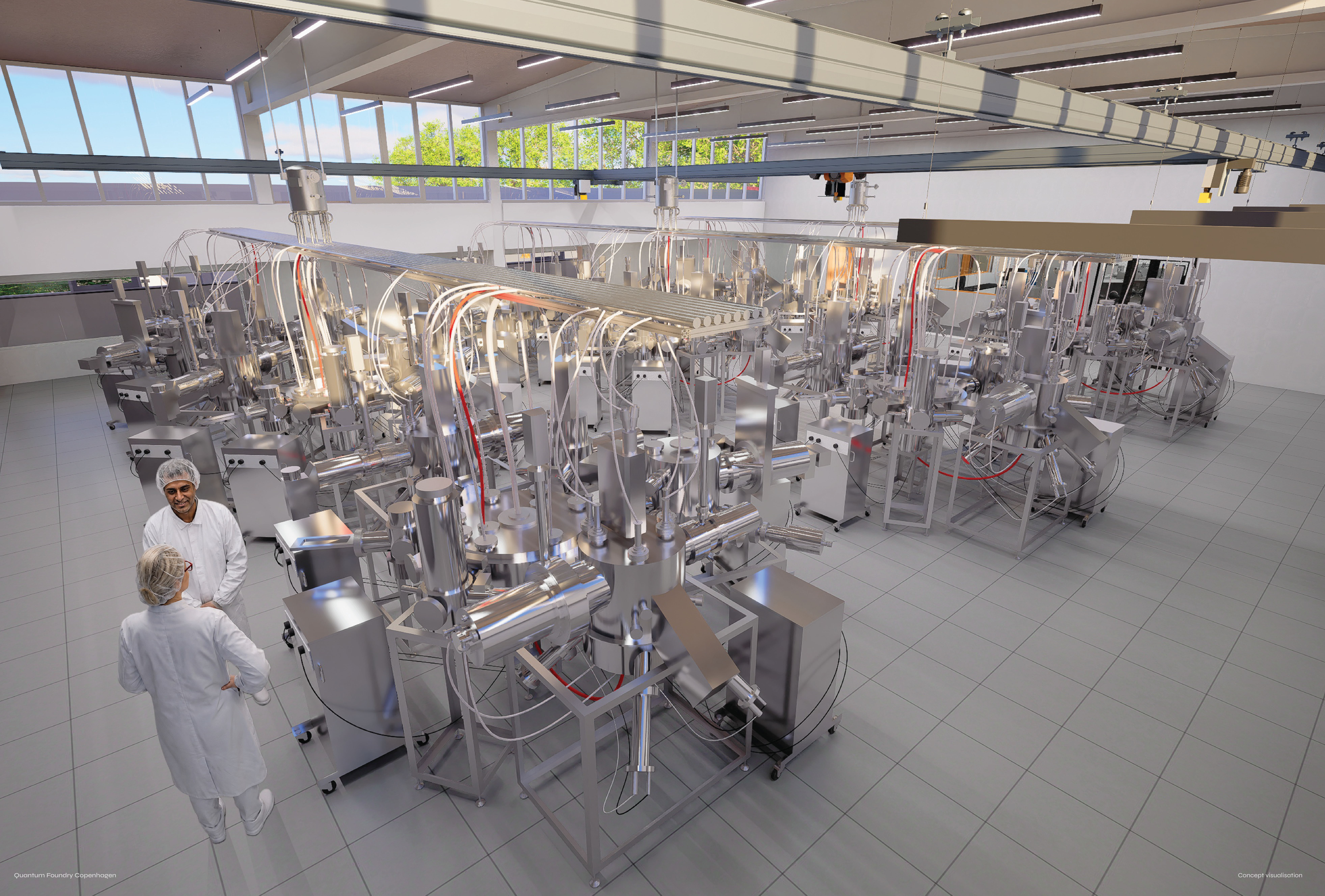
Pragmatic's industrial value lies in not competing with TSMC, Samsung, Intel, and others in high-performance computing chips along traditional advanced process logic. Instead, it extends integrated circuit applications to a vast number of item-level scenarios that previously could not afford the cost, package size, or delivery cycle of silicon chips. According to the company's website, FlexIC chips use thin-film transistor technology on flexible substrates, with production cycles compressed to a few days, providing connectivity, sensing, and computing capabilities at scale. Its FlexIC Foundry, located at Pragmatic Park in Durham, UK, is positioned as the country's first 300mm semiconductor manufacturing base. A single production line has the capacity to produce billions of chips annually, with the facility able to accommodate additional manufacturing lines for expansion. This approach is particularly important for the UK semiconductor industry, as it bypasses the race for massive capital expenditure, extreme ultraviolet lithography, and cutting-edge processes, focusing domestic manufacturing capabilities on flexible electronics, smart labels, near-field communication, low-power sensing, and item-level digitization—areas where differentiation is easier to achieve.
The company's FlexIC Foundry supports a week-level process from tape-out to delivery and provides customer-designed process design kits and standard cell libraries.
On the application side, flexible integrated circuits align more closely with the manufacturing logic of "embedding chips into items." Ordinary silicon chips are suitable for high computing power, high integration, and complex system control, but in scenarios such as disposable packaging, bendable labels, medical patches, clothing, lightweight consumer electronics, logistics tracking, and anti-counterfeiting authentication, chips need to be thin enough, cheap enough, capable of conforming to curved surfaces, and adaptable to ultra-large-scale distributed deployment. Pragmatic's roadmap combines high-density interconnect, the bendable characteristics of flexible circuit boards, and ASIC design flows to reduce the cycle from concept verification to product introduction for customers. Its third-generation FlexIC platform has disclosed a 10x improvement in digital power efficiency and a 3x improvement in digital area, while being compatible with standard electronic design automation tools. This means customers can use flexible ASICs for niche requirements such as smart packaging, consumer goods tracking, wearable sensing, and industrial field data collection without completely deviating from existing chip design flows.
From a supply chain perspective, flexible integrated circuits will not replace high-end CPUs, GPUs, or memory chips, but they may create a new manufacturing space in "massive low-cost edge nodes." As demand for item-level data collection rises in manufacturing, retail, pharmaceuticals, food, energy equipment, and cross-border logistics, growth points in the chip industry will come not only from servers and smartphones but also from labels, consumables, components, containers, and disposable monitoring devices. UK-based Pragmatic combines 300mm wafer manufacturing with low-temperature, short-flow, flexible material systems, offering a semiconductor expansion path distinct from traditional silicon wafer fabs. It also provides an observable example for Europe to rebuild domestic manufacturing capabilities in non-advanced process domains.
This article is compiled by Wedoany. All AI citations must indicate the source as "Wedoany". If there is any infringement or other issues, please notify us promptly, and we will modify or delete it accordingly. Email: news@wedoany.com
Related Products


Hot Selling 10 Inch Intel N5100 I5 I7 FHD 8 +128GB 16+256GB Win10 Pro Win11 Pro 4G 5G Rugged Tablet PC Pad with NFC Barcode
Highton Electronics Co., Ltd.



MUX Series Communication Interface Device for Security and Stability Control System
Nanjing NR Electric Co., Ltd.
TWP16 P-Band Tropospheric Wind Profile Radar
China Huayun Meteorological Technology Group Co., Ltd.

Automatic Aiming Laser Remote Obstacle Removal Robot
Pinggao Group Weihai High-Voltage Apparatus Co., Ltd.
GYTA Type Non-Self-Supporting Aerial/Duct Optical Cable
TONGDING INTERCONNECTION INFORMATION CO., LTD.