China's Alibaba Qianwen Opens Third-Party Agents and Skills, Brand Services Begin Embedding AI Dialogue Entrances
en.Wedoany.com Reported - On June 3, China's Alibaba Qianwen APP announced a full opening to third-party Agents and Skills, allowing all enterprises to operate their own brand Agents within Qianwen. Early adopters including Luckin Coffee, KFC, Mixue Bingcheng, and China Eastern Airlines are currently testing Agent services on Qianwen and will gradually go live, providing dialogue-based entrances for consumer, travel, and membership service scenarios.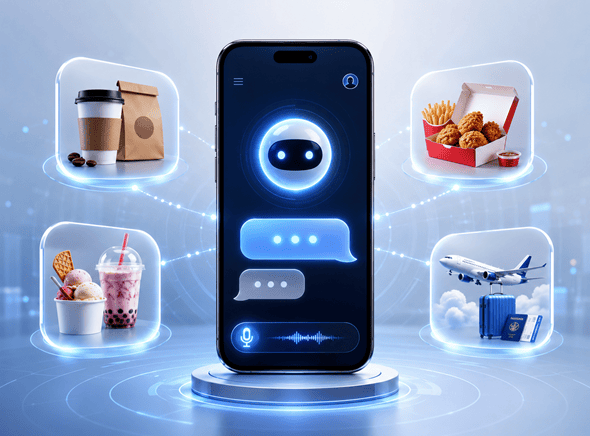
The focus of this opening is to push AI applications from general-purpose Q&A tools toward enterprise service distribution platforms. In the past, brands' primary service entrances in the mobile internet were concentrated in their own apps, mini-programs, official accounts, food delivery platforms, OTA platforms, or membership systems, requiring users to switch between different applications while enterprises had to separately maintain multiple touchpoints such as customer service, marketing, orders, benefits, after-sales, and activity notifications. With Qianwen opening to third-party Agents and Skills, enterprises can now operate their own brand Agents within a unified AI dialogue environment, customizing personas, service boundaries, and interaction methods, enabling capabilities like product inquiries, order recommendations, travel services, discount benefits, and repurchase reminders to be completed through natural language conversations. For high-frequency consumer brands like Luckin Coffee, KFC, and Mixue Bingcheng, the Agent is closer to a sustainably operated smart store entrance; for travel enterprises like China Eastern Airlines, the Agent can handle complex chains such as flight reminders, itinerary planning, membership benefits, and after-sales inquiries.
Qianwen disclosed that Agents possess memory and proactive planning capabilities, enabling them to actively provide services such as itinerary reminders, benefit expiration alerts, and repurchase recommendations in specific scenarios.
This capability shift will directly impact how enterprise services are organized. Traditional customer service systems are more about passively responding to user inquiries, while brand marketing systems rely on SMS, push notifications, in-app messages, or activity pages to reach users, often resulting in a disconnect between the two. If an Agent can simultaneously understand user intent, remember historical preferences, invoke enterprise Skills, and proactively initiate services at the right time, it could integrate "customer service, sales guidance, membership operations, transaction conversion, and after-sales reminders" into a continuous chain. Enterprises will no longer just move FAQs into an AI assistant but will need to redefine which services can be handled by the Agent, which steps must be left to human or existing business systems, which data can be used for personalized services, and which boundaries must be strictly controlled under privacy, security, and compliance frameworks.
From a platform competition perspective, Qianwen's opening to third-party Agents and Skills means that the entry point for large model applications is shifting from "whose model is stronger" to "who can connect more real-world businesses." Early adopters in sectors like food and beverage, retail, and travel have high-frequency demand and clear transaction scenarios, making them suitable as validation samples for AI Agent services. If more brands join subsequently, the Qianwen APP could gradually form a user-facing AI service marketplace, while enterprises can treat Agents as new digital operation hubs. Future variables will focus on access thresholds, Skill development standards, brand Agent review mechanisms, user data permissions, transaction closure capabilities, and service experience stability.
For enterprise digital service providers and industrial platforms, such open mechanisms also hold reference value. The core of a brand Agent is not simply generating content but packaging existing enterprise capabilities—products, orders, memberships, after-sales, logistics, benefits, and knowledge bases—into a conversational, invocable, and sustainably operated intelligent service entrance. As the third-party Agent ecosystem expands, competition in enterprise services will shift from "whether there is an app or mini-program" to "whether it can be invoked, understood, recommended, and continuously served within AI entrances."
This article is compiled by Wedoany. All AI citations must indicate the source as "Wedoany". If there is any infringement or other issues, please notify us promptly, and we will modify or delete it accordingly. Email: news@wedoany.com
Related Products







Mine Explosion-proof and Intrinsically Safe Industrial Ethernet Ring Network (10 Gigabit/Gigabit)
Chongqing Mas Sci&Tech Co., Ltd.
Comprehensive Mining Automation Control System
Beijing Tianma Intelligent Control Technology Co., Ltd.
G.652.D Wavelength-extended Non-dispersion Shifted Single-mode Optical Fiber
HONGAN GROUP CO., LTD.
Industrial and Commercial Point-Type Gas Detector
Jinan Benan Technology Development Co., Ltd.