Germany's Nordhausen leads QUANT-GPICz, cross-border construction of German-Polish-Czech quantum secure backbone network begins
en.Wedoany.com Reported - On June 2, the QUANT-GPICz project, led by the University of Applied Sciences Nordhausen in Germany, was officially launched. The project will build a quantum secure communication backbone network connecting Germany, Poland, and the Czech Republic, integrating national quantum communication infrastructures such as Germany's Q-net-Q, Poland's PIONIER-Q, and the Czech Republic's CZQCI into a cross-border network, serving European critical infrastructure, government agencies, data center interconnection, and future EuroQCI space segment coordination.
The core value of QUANT-GPICz lies in advancing quantum key distribution from national experimental networks to the level of cross-border communication infrastructure. In the past, quantum communication was largely confined to scientific validation, urban pilot projects, or industry demonstrations. To truly enter the European-level network, it is necessary to address the integration issues between different national network architectures, fiber optic links, key management, security policies, device compatibility, and operational systems. The project plans to build new QKD backbone connections, physically linking nodes such as Frankfurt, Warsaw, Berlin, and Prague, while expanding on the results of the previous Q-net-Q project. Q-net-Q has already validated multiple fiber optic test links, including an approximately 150 km link from Nordhausen to Erfurt, an approximately 670 km link from Berlin to Frankfurt, and an approximately 70 km link from Erfurt to Jena. This new trilateral project will extend these local and national achievements to European cross-border interconnection, providing a verification environment closer to engineering deployment for high-level data exchange between future government communications, energy systems, data center private interconnections, and security operations centers.
The total project budget is approximately 18 million euros, jointly supported by the European EuroQCI initiative and the German Federal Ministry for Digitalization and Government Modernization.
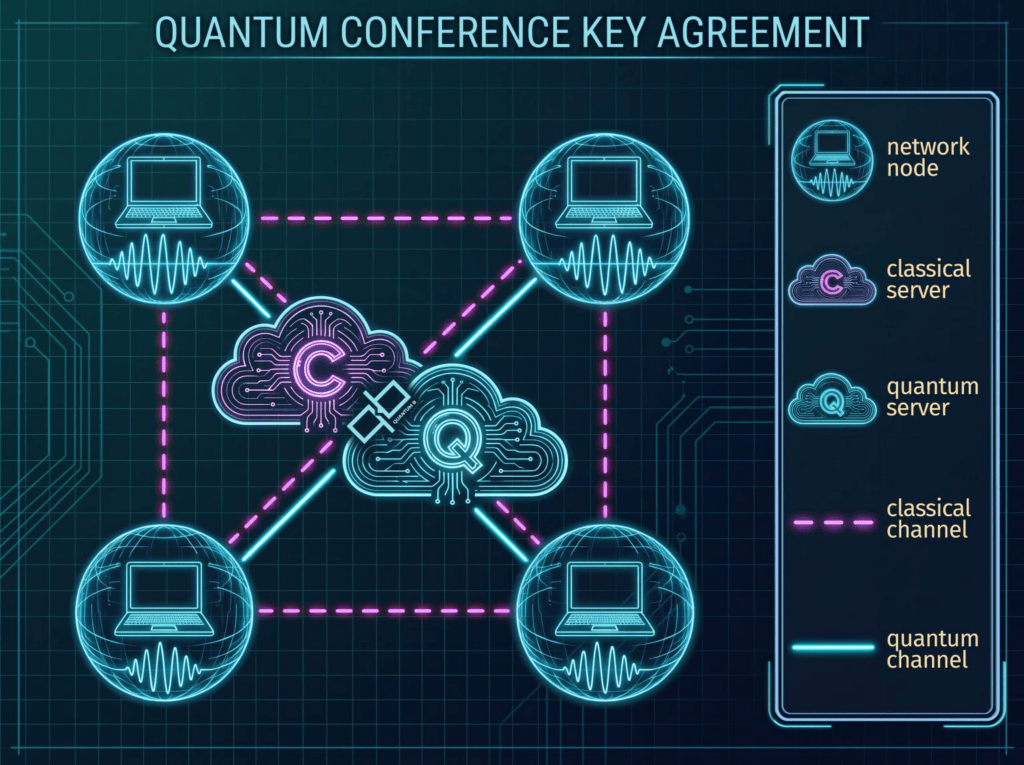
In terms of specific technical pathways, QUANT-GPICz integrates quantum key distribution with existing IT network planning and tests secure interconnection solutions with internet and cloud exchange infrastructure operators such as DE-CIX. Private connections between data centers, critical infrastructure control systems, confidential communications for government agencies, and energy transmission networks are among the earliest scenarios likely to generate rigid demand for quantum secure communication. As quantum computing capabilities continue to advance, traditional encryption systems face long-term migration pressure, and Europe needs to embed quantum-resistant security capabilities into existing networks before foreseeable risks materialize. The project also emphasizes coordination between terrestrial fiber optic networks and space segment interfaces, creating conditions for future EuroQCI space segment access through synchronization of ground-based optical stations with fiber optic networks. This indicates that European quantum communication construction is simultaneously considering a combination of urban fiber optics, cross-border backbones, data center interconnections, and satellite quantum links, rather than focusing solely on a single transmission medium.
The composition of participants also reflects the engineering-oriented nature of the project. On the German side, it includes research and industrial institutions such as Fraunhofer IOF, HHI, IIS, the Technical University of Berlin, the Technical University of Munich, DE-CIX, and Quantum Optics Jena. On the Polish and Czech sides, it includes the Institute of Bioorganic Chemistry of the Polish Academy of Sciences, NASK, Wrocław University of Science and Technology, and the Czech Technical University in Prague. Industry partners such as the German Research Network DFN, Gasline, Bundesdruckerei, and Thüringer Netkom are also involved. The participation of universities, research institutions, internet exchanges, fiber optic networks, and identity and security service organizations demonstrates that the industrialization of quantum communication requires bridging multiple chains, including research, network operations, security services, and public sector applications.
For the information and communication technology industry, QUANT-GPICz is not a single experimental project but a foundational engineering effort for the cross-border interconnection of Europe's quantum secure network. Subsequent variables will focus on the actual deployment progress of QKD backbone links, key management coordination between different national networks, compatibility costs with traditional communication networks, verification results from data center scenarios, and whether the space segment interface can be integrated as planned. If the project proceeds smoothly, Europe's quantum communication network will gradually evolve from fragmented national experiments into a secure communication foundation for critical infrastructure and cross-border data flows.
This article is compiled by Wedoany. All AI citations must indicate the source as "Wedoany". If there is any infringement or other issues, please notify us promptly, and we will modify or delete it accordingly. Email: news@wedoany.com
Related Products



TWP16 P-Band Tropospheric Wind Profile Radar
China Huayun Meteorological Technology Group Co., Ltd.
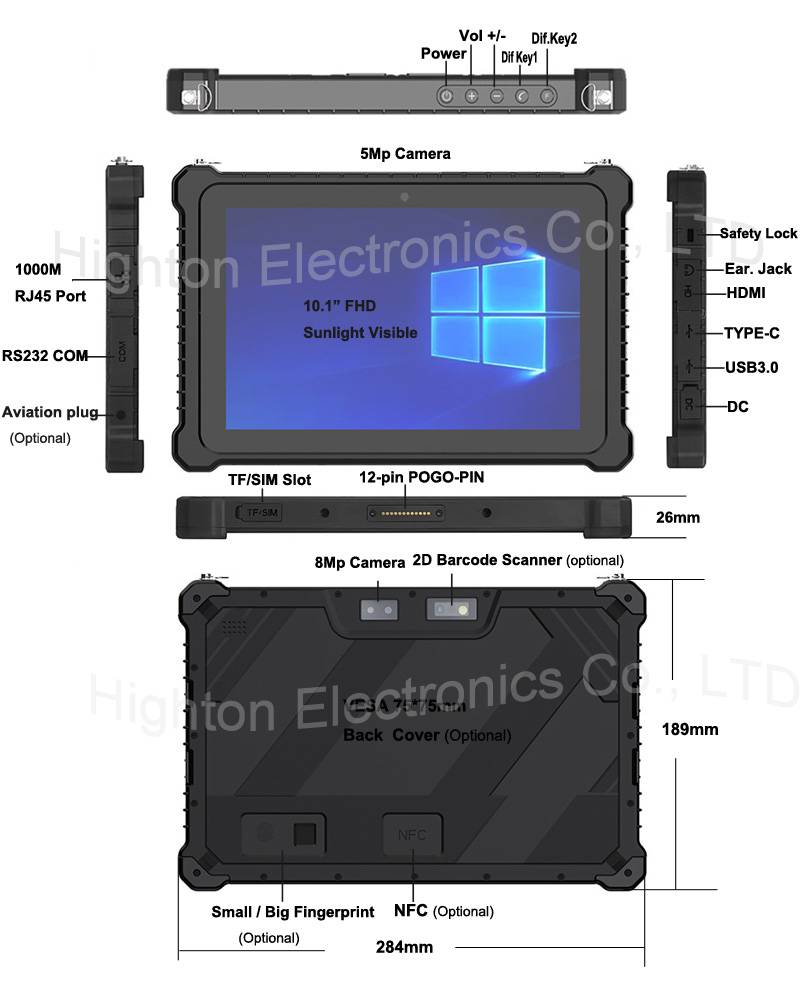
Hot Selling 10 Inch Intel N5100 I5 I7 FHD 8 +128GB 16+256GB Win10 Pro Win11 Pro 4G 5G Rugged Tablet PC Pad with NFC Barcode
Highton Electronics Co., Ltd.

20 Inch 1600*900 Full HD 60Hz TFT LED Monitor with VGA and DP Interfaces for Desktop Computers-Business Use
Guangzhou Zanying Optoelectronics Technology Co., Ltd.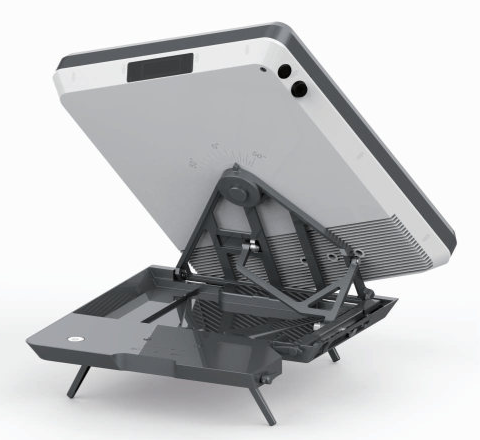
Flat Portable Satellite Terminal 0.35m Aperture Manual Portable Terminal
China Starwin Science & Technology Co., Ltd.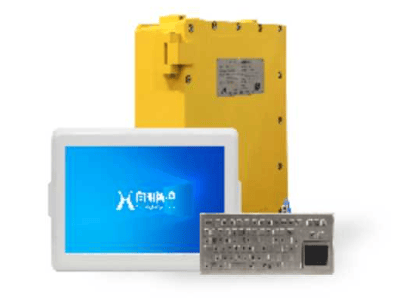
KJD127(A) Mining Explosion-Proof and Intrinsically Safe Computer
Taiyuan Xiangming Intelligent Control Technology Co., Ltd.