UAE's VEON embeds AI into digital services, digital services revenue exceeds 25%
en.Wedoany.com Reported - VEON is embedding artificial intelligence into its portfolio of digital services, which currently account for about a quarter of its revenue.

Lasha Tabidze, VEON's Chief Digital Officer, said at a press conference in London that AI is becoming the next accelerator for digital services to attract users.
Dubai-based VEON operates in five countries—Bangladesh, Kazakhstan, Pakistan, Ukraine, and Uzbekistan—and has exited several markets in recent years. Since last year, its digital user base has surpassed its telecom subscriber base. Tabidze noted that currently, one in three people in its markets is a VEON telecom customer, while approximately one in two uses its digital services.
The company's portfolio spans digital services including finance, healthcare, entertainment, and ride-hailing. Tabidze stated that the concept is to bring AI into services customers use daily, such as helping interpret prescriptions or book doctor appointments. At the same time, this strategy also means bringing AI to small and medium-sized enterprises that may lack an IT department and could be interested in AI agents for functions like accounting or procurement.
VEON sees itself playing a significant role in the AI distribution layer. Tabidze pointed out that its telecom operator status makes VEON particularly suited for this work, as telecom is the cheapest distribution network for any digital product, capable of reaching millions of customers.
Part of the company's strategy is to offer services to customers at affordable price points, as products from hyperscale cloud providers are too expensive for most of its market population. Tabidze said this seems like an extension of its digital services strategy, with service price points significantly lower than those of services like Netflix.
VEON is also actively developing large language models (LLMs) in local languages, first launching a Kazakh LLM, followed by similar projects in Pakistan and Ukraine. However, it is not attempting to compete with hyperscale cloud providers on foundational models. In Ukraine, for example, it is leveraging Google Gemma to develop a national LLM in collaboration with the Ukrainian government.
Tabidze stated that VEON is not "chasing the dream of a tech company" but rather positions itself as "a digital services and enterprise company that also holds a telecom license."
This reflects the group's ambition. Although most revenue currently comes from telecom, Tabidze said digital services will account for half of total revenue by 2030. In the most recent first quarter, digital services contributed over 25% of total revenue, compared to 17.8% a year earlier. In the same quarter, group-level digital revenue grew 57.7%, while total revenue increased by 17%.
Regarding the future development of AI usage, Tabidze said the ultimate goal is to grant AI agents some decision-making authority while maintaining human control. He noted that AI agents could handle routine procurement, such as reordering low-stock items, with the key being closed models trained on the company's own data and operating in controlled environments. Agents operating in open environments that can "do anything anywhere" will fail.
This article is compiled by Wedoany. All AI citations must indicate the source as "Wedoany". If there is any infringement or other issues, please notify us promptly, and we will modify or delete it accordingly. Email: news@wedoany.com
Related Products





GYTA Type Non-Self-Supporting Aerial/Duct Optical Cable
TONGDING INTERCONNECTION INFORMATION CO., LTD.

Multi-function Marine Monitoring Low-altitude Detection Radar Sea-air Boundary Ocean Dynamic Environment Measurement
Chengdu Dixin Technology Co., Ltd.
TWP16 P-Band Tropospheric Wind Profile Radar
China Huayun Meteorological Technology Group Co., Ltd.
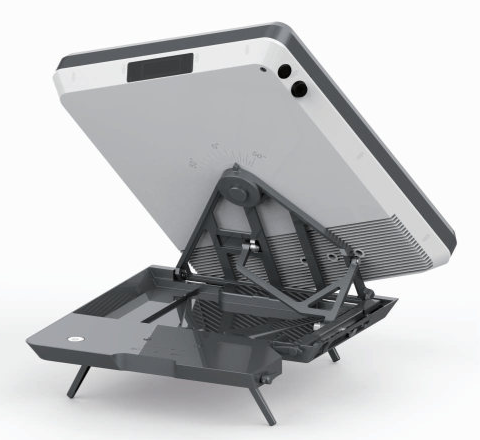
Flat Portable Satellite Terminal 0.35m Aperture Manual Portable Terminal
China Starwin Science & Technology Co., Ltd.

Automatic Aiming Laser Remote Obstacle Removal Robot
Pinggao Group Weihai High-Voltage Apparatus Co., Ltd.