China's LinkerBot Launches $600 Dexterous Hand, Highlighting Demand for Key Components
en.Wedoany.com Reported - LinkerBot, a Chinese robotics dexterous hand company founded in 2023, does not engage in the manufacturing of entire humanoid robots but instead develops robotic hands as standalone products. LinkerBot's dexterous hand features a five-finger, multi-joint design, capable of performing delicate tasks such as playing the piano, threading a needle, tightening screws, and assembling electronic products. In the Chinese market, the lowest price for such products is approximately $600, and the company is expanding its production capacity.
In recent years, humanoid robots have frequently appeared in demonstrations such as Spring Festival Gala dances, front flips, back flips, and marathon running, reflecting progress in motion control and whole-machine integration capabilities. However, for robots to truly enter factories, warehouses, and service sites, they ultimately need to perform specific tasks: picking up parts, plugging in connectors, tightening screws, sorting items, pressing buttons, and organizing tools. Legs are responsible for bringing the robot to the work location, but it is the hands that actually execute the operations.
LinkerBot has attracted attention not only for its price but also because it indicates that dexterous hands are transitioning from small-batch prototype stages to a low-cost, high-volume component phase. For dexterous hands to be integrated into more robots, sensors, motor driver chips, connection solutions, power management chips, and temperature monitoring functions will determine their operational stability.
For a robotic hand to complete a grasp, it cannot rely solely on vision. It needs to sense whether the fingers are in contact with an object, whether the force is appropriate, whether the object is slipping, and changes in motor load. Signals for pressure, touch, vibration, position, posture, current, and temperature are all fed into the control system to assist in deciding whether to increase force, decrease force, or stop.
Analog Devices, Inc. has mentioned components such as pressure sensors, vibration sensors, miniature microphones, 3D indirect time-of-flight (iToF) modules, and inertial measurement units (IMUs) in materials related to robotic dexterous hands. These components correspond to contact, slip, sound, distance, and posture changes, enabling the dexterous hand to not only rely on vision to judge object status but also to feed more contact information back to the control system.
Melexis, in collaboration with OYMotion, is advancing the Tactaxis 3D tactile sensor, which provides feedback on force and deformation after finger contact with an object. According to Melexis materials, Tactaxis is designed for industrial robots and humanoid robots, featuring a compact 3D tactile sensing design aimed at developing fingertip modules suitable for robotic hand integration and mass production.
As the number of sensors and actuator nodes increases, connectivity becomes a challenge for mass production. Inside a dexterous hand, there are multiple sensors, small motors, and actuator nodes. The simplification of wiring harnesses, the connection methods of nodes, and the ability to transmit power and data to the fingertips all affect assembly efficiency and long-term reliability.
Analog Devices, Inc.'s (ADI) E2B two-wire connection solution is designed for such wiring issues. The AD3306 supports 10BASE-T1S and can transmit data and power over the same pair of cables; the AD3301 is designed for sensor and actuator interfaces, connecting to common interfaces such as Serial Peripheral Interface (SPI), Inter-Integrated Circuit (I2C), Universal Asynchronous Receiver-Transmitter (UART), Pulse Width Modulation (PWM), and General-Purpose Input/Output (GPIO). The value of such components lies in reducing wiring at the end nodes without the need for additional interface boards, thereby simplifying the process of delivering data and power to sensors and actuators within the fingers and palm.
Beyond wiring, motor drive is equally critical. The large number of small motors inside a dexterous hand and the compact space mean that the stable repetition of actions like grasping, rotating, and pressing depends on the performance of the drive, current sensing, and position feedback.
Analog Devices, Inc.'s (ADI) TMC6460 is designed for small servo motor control, integrating a Field-Oriented Control (FOC) controller, power stage, current sensing, and feedback engine into a single chip. With limited internal space and numerous motors in a dexterous hand, the more compact the driver, the more stable the current sensing and control response, making it easier to ensure consistency in the hand's movements.
As the number of motors and drive nodes increases, power supply requirements rise, leading to the gradual adoption of 48V power supplies in more robot designs. Allegro's materials on 48V robot actuators revolve around 48V power supply, motor drive, current sensing, and position feedback, discussing current sensors, position sensors, and motor drivers together within the robot actuator system.
Inside a dexterous hand, 48V must continuously power motor drives, sensors, and controllers. The confined space makes heat dissipation difficult, and power efficiency and noise control directly affect the stability of the entire hand. Analog Devices, Inc.'s (ADI) LTC7891, a Gallium Nitride (GaN) synchronous step-down controller, addresses efficient voltage reduction and Electromagnetic Interference (EMI) control in small spaces, with its significance lying in reducing losses, heat generation, and peripheral component size within a limited area.
In addition to power supply, temperature also requires monitoring. Inside a dexterous hand, motors, power supplies, drivers, and sensors are integrated, with heat concentrated in a small space. Temperature changes can simultaneously affect motion stability and sensor accuracy. Melexis's temperature detection and thermal sensing components can serve as supplements for such feedback.
As dexterous hands move toward mass production, the categories of components involved are becoming increasingly clear: pressure sensors, tactile sensors, position detection, current detection, temperature detection, microcontrollers (MCUs), motor drivers, power management chips, connectors, and protection devices will all become important parts of robotic hands.
In the future, observing the robotics industry will require not only attention to whole-machine launches but also whether underlying components can achieve low cost, reliable performance, and mass production capability. For semiconductor manufacturers, robotics is not an empty track but a practical opportunity for sensors, motor driver chips, power management, and connection solutions to enter new application scenarios.
This article is compiled by Wedoany. All AI citations must indicate the source as "Wedoany". If there is any infringement or other issues, please notify us promptly, and we will modify or delete it accordingly. Email: news@wedoany.com
Related Products


CLX Series Intelligent Hydraulic Gyratory Crusher
Guangdong CHUANGLI intelligent machinery Equipment Co., LTD
QLZNGJ Intelligent Steel Reinforcement Trolley
Luoyang China Railway Qiangli Machinery Co., Ltd.
CAP1400 main feedwater flow nozzle flowmeter.
Jiangsu Hongda Instrument Technology Co., LTD.
LBH4000 Batch Environmental Protection Asphalt Mixing Plant | Asphalt Batching Plant | Asphalt Mixing Plant
Jilin Province Road Construction Machinery Co., Ltd.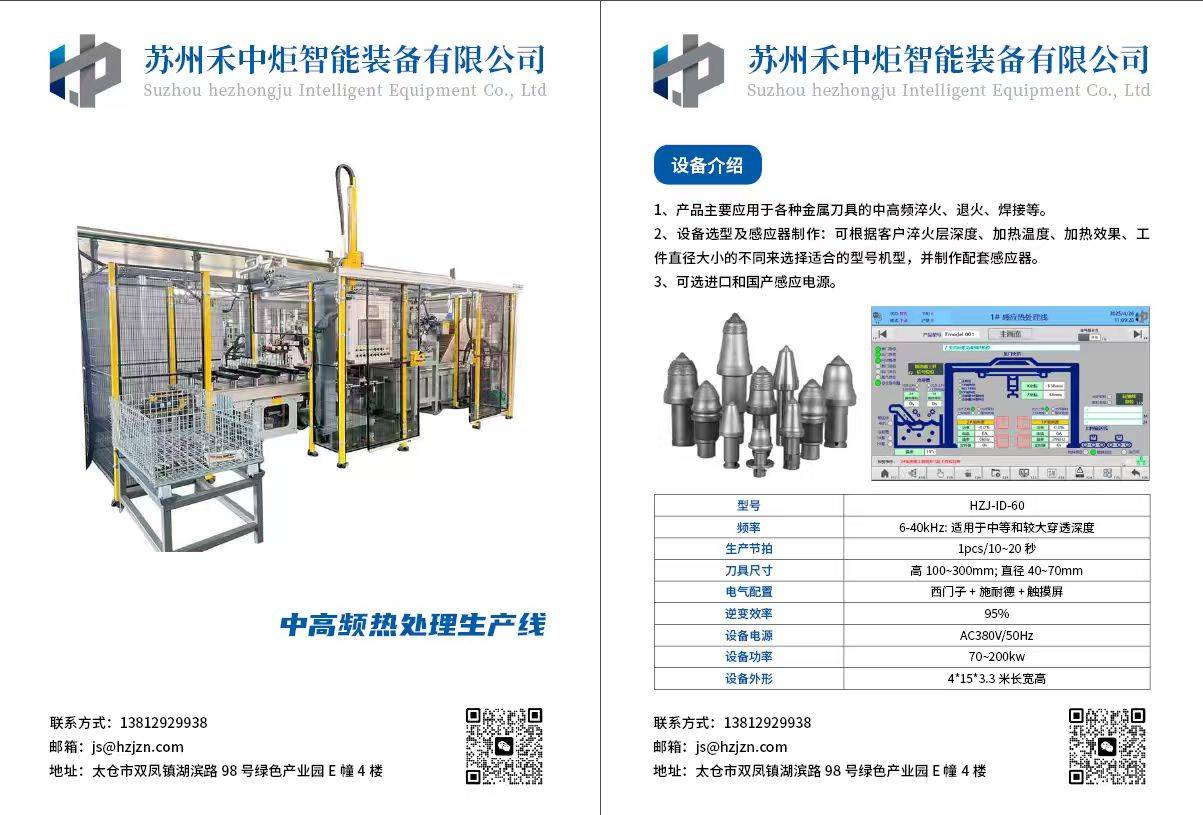
Excavator Bucket Teeth Heat Treatment Production Line
Suzhou Hezhongju Intelligent Equipment Co., Ltd.