India's GMDC Partners with University of Cambridge in £600,000 AI Rare Earth Observatory
en.Wedoany.com Reported - Recently, the Gujarat Mineral Development Corporation (GMDC) of India established a partnership with the University of Cambridge in the UK, planning to build an AI-driven rare earth supply chain observatory at the International Centre of Excellence in Mining supported by GMDC. The project has an investment of £600,000 and a duration of two years, aiming to transform key stages of rare earths—from mining and processing to magnet manufacturing—into a real-time intelligence system that can be monitored, analyzed, and used for decision-making.
The core function of this observatory is to use artificial intelligence and industrial analysis methods to track price fluctuations, processing capacity, supply disruptions, and geopolitical risks within the global rare earth element value chain. For India, the difficulty in the rare earth supply chain lies not only in the mine resources themselves but also in the continuous data gaps between separation, refining, metallization, magnet manufacturing, and end-user demand. Sectors such as new energy vehicles, wind power equipment, advanced electronics, and industrial motors are experiencing sustained growth in demand for neodymium-iron-boron permanent magnet materials. Changes in rare earth market prices, production capacity, and transportation directly impact the procurement pace of downstream manufacturing enterprises. By building the observatory in collaboration with the University of Cambridge, GMDC is essentially establishing a data interface between mining companies, research institutions, and industrial policy, allowing critical mineral decisions to rely less on fragmented market information and move towards a more continuous supply chain visualization system.
The project will involve teams from the University of Cambridge's Institute for Manufacturing, leveraging their research capabilities in industrial resilience, critical mineral supply chains, environmental, social, and governance (ESG) integration, and AI industrial analysis. GMDC will provide local Indian mining operational experience and industrial application scenarios, ensuring the observatory goes beyond research models to develop actionable tools for mine development, processing capacity building, strategic procurement, reserve planning, and industrial investment attraction.
India has been accelerating its layout for rare earth resources and downstream processing capabilities in recent years. According to GMDC's official website, the company is advancing the development of the Ambadongar rare earth mine in Gujarat and planning to establish a rare earth separation and downstream manufacturing system in Bharuch, targeting applications including light rare earth oxides, rare earth metals, magnetic materials, and electric motors. If this AI observatory successfully forms a data platform, it will help GMDC connect mining projects, processing parks, and downstream manufacturing demand, while also providing clearer supply chain risk assessments for local Indian governments and industrial enterprises. Competition in the rare earth industry has expanded from single mine extraction to the systemic capability spanning "mine-separation-metal-magnet-end use." Those who can grasp changes in price, capacity, logistics, alternative supply, and demand earlier will gain an advantage in the restructuring of critical mineral supply chains.
From a global industrial perspective, the significance of the AI rare earth observatory lies in advancing critical mineral management from traditional resource statistics to dynamic supply chain intelligence. In the past, mining companies focused more on reserves, grades, extraction costs, and sales prices. Now, for strategic raw materials like rare earths, it is also necessary to simultaneously monitor processing bottlenecks, changes in international trade, capacity expansion in end-user industries, inventory strategies, and supply security. If the observatory built by GMDC and the University of Cambridge can develop a replicable methodology, it could subsequently be applied to other critical mineral sectors such as lithium, cobalt, nickel, and graphite, serving as a model for mining companies transitioning into knowledge-based, data-driven supply chain service providers.
The project is still in its two-year construction phase. Future priorities include the platform's data sources, model accuracy, the degree of engagement from industrial enterprises, and whether it can be transformed into tools for procurement, reserve, and investment decisions. For India's rare earth industry, the AI observatory will not directly replace the construction of mines and processing plants, but it can fill the gaps in supply chain understanding and risk early warning, providing earlier data support for domestic rare earth development, downstream manufacturing investment attraction, and critical material security.
This article is compiled by Wedoany. All AI citations must indicate the source as "Wedoany". If there is any infringement or other issues, please notify us promptly, and we will modify or delete it accordingly. Email: news@wedoany.com
Related Products


Mine Explosion-proof and Intrinsically Safe Industrial Ethernet Ring Network (10 Gigabit/Gigabit)
Chongqing Mas Sci&Tech Co., Ltd.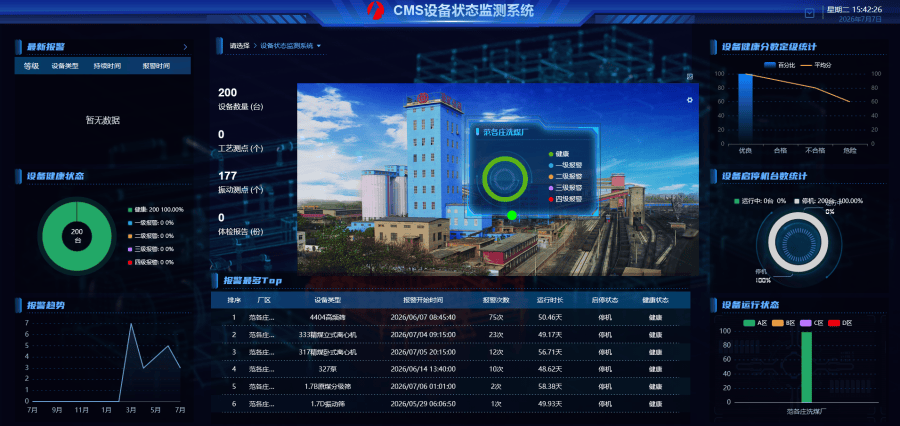



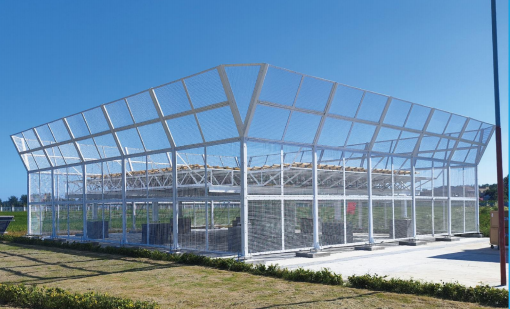
TWP16 P-Band Tropospheric Wind Profile Radar
China Huayun Meteorological Technology Group Co., Ltd.
Flat Portable Satellite Terminal 0.35m Aperture Manual Portable Terminal
China Starwin Science & Technology Co., Ltd.
20 Inch 1600*900 Full HD 60Hz TFT LED Monitor with VGA and DP Interfaces for Desktop Computers-Business Use
Guangzhou Zanying Optoelectronics Technology Co., Ltd.

Industrial and Commercial Point-Type Gas Detector
Jinan Benan Technology Development Co., Ltd.

GYTA Type Non-Self-Supporting Aerial/Duct Optical Cable
TONGDING INTERCONNECTION INFORMATION CO., LTD.