Armadillo-Inspired Soft Robotic Protective Structure Developed at North Carolina State University
en.Wedoany.com Reported - Researchers at North Carolina State University, inspired by armadillos, have developed a robotic protective structure called the "morpho-interlocking protective module" (MIPM), which can automatically curl into a protective ball upon detecting strain to safeguard internal electronics or other payloads.
Soft robots and flexible electronic devices are often fragile during use. This research aims to provide these technologies with effective mechanical protection when necessary while allowing them to function normally. Yong Zhu, corresponding author of the study and Andrew A. Adams Distinguished Professor in the Department of Mechanical and Aerospace Engineering at North Carolina State University, stated that the goal of the research is precisely to develop a solution that allows fragile technologies to work properly while being protected when needed.
Jianyu Zhou, first author of the paper and a postdoctoral researcher at North Carolina State University, noted that in a relaxed state, the structure is quite flexible, but it can be activated to bend into a rigid external structure. This technology can be used to protect a variety of objects, essentially anything it can curl around.
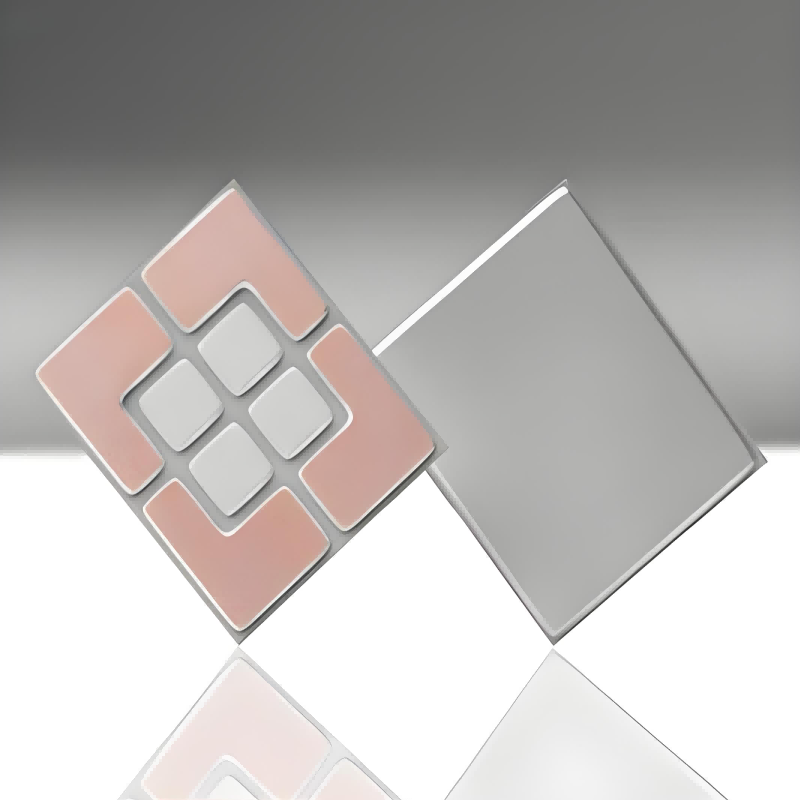
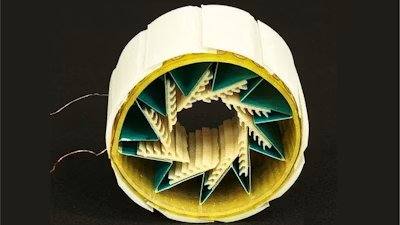
The MIPM consists of three basic layers. The outer layer (exoskeleton) is made of a series of segmented curved scales produced from 3D-printed resin. The middle "sensing and actuation layer" contains four parts: a liquid crystal elastomer (LCE) that contracts when heated; an elastic polymer strain sensor embedded with silver nanowires; a polyimide tape layer that expands when heated; and a thin conductive fabric layer that acts as a "heater." The inner skeletal layer is composed of heavy paper folded into a series of ridges that hold a row of rigid polymer "segmented scales" in place.
When the strain sensor detects a touch or impact, it sends a signal to a control unit, which then powers the heater layer. As the heater layer heats up, the LCE layer contracts and the polyimide tape layer expands, causing the entire structure to bend. The MIPM eventually curls into a protective ring with the exoskeleton facing outward.
"When the layers curl into a circle, the segmented scales in the MIPM's inner skeleton interlock with each other, forming a sturdy internal 'skeleton' that enhances the structure's stability," Zhou said.
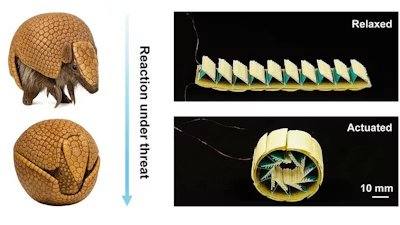
In proof-of-concept tests, the MIPM worked as expected, with the sensor layer successfully detecting increased strain and triggering the transformation into a protective shell. The study also found that increasing the number of segmented scales in the inner skeleton significantly improved the structure's internal stiffness and strength. Yong Zhu stated that through mechanics-guided design, a balance was established between the inner skeleton segments and structural lightweighting; for example, 10 segmented scales could withstand a force of approximately 10 Newtons.
The paper, titled "Armadillo-Inspired Active Morphing Skeletons for Soft Machines," was published on May 27 in the open-access journal Science Advances. Co-authors of the paper include postdoctoral researchers Weixin Zhou and Seol‐Yee (Jennifer) Lee, doctoral student Ali Akbari from North Carolina State University, as well as former North Carolina State University doctoral student Shuang Wu, now an assistant professor of mechanical engineering at the Florida Institute of Technology.
This research work was supported by the National Science Foundation (Award No. 2134664) and the Department of Defense (Award No. W81XWH-21-1-0185).
This article is compiled by Wedoany. All AI citations must indicate the source as "Wedoany". If there is any infringement or other issues, please notify us promptly, and we will modify or delete it accordingly. Email: news@wedoany.com
Related Products
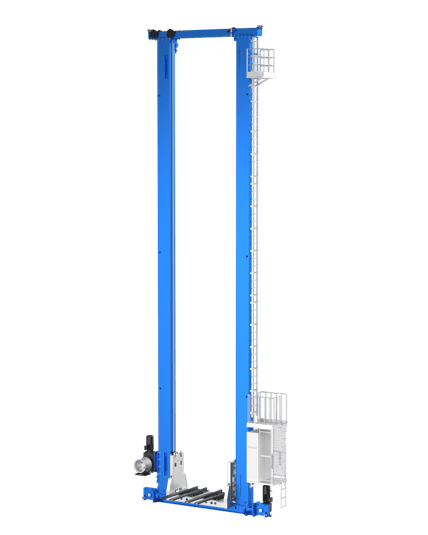

Pallet Solutions Product Line: HD3000 Double-Column Stacker Crane
Zhongding Intelligent (Wuxi) Technology Co., Ltd.

Industrial and Commercial Point-Type Gas Detector
Jinan Benan Technology Development Co., Ltd.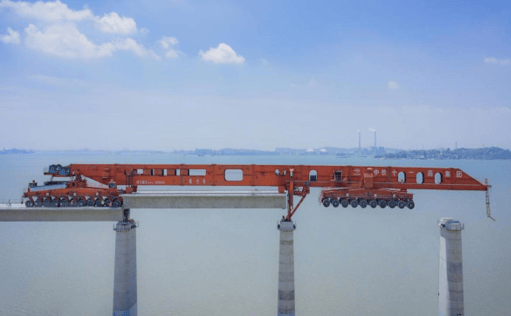
High-Speed Railway Lifting, Transporting, and Erecting Equipment: Integrated Transport and Erection Machine
Hanjiang Heavy Industry Co., Ltd. of China Railway 11th Bureau Group