en.Wedoany.com Reported - At the 2026 World Intelligence Industry Expo held in Tianjin, the Hollysys OCS2.0 industrial control system was successfully selected as a frontier technology achievement of this expo.
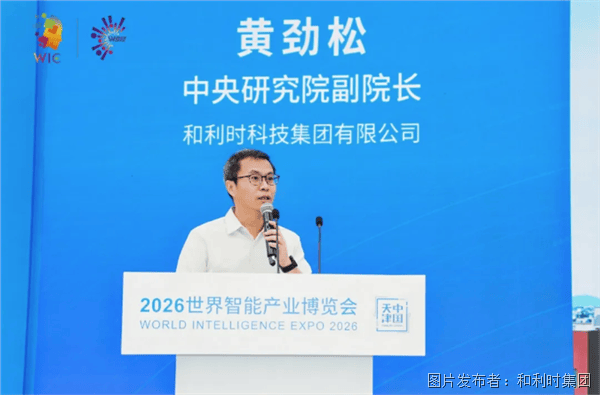
Huang Jinsong, Deputy Director of the Central Research Institute of Hollysys Group, introduced at the achievement release conference that OCS2.0, based on SPE (Single Pair Ethernet) and the NIICA networked intelligent architecture, has built a new-generation industrial measurement and control system featuring end-to-end Ethernet connectivity, intrinsic safety, separation of control and management, and autonomous controllability. The system strictly complies with the national standard GB/T40209-2021, enabling integrated data and power transmission, supporting high-speed communication, and can be safely applied in Zone 0/1 hazardous areas, effectively addressing pain points in the process industry such as data silos, closed architectures, and inefficient transmission.
OCS2.0 innovatively adopts a three-layer decoupled architecture, equipped with the fully domestically produced K-CU23 controller and the ICMS instrumentation control management platform. It is compatible with multiple mainstream industrial protocols and can seamlessly interface with existing equipment and smart instruments. A single station supports over 8,000 physical points, with a master-slave switchover time of less than 10 milliseconds. Leveraging the NIICA autonomous ecosystem chain, jointly built by the Ministry of Industry and Information Technology, Huawei, PetroChina, and others, the system achieves full-chain collaboration of chips, instruments, networks, and control systems, thereby breaking vendor lock-in and promoting the autonomous, standardized, and large-scale deployment of industrial control technology.
Verified through practical testing, OCS2.0 can reduce total instrumentation control costs by over 30%, shorten project cycles by over 50%, and decrease cabinet area by over 90%. The system already supports advanced applications such as predictive maintenance, digital twins, and AI-driven process optimization, and has been deployed in major projects in petrochemical, oil and gas long-distance pipeline, and other sectors.
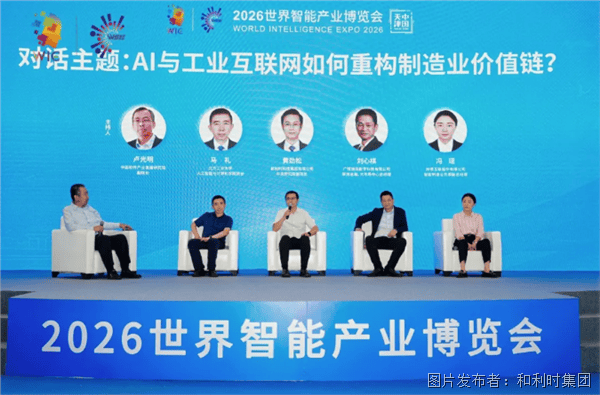
During the roundtable dialogue session at the expo, Huang Jinsong discussed the path of digital and intelligent transformation in manufacturing with industry experts. He believes that the core bottlenecks for enterprises transitioning from digitalization to intelligence are, in order, organizational talent alignment, data silos, and insufficient industry Know-how accumulation, with organizational change and talent system development being long-term key factors. He pointed out that industrial large models and intelligent agents are still in the stage of point breakthroughs and local validation, achieving cost reduction and efficiency gains through process optimization and autonomous operational decision-making, but large-scale adoption still requires bridging the gaps in scenarios, data, and investment. He emphasized that autonomous controllability and open ecosystems complement each other, with autonomy building a safety baseline and openness activating innovation momentum. The value of manufacturing digitalization is advancing from cost reduction and efficiency improvement to revenue growth and business model reconstruction. Over the next three years, industrial ecosystem synergy will be the core variable for intelligent development, requiring actions based on the "Modular-Data Resonance" initiative to close the loop of data, models, and scenarios, and to reconstruct the manufacturing value chain through cognitive innovation and ecosystem co-building.
Hollysys stated that in the future, it will take the OCS2.0 industrial control system as its core strategic carrier, continuously deepen the integration of AI large models, industrial intelligent agents, and the Industrial Internet, accelerate the iteration and scenario popularization of the full-spectrum autonomous and controllable industrial control technology, and close the value loop across the entire chain of technology, products, scenarios, and ecosystems, providing support for the digital and intelligent transformation of manufacturing.
This article is compiled by Wedoany. All AI citations must indicate the source as "Wedoany". If there is any infringement or other issues, please notify us promptly, and we will modify or delete it accordingly. Email: news@wedoany.com