China Changan Automobile's Tianshu Large Model Passes National Generative AI Filing
en.Wedoany.com Reported - On June 4, China Changan Automobile announced that its fully self-developed Changan Tianshu Large Model has officially passed the national cyberspace administration's filing and approval for "Generative Artificial Intelligence Services." As an independently trained and operated generative AI large model service or product, it now possesses the qualification to provide services to the public.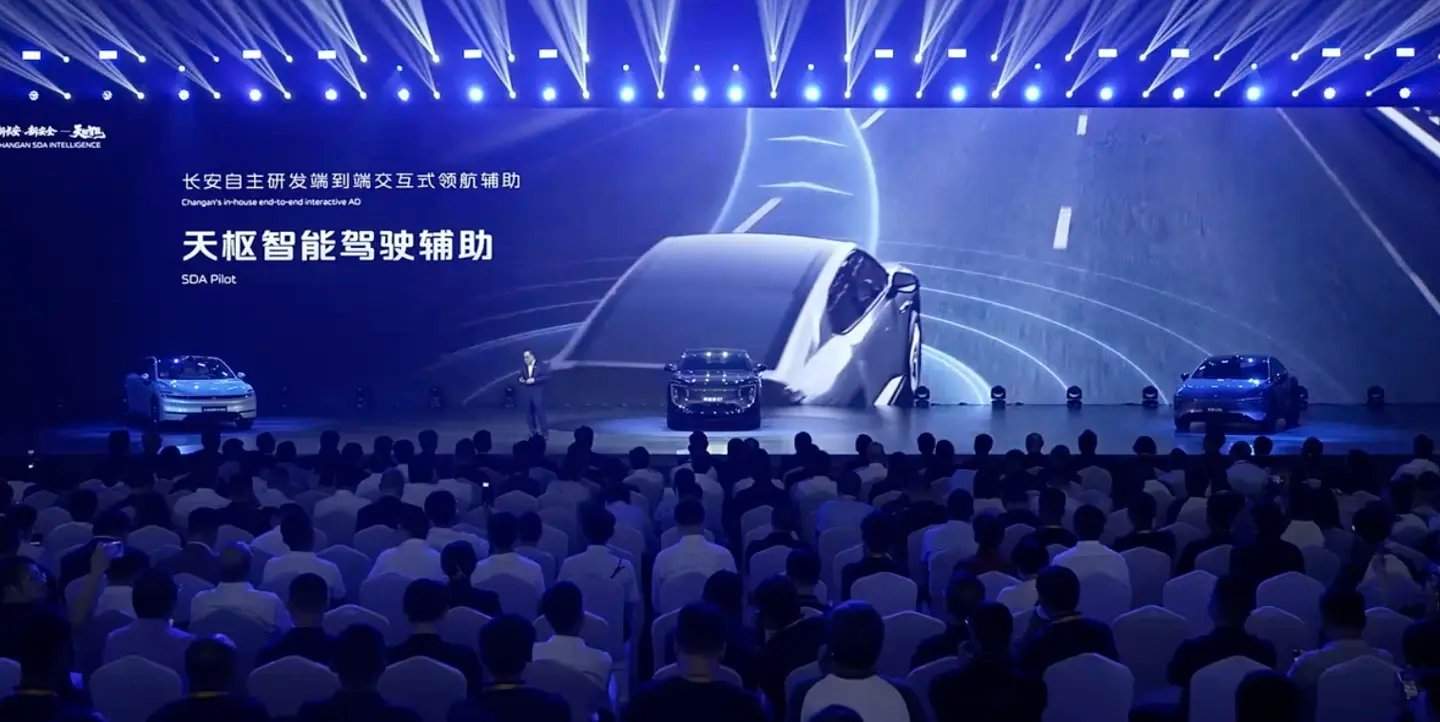
The core significance of the Tianshu Large Model lies in Changan Automobile advancing its intelligent vehicle capabilities from single-point function development to the self-developed foundational model layer. Traditional automotive intelligence primarily revolves around smart cockpits, voice assistants, assisted driving, in-vehicle ecosystems, and remote control, with different functions often supported by multiple separate systems. With the integration of large models into the automotive R&D system, automakers can develop voice, language, vision, multimodal interaction, and vehicle control scenarios on a unified technical foundation, enabling vehicles to gradually shift from "executing preset commands" to "understanding user intent, perceiving environmental changes, and generating service responses." The Changan Tianshu Large Model, characterized by multimodal data such as voice, language, and vision, possesses capabilities in perception, understanding, reasoning, and generation. It will serve as a foundational model to support Changan's Tianshu intelligent product R&D system.
This filing also signifies that automakers' self-developed AI capabilities have entered a more standardized phase of external service provision. The filing for generative artificial intelligence services involves not only model capabilities but also data security, content security, service boundaries, and compliance requirements for public access. For automakers, if in-vehicle AI is merely an internal R&D tool, the focus is on engineering efficiency and algorithm validation; however, once the model is intended to provide user-facing services such as dialogue, content generation, intelligent recommendations, scenario-based Q&A, or in-vehicle interaction, it must meet more explicit compliance conditions. With Changan Automobile passing the filing, the Tianshu Large Model can now establish a clearer service foundation in scenarios such as smart cockpits, mobility services, driving assistants, in-vehicle knowledge Q&A, and multimodal interaction.
Changan Automobile has previously released the end-to-end interactive navigation assistance system "Tianshu Intelligent Driving Assistance" and obtained related license information disclosure for L3-level autonomous driving. Although the Tianshu Large Model and Tianshu Intelligent Driving Assistance target different technical levels, they collectively point to Changan Automobile's self-developed route within its intelligent system: one end focuses on the generative AI foundation for human-vehicle interaction and intelligent services, while the other end addresses perception, planning, decision-making, and control capabilities for driving scenarios. As vehicles transition from mechanical products to mobile intelligent terminals, automakers must simultaneously master algorithms, data, computing power, operating systems, cockpit experiences, and security governance capabilities. Relying solely on external general-purpose models or third-party suppliers makes it difficult to achieve long-term differentiation.
From an industry competition perspective, Chinese automakers are accelerating the integration of large model capabilities into vehicle R&D and user services. Smart cockpits have traditionally competed on screens, voice wake-up, navigation, entertainment, and ecosystem applications. The next phase of competition will focus more on whether the model truly understands vehicle status, user habits, driving environments, and complex scenario needs. Those who can deeply integrate large models with the vehicle's electronic and electrical architecture, onboard sensors, cloud data, after-sales services, and intelligent driving systems are more likely to gain advantages in product experience and continuous iteration speed. The Changan Tianshu Large Model's passage of national filing opens a compliance channel for incorporating generative AI capabilities into production vehicles, in-vehicle systems, and intelligent services. It also provides a local automaker benchmark for Chongqing's automotive industry in its intelligent connected transformation.
Going forward, the actual value of the Tianshu Large Model will depend on the pace of vehicle integration, user experience, model stability, and the depth of integration with specific business scenarios. For consumers, the truly perceptible change is not that "an automaker has a large model," but whether the vehicle can more naturally complete voice interaction, trip planning, complex Q&A, vehicle usage reminders, scenario recommendations, and multimodal understanding. For Changan Automobile, the large model also needs to release greater long-term engineering value in R&D efficiency, after-sales services, product definition, and intelligent platform reuse. The completion of the generative AI filing is just the starting point; subsequent production models, software updates, and intelligent service performance will determine whether the Tianshu Large Model can transform from a technical qualification into market competitiveness.
This article is compiled by Wedoany. All AI citations must indicate the source as "Wedoany". If there is any infringement or other issues, please notify us promptly, and we will modify or delete it accordingly. Email: news@wedoany.com
Related Products




Multi-function Marine Monitoring Low-altitude Detection Radar Sea-air Boundary Ocean Dynamic Environment Measurement
Chengdu Dixin Technology Co., Ltd.
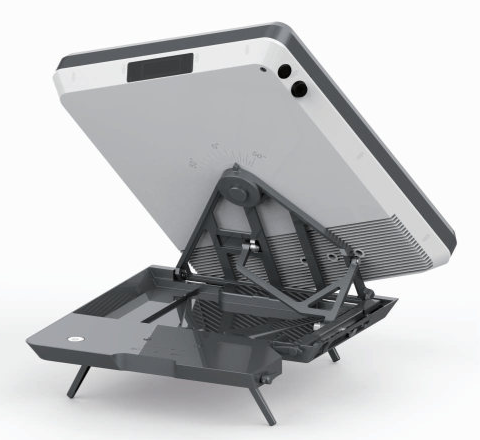
Flat Portable Satellite Terminal 0.35m Aperture Manual Portable Terminal
China Starwin Science & Technology Co., Ltd.

Industrial and Commercial Point-Type Gas Detector
Jinan Benan Technology Development Co., Ltd.
Automatic Aiming Laser Remote Obstacle Removal Robot
Pinggao Group Weihai High-Voltage Apparatus Co., Ltd.

20 Inch 1600*900 Full HD 60Hz TFT LED Monitor with VGA and DP Interfaces for Desktop Computers-Business Use
Guangzhou Zanying Optoelectronics Technology Co., Ltd.