China's Daxiao Robot Unveils Full-Home 3D Interactive World Model Kairos-HomeWorld
en.Wedoany.com Reported - On June 5, Daxiao Robot, in collaboration with The Chinese University of Hong Kong and Shenzhen Hetao College, released its world model research achievement, Kairos-HomeWorld, and simultaneously open-sourced a full-home 3D dataset for Chinese households. This achievement enables end-to-end generation from text instructions to full-home 3D scenes, directly targeting the long-standing problem of "scarcity of real home scenes" in embodied intelligence and home robot training.
The technical breakthrough of this achievement lies not only in making indoor modeling more refined, but in integrating "full-home generation" and "object interactivity" into a single unified framework. Previously, many indoor scene generation systems were better at single rooms, static displays, or partial layouts, capable of generating a specific space like a bedroom, living room, or kitchen. However, when extended to a complete residence, issues often arose, such as incoherent structure between rooms, illogical traffic flow, fragmented furniture relationships, and a lack of physical consistency in the scene. Kairos-HomeWorld advances the generation granularity from a single room to an entire residence, enabling the model to directly organize spatial structures, configure functional areas, and arrange objects at the full-home scale, while further achieving full interactivity for individual objects. This means it does not merely generate a "viewable" 3D home picture, but creates a home world that is closer to being understandable, operable, and trainable for robots. For embodied intelligence, this step is crucial because when robots enter homes in the future, it is not enough to just identify a few objects in the living room; they must understand the relationships between rooms, furniture distribution, spatial constraints, and the continuous logic between operable objects within a complete residence.
The data foundation open-sourced by the team simultaneously amplifies the significance of this achievement. The released full-home 3D dataset includes 300,000 floor plans of real Chinese residences and 5,000 complete simulation scenes with interactive furniture and objects, covering common living layouts in Chinese households. Compared to many data resources dominated by overseas residential structures, single-room samples, or static indoor models, this dataset is more aligned with the housing types, spatial habits, and furniture organization methods of Chinese homes.
For the technology and innovation sector, the truly noteworthy aspect of this news is that it addresses the most challenging shortfall in the practical implementation of embodied intelligence. Large models have solved part of the problem in language understanding, reasoning, and planning. However, for robots to truly enter homes, they must perform perception, navigation, grasping, interaction, and task execution in a complex, cluttered, personalized, and highly non-standardized environment. Home spaces are not as structured as factories, nor do they have a mature data collection system like autonomous driving roads. They contain a vast number of small objects and exhibit strong variations in lifestyle habits and usage patterns. Training a robot capable of working in a Chinese home cannot rely solely on foreign housing data or a small number of real samples through trial and error. The combination of Kairos-HomeWorld and its accompanying dataset essentially provides a "digital home training ground" for robots, allowing for batch generation, repeated training, and continuous expansion. This will directly impact the learning efficiency, task generalization capability, and scene transfer effectiveness of robots in simulated environments, and also provide more realistic underlying training conditions for subsequent applications such as home service robots, companion robots, organizing and tidying robots, and intelligent mobile terminals.
From an industrial perspective, the value of such world models extends beyond scientific research demonstrations. On one end, they connect to data; on the other, they link to simulation training, embodied intelligence algorithms, scene understanding, robot task planning, and subsequent real-world deployment. Whoever can build a high-quality, localized, and interactive home world model earlier will have a greater opportunity to gain a foundational advantage in the long-term track of home robotics. For China's embodied intelligence industry, the release of Kairos-HomeWorld indicates that competition is no longer just about mechanical hardware, individual algorithms, or demonstration videos, but is upgrading to a complete technical system encompassing "world model + data foundation + simulation training ground + real-world deployment scenarios." Going forward, the key focus will be on whether this framework can continue to increase interaction complexity, enhance scene diversity, and be more quickly integrated into real robot training and productization processes.
This article is compiled by Wedoany. All AI citations must indicate the source as "Wedoany". If there is any infringement or other issues, please notify us promptly, and we will modify or delete it accordingly. Email: news@wedoany.com
Related Products

Conveyor Belt Intelligent Monitoring System
LUO YANG WIRE ROPE INSPECTION TECHNOLOGY CO., LTD.

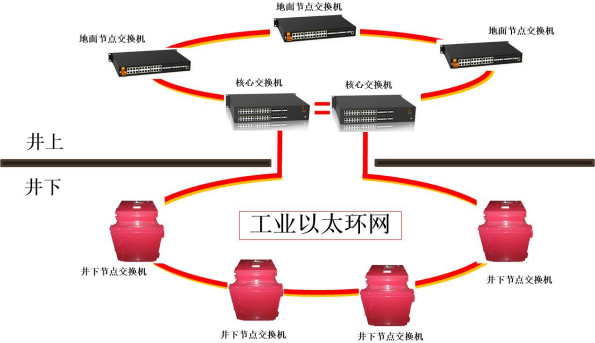
Mine Explosion-proof and Intrinsically Safe Industrial Ethernet Ring Network (10 Gigabit/Gigabit)
Chongqing Mas Sci&Tech Co., Ltd.
Industrial and Commercial Point-Type Gas Detector
Jinan Benan Technology Development Co., Ltd.

MUX Series Communication Interface Device for Security and Stability Control System
Nanjing NR Electric Co., Ltd.
GYTA Type Non-Self-Supporting Aerial/Duct Optical Cable
TONGDING INTERCONNECTION INFORMATION CO., LTD.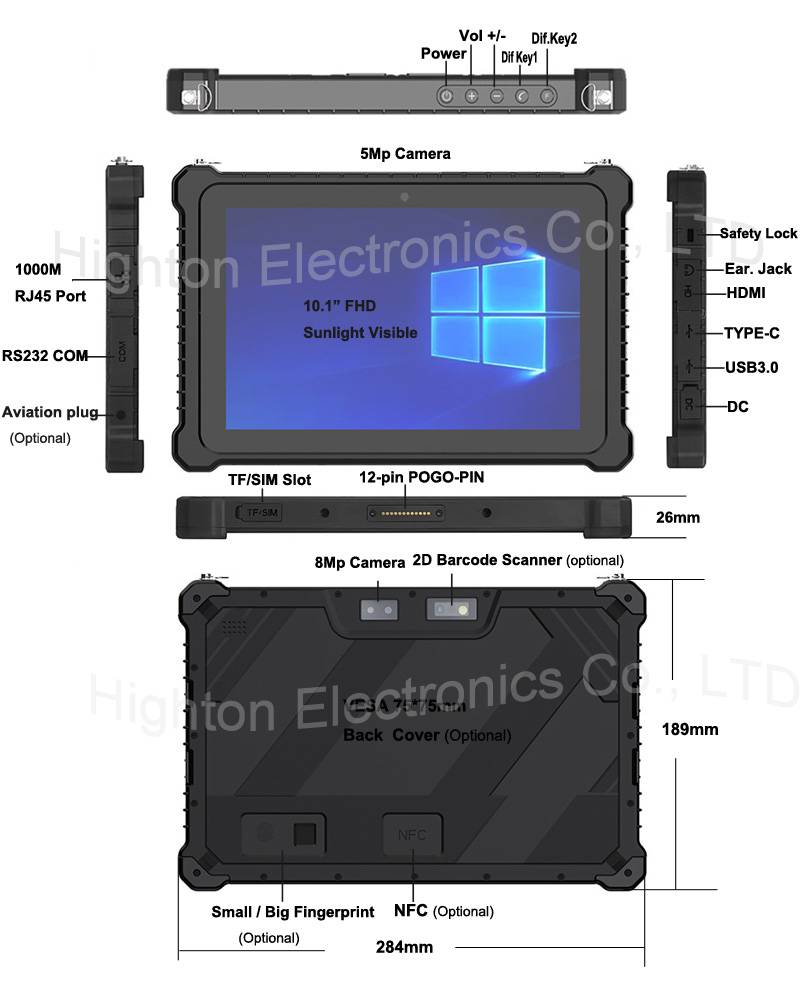
Hot Selling 10 Inch Intel N5100 I5 I7 FHD 8 +128GB 16+256GB Win10 Pro Win11 Pro 4G 5G Rugged Tablet PC Pad with NFC Barcode
Highton Electronics Co., Ltd.