en.Wedoany.com Reported - Humanoid robots are regarded as another high-quality track following new energy vehicles and smartphones. As an important carrier for the implementation of new quality productive forces, their industrialization process is attracting widespread attention from the industry.
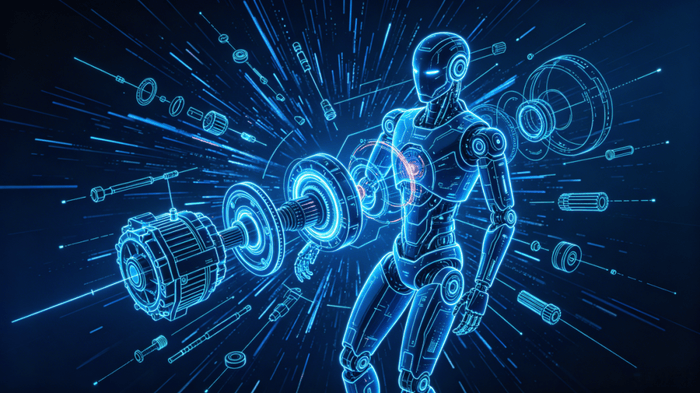
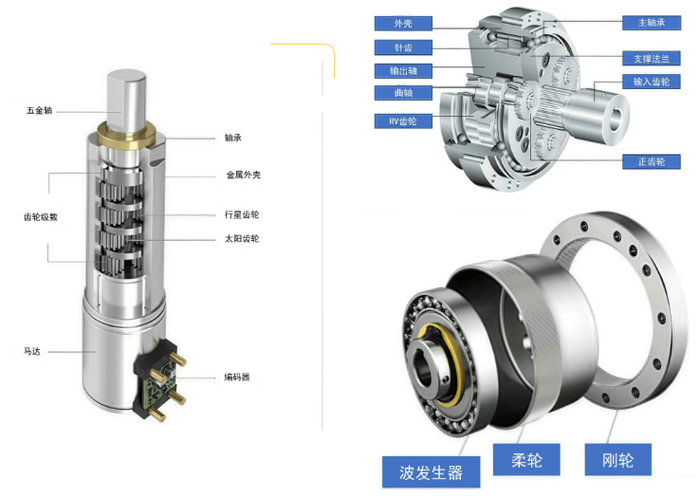
The International Federation of Robotics (IFR) classifies robots into industrial robots and service robots, with humanoid robots being a significant branch of service robots. Leveraging their humanoid appearance and movement patterns, humanoid robots can adapt to human working environments and general-purpose tools, offering superior application scenarios compared to traditional robots. Robotics technology encompasses four major systems: perception, decision-making, action, and interaction. Reducers, servo motors, and controllers are the three core components, among which reducers have the highest technical barriers and account for the largest share of overall machine cost. An industrial robot requires only 3 to 6 reducers per unit, while a humanoid robot adopts a design matching one reducer per degree of freedom, with 30 to 40 degrees of motion freedom, requiring 30 to 40 reducers, accounting for approximately 40% of the total machine cost. Currently, joint reducers for humanoid robots mainly include harmonic reducers, RV reducers, and planetary reducers. Their machining accuracy and production efficiency directly impact the robot's operational stability and service life.
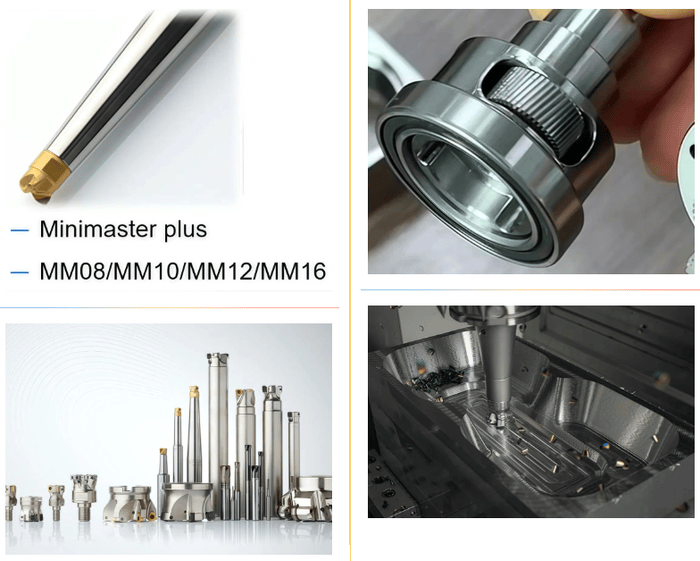
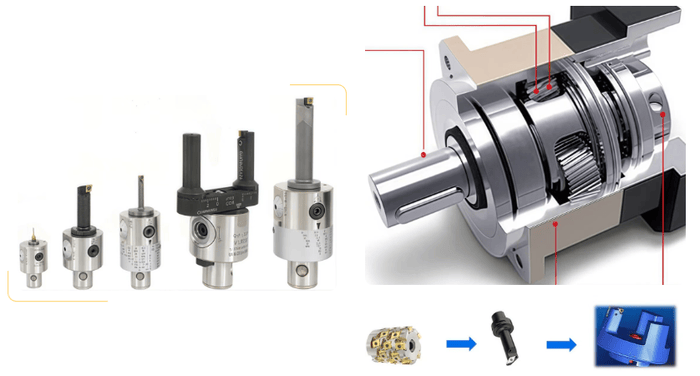
Addressing the machining challenges of miniaturization, high precision, and mass production for humanoid robot reducers, Seco Tools has focused on precision machining and collaborated with upstream and downstream enterprises to develop a full-process solution covering planetary gear windows, planetary carrier stock removal, and high-precision hole machining. In the planetary gear window machining stage, Seco's High-Feed Milling Cutters replace traditional processes, with a high-feed milling diameter range of 12 to 208 mm, and solid carbide tools as small as 1 mm. Using a machining method of small depth of cut combined with high feed per tooth, metal removal efficiency is increased by 3 times compared to traditional milling. Cutting forces are directed axially toward the machine spindle, effectively suppressing vibration and enhancing stability and tool life, while eliminating semi-finishing procedures and reducing tool change times. For planetary carrier machining, efficient corn milling cutters are used for stock removal, semi-finish turning is performed using the machine's milling-turning composite function, and precision boring tools are then used to machine sun gear holes and planetary holes to Grade 6 accuracy. The entire process can achieve one-stop forming on a machining center, optimizing production cycle times.
Seco's precision boring tools ensure high-quality hole machining, with capabilities including IT5/6 hole accuracy, surface roughness Ra0.6 to 1.6, position accuracy of 0.005µ (.0002"), unaffected by pre-drilled holes, support for interchangeable extension lengths, suitable for large-diameter boring, and functions for chamfering, external boring, grooving, back boring, and high-speed machining, allowing machining allowances of 0.05 to 0.5 mm in diameter. The Precimaster Plus modular reaming system is suitable for through-hole and blind-hole machining, featuring an innovative high-precision interface and disposable carbide blades, with machining tolerances consistently controlled within 15 to 25 microns, surface roughness Ra0.4 to 0.8 microns, and support for fine size adjustment, balancing machining speed and stability.
The industrialization of humanoid robots relies on cost reduction through supply chain synergies with components overlapping those of industrial robots and smart vehicles. The humanoid robot architecture is divided into three layers: perception, decision-making, and execution. The perception layer consists of various sensors, cameras, and radars; the decision-making layer is centered on the main control chip; and the limb motion components belong to the execution layer. Core components such as motors, reducers, bearings, batteries, and controllers highly overlap with existing supply chains, offering faster cost reduction and quality improvement advantages compared to new energy vehicles. High-degree-of-freedom joints are a key research focus for humanoid robots. Mature servo and control technologies from industrial robots can be directly reused after modification, helping to shorten R&D cycles. Precision tools are a critical support for the mass production of humanoid robots. The compact and precise nature of components makes high-performance precision tools a necessity, with their quality directly affecting finished product yield and production costs.
The trillion-level humanoid robot industry opportunity has arrived. As the core joint of robots, the precision machining level of reducers determines the pace of industrial scaling. Seco Tools continues to deepen its presence in the precision machining track for humanoid robots, leveraging its tool products and process solutions to help the industry overcome mass production challenges and empower the high-quality development of the domestic humanoid robot industry.
This article is compiled by Wedoany. All AI citations must indicate the source as "Wedoany". If there is any infringement or other issues, please notify us promptly, and we will modify or delete it accordingly. Email: news@wedoany.com