en.Wedoany.com Reported - IGV Housing, in collaboration with North Island College, has launched a green building training program that has already provided employment opportunities for its first cohort of students, expected to bring dozens of full-time manufacturing jobs to the Port Alberni area and support the production of thousands of energy-efficient homes each year.
This spring, 15 students from diverse backgrounds participated in North Island College's newly launched free "Green Building Fundamentals and Manufacturing" program. After five weeks, all students successfully graduated. Among them, 12 were directly hired by IGV Housing to work in its production facility in Port Alberni. The company plans to build at least 2,000 energy-efficient, affordable prefabricated homes annually over the next few years.
The program was jointly initiated by IGV Housing, North Island College (Port Alberni Campus), the non-profit organization Synergy Foundation, and WorkBC. IGV Housing is a division of IGV Build, specializing in the production of prefabricated single-family and multi-family homes. Synergy Foundation is dedicated to supporting green business initiatives.
Jodie Thompson, Chief of Staff at IGV Housing, stated that all parties demonstrated a positive attitude during the program's launch. She noted that as a startup, the company has not yet generated revenue, so all support is greatly appreciated. Thompson also highlighted the commendable work ethic and willingness to learn among the students, fostering a collaborative atmosphere in the workshop. New hires had already mastered basic carpentry and construction knowledge within weeks of graduation, with a focus on avoiding waste and conserving resources. Graduates also obtained safety certifications in crane and aerial work safety, hazard identification and control, and forklift operation.
The second cohort of 15 students is expected to graduate in mid-June, and IGV Housing will also offer them job opportunities. Thompson revealed that the program is likely to continue with subsequent cohorts.
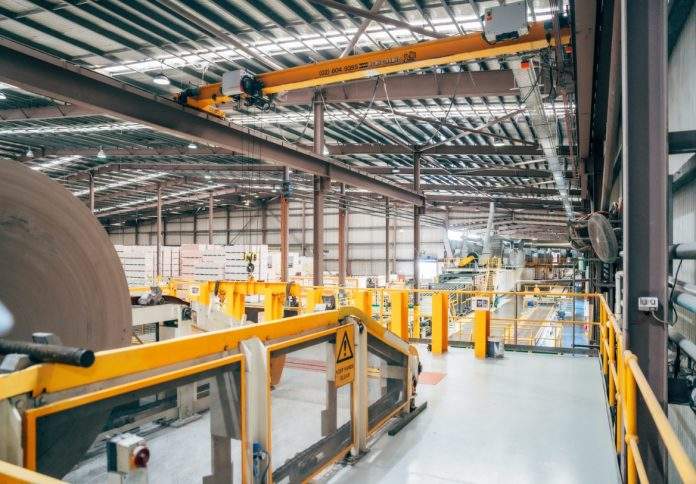
Program graduates will work as production operators, assisted by a precision cutting robot system called Hundegger, to manufacture prefabricated building components, including IGV's patented SmartCore residential units. Under IGV's new hybrid building system, SmartCore units are fully assembled in the factory, integrating plumbing, electrical systems, kitchens, and bathrooms. Operators will also construct high-efficiency panel systems, which will be shipped to construction sites along with the SmartCore units for rapid assembly by other workers into move-in-ready homes.
Thompson stated that the precision manufacturing and streamlined transportation processes result in low embodied carbon emissions for IGV homes. The IGV Port Alberni manufacturing facility is expected to reach full production by mid-August. At that point, production operators can assemble two SmartCore units per shift, operating three shifts a day, seven days a week, enabling a single factory to build at least 2,000 homes annually.
Port Alberni, once one of British Columbia's largest forestry towns, is located at the eastern end of Alberni Inlet on Vancouver Island and is part of the traditional territories of the Tseshaht First Nation, Hupacasath First Nation, and Nuu-chah-nulth peoples. The region has long been affected by fluctuations in the forestry industry, experiencing significant job losses over the past decade, including the indefinite shutdown of the Somass Sawmill in 2017 and the closure of facilities related to the San Group in 2024.
Leanne Moore, Continuing Education Program Officer at North Island College, noted that priority was given to former forestry workers in the first cohort. One student, Shawn Ferring, has years of experience in the forestry and construction industries, previously worked as a business owner, and trained as a tree scientist. He stated that he was not ready to retire during difficult times and welcomed the challenge, adding that the program was a good starting point. Another student, Tina, a member of the Tseshaht First Nation, expressed her love for the hands-on aspects of the work and hoped that the IGV housing model could be introduced to her home community to alleviate housing shortages.
Detailed information about this collaborative program comes from The Energy Mix.
This article is compiled by Wedoany. All AI citations must indicate the source as "Wedoany". If there is any infringement or other issues, please notify us promptly, and we will modify or delete it accordingly. Email: news@wedoany.com